Department of Cellular and Molecular Biology, School of Medicine of Ribeirão Preto, University of São Paulo, Ribeirão Preto-SP 14049-900, Brazil.
Department of Microbiology and Immunology, The University of Melbourne at the Peter Doherty Institute for Infection and Immunity, Melbourne, VIC 3000, Australia.
Proc Natl Acad Sci U S A. 2023 Sep 5;120(36):e2308752120. doi: 10.1073/pnas.2308752120. Epub 2023 Aug 28.
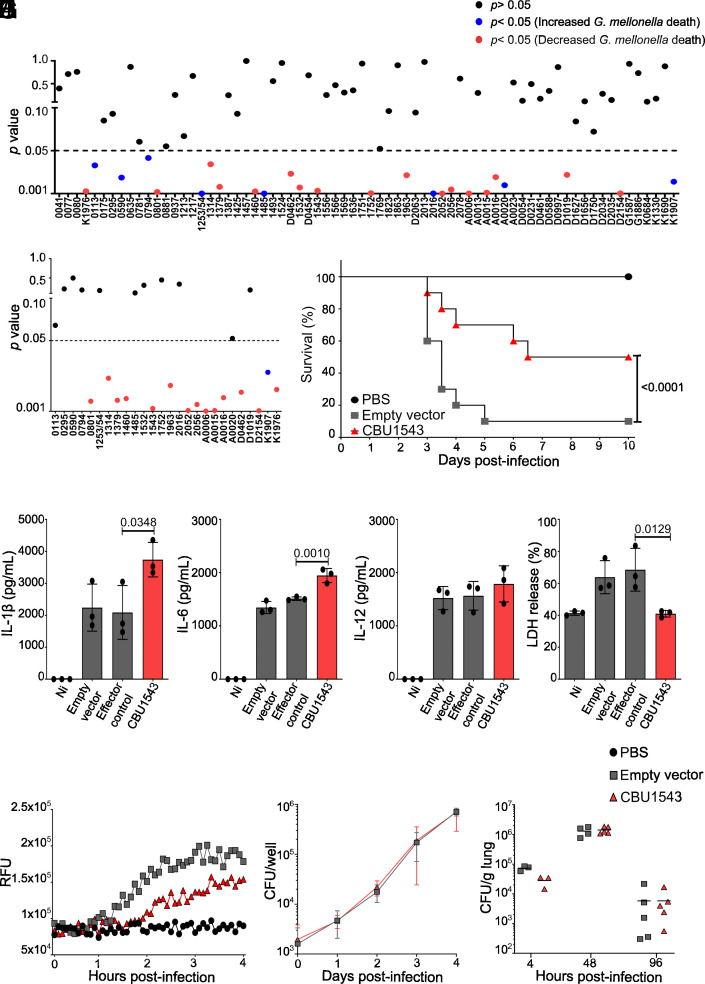
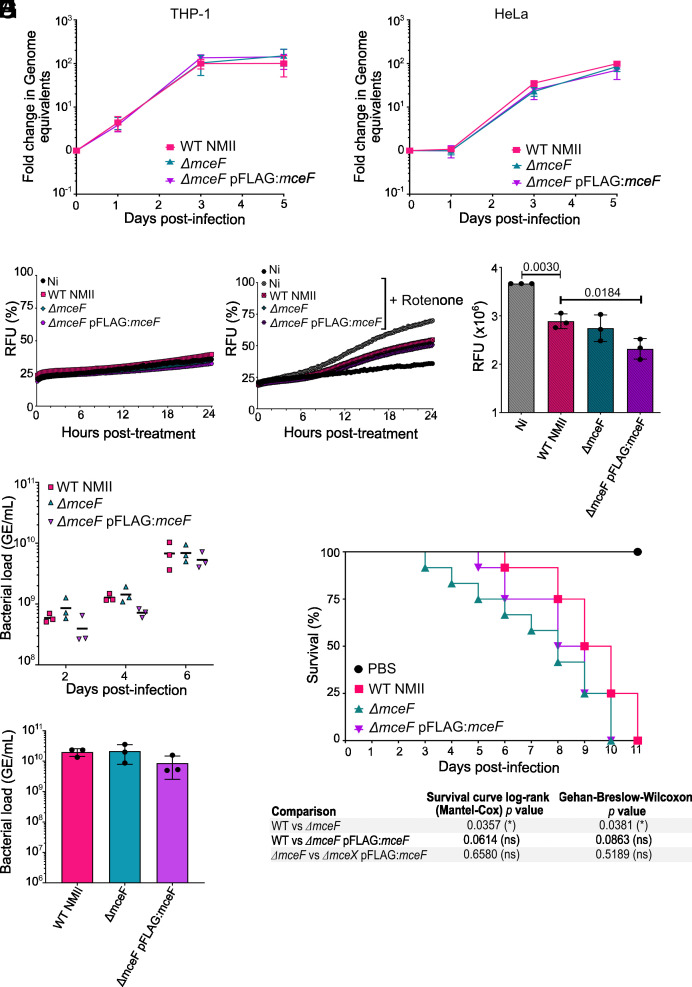
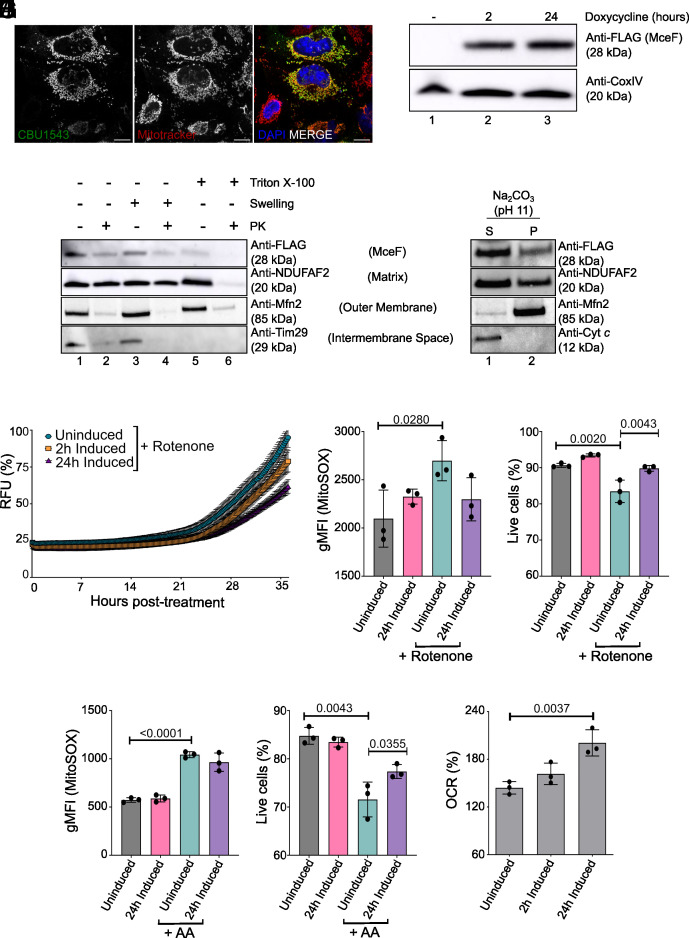
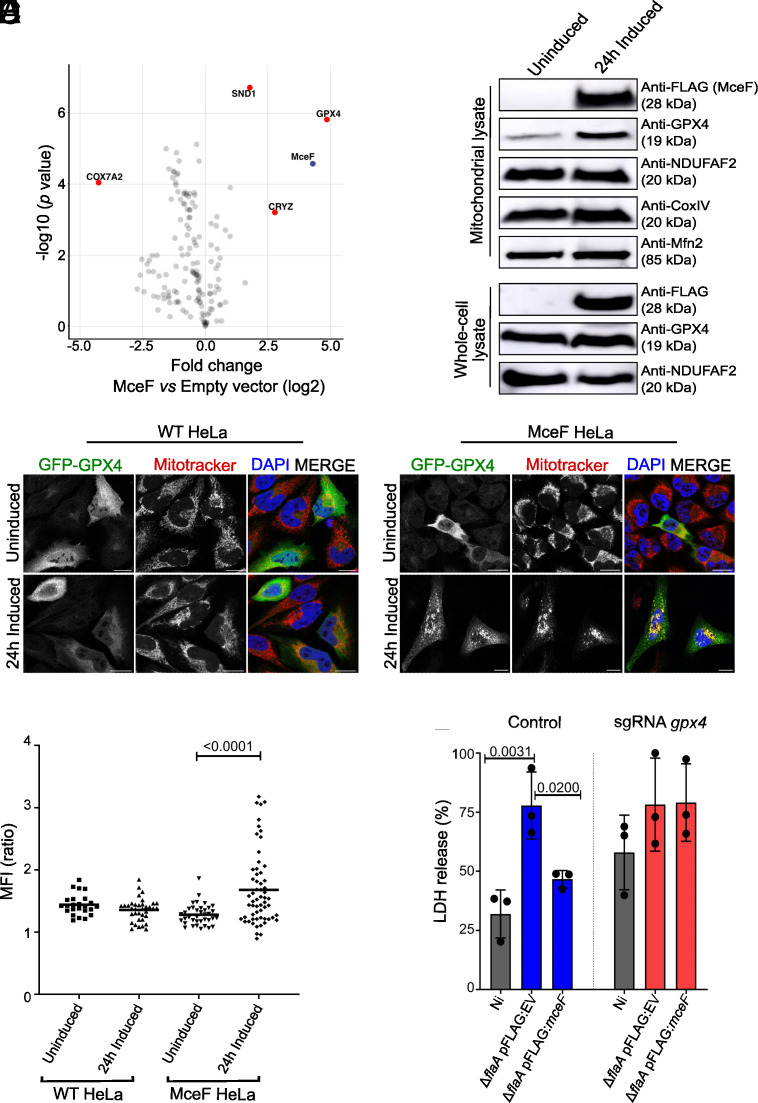
The causative agent of human Q fever, is highly adapted to infect alveolar macrophages by inhibiting a range of host responses to infection. Despite the clinical and biological importance of this pathogen, the challenges related to genetic manipulation of both and macrophages have limited our knowledge of the mechanisms by which subverts macrophages functions. Here, we used the related bacterium to perform a comprehensive screen of effectors that interfere with innate immune responses and host death using the greater wax moth and mouse bone marrow-derived macrophages. We identified MceF (Mitochondrial Coxiella effector protein F), a effector protein that localizes to mitochondria and contributes to host cell survival. MceF was shown to enhance mitochondrial function, delay membrane damage, and decrease mitochondrial ROS production induced by rotenone. Mechanistically, MceF recruits the host antioxidant protein Glutathione Peroxidase 4 (GPX4) to the mitochondria. The protective functions of MceF were absent in primary macrophages lacking GPX4, while overexpression of MceF in human cells protected against oxidative stress-induced cell death. lacking MceF was replication competent in mammalian cells but induced higher mortality in indicating that MceF modulates the host response to infection. This study reveals an important strategy to subvert macrophage cell death and host immunity and demonstrates that modulation of the host antioxidant system is a viable strategy to promote the success of intracellular bacteria.
导致人类 Q 热的病原体 高度适应通过抑制宿主对感染的一系列反应来感染肺泡巨噬细胞。尽管这种病原体具有临床和生物学重要性,但由于对 和巨噬细胞的遗传操作的挑战,限制了我们对 颠覆巨噬细胞功能的机制的了解。在这里,我们使用相关细菌 对使用大蜡螟 和鼠骨髓来源的巨噬细胞来干扰先天免疫反应和宿主死亡的 效应物进行了全面筛选。我们鉴定出 MceF(线粒体 Coxiella 效应蛋白 F),一种定位于线粒体的 效应蛋白,有助于宿主细胞存活。MceF 被证明能增强线粒体功能,延迟由鱼藤酮诱导的膜损伤和减少线粒体 ROS 产生。在缺乏 GPX4 的原代巨噬细胞中,MceF 募集宿主抗氧化蛋白谷胱甘肽过氧化物酶 4(GPX4)到线粒体。缺乏 MceF 的 在哺乳动物细胞中具有复制能力,但在 中诱导更高的死亡率,表明 MceF 调节宿主对感染的反应。这项研究揭示了 颠覆巨噬细胞细胞死亡和宿主免疫的重要策略,并表明宿主抗氧化系统的调节是促进细胞内细菌成功的可行策略。