Department of Allied Health Sciences, University of Connecticut, Storrs, CT, United States.
WW International, Inc, New York, NY, United States.
J Med Internet Res. 2023 Aug 29;25:e44955. doi: 10.2196/44955.
Digital behavioral weight loss programs are scalable and effective, and they provide an opportunity to personalize intervention components. However, more research is needed to test the acceptability and efficacy of personalized digital behavioral weight loss interventions.
In a 6-month single-arm trial, we examined weight loss, acceptability, and secondary outcomes of a digital commercial weight loss program (WeightWatchers). This digital program included a personalized weight loss program based on sex, age, height, weight, and personal food preferences, as well as synchronous (eg, virtual workshops and individual weekly check-ins) and asynchronous (eg, mobile app and virtual group) elements. In addition to a personalized daily and weekly PersonalPoints target, the program provided users with personalized lists of ≥300 ZeroPoint foods, which are foods that do not need to be weighed, measured, or tracked.
We conducted a pre-post evaluation of this 6-month, digitally delivered, and personalized WeightWatchers weight management program on weight loss at 3 and 6 months in adults with overweight and obesity. The secondary outcomes included participation, satisfaction, fruit and vegetable intake, physical activity, sleep quality, hunger, food cravings, quality of life, self-compassion, well-being, and behavioral automaticity.
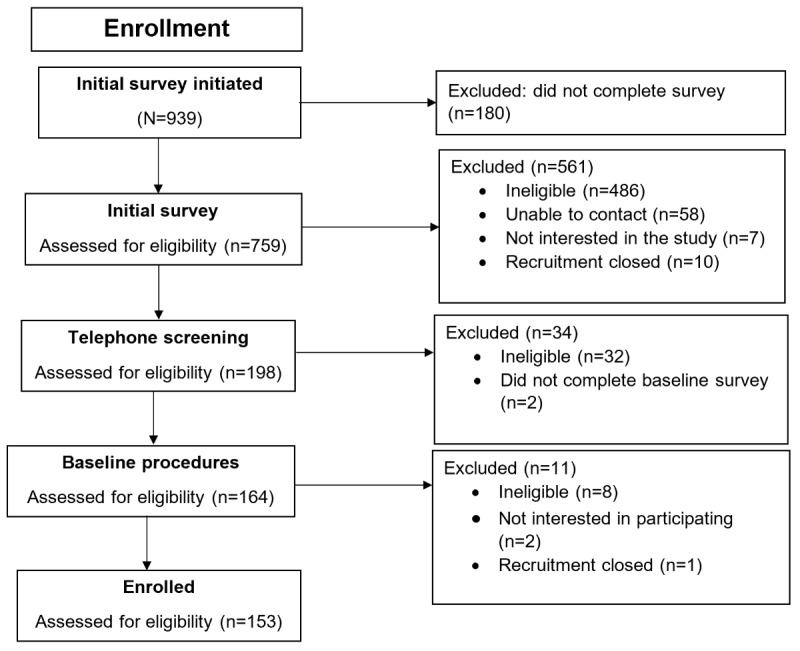
Of the 153 participants, 107 (69.9%) were female, and 65 (42.5%) identified as being from a minoritized racial or ethnic group. Participants' mean age was 41.09 (SD 13.78) years, and their mean BMI was 31.8 (SD 5.0) kg/m. Participants had an average weight change of -4.25% (SD 3.93%) from baseline to 3 months and -5.05% (SD 5.59%) from baseline to 6 months. At 6 months, the percentages of participants who experienced ≥3%, ≥5%, and ≥10% weight loss were 63.4% (97/153), 51% (78/153), and 14.4% (22/153), respectively. The mean percentage of weeks in which participants engaged in ≥1 aspects of the program was 87.53% (SD 23.40%) at 3 months and 77.67% (SD 28.69%) at 6 months. Retention was high (132/153, 86.3%), and more than two-thirds (94/140, 67.1%) of the participants reported that the program helped them lose weight. Significant improvements were observed in fruit and vegetable intake, physical activity, sleep quality, hunger, food cravings, quality of life, and well-being (all P values <.01).
This personalized, digital, and scalable behavioral weight management program resulted in clinically significant weight loss in half (78/153, 51%) of the participants as well as improvements in behavioral and psychosocial outcomes. Future research should compare personalized digital weight loss programs with generic programs on weight loss, participation, and acceptability.
数字化行为减肥项目具有可扩展性和有效性,并且为个性化干预组件提供了机会。然而,仍需要更多的研究来测试个性化数字化行为减肥干预措施的可接受性和效果。
在一项为期 6 个月的单臂试验中,我们检查了一个商业化数字化减肥项目(Weight Watchers)的减肥效果、可接受性和次要结果。这个数字化项目包括基于性别、年龄、身高、体重和个人食物偏好的个性化减肥计划,以及同步(例如,虚拟研讨会和个人每周签到)和异步(例如,移动应用程序和虚拟小组)元素。除了个性化的每日和每周 PersonalPoints 目标外,该计划还为用户提供了个性化的≥300 种零卡路里食物清单,这些食物无需称重、测量或跟踪。
我们对这个为期 6 个月、数字化交付和个性化的 Weight Watchers 体重管理计划进行了预-后评估,评估了超重和肥胖成年人在 3 个月和 6 个月时的体重减轻情况。次要结果包括参与度、满意度、水果和蔬菜摄入量、身体活动、睡眠质量、饥饿感、食欲、生活质量、自我同情、幸福感和行为自动性。
在 153 名参与者中,有 107 名(69.9%)为女性,有 65 名(42.5%)来自少数族裔或种族群体。参与者的平均年龄为 41.09 岁(SD 13.78),平均 BMI 为 31.8(SD 5.0)kg/m。参与者的体重平均变化为从基线到 3 个月时的-4.25%(SD 3.93%),从基线到 6 个月时的-5.05%(SD 5.59%)。在 6 个月时,体重减轻≥3%、≥5%和≥10%的参与者比例分别为 63.4%(97/153)、51%(78/153)和 14.4%(22/153)。参与者在 3 个月时有 87.53%(SD 23.40%)的周参与了≥1 个项目方面,而在 6 个月时有 77.67%(SD 28.69%)的周参与了≥1 个项目方面。保留率很高(132/153,86.3%),超过三分之二(94/140,67.1%)的参与者表示该计划帮助他们减轻了体重。在水果和蔬菜摄入量、身体活动、睡眠质量、饥饿感、食欲、生活质量和幸福感方面都观察到了显著的改善(所有 P 值均<.01)。
这个个性化、数字化和可扩展的行为减肥管理计划在一半(78/153,51%)的参与者中产生了临床显著的体重减轻,并且在行为和心理社会结果方面也有所改善。未来的研究应该比较个性化的数字化减肥计划和通用计划在减肥、参与度和可接受性方面的效果。
