Department of Psychiatry, Robert Wood Johnson Medical School, Rutgers University, Piscataway, New Jersey, USA.
Department of Psychiatry, Washington University School of Medicine, St. Louis, Missouri, USA.
Addict Biol. 2023 Sep;28(9):e13319. doi: 10.1111/adb.13319.
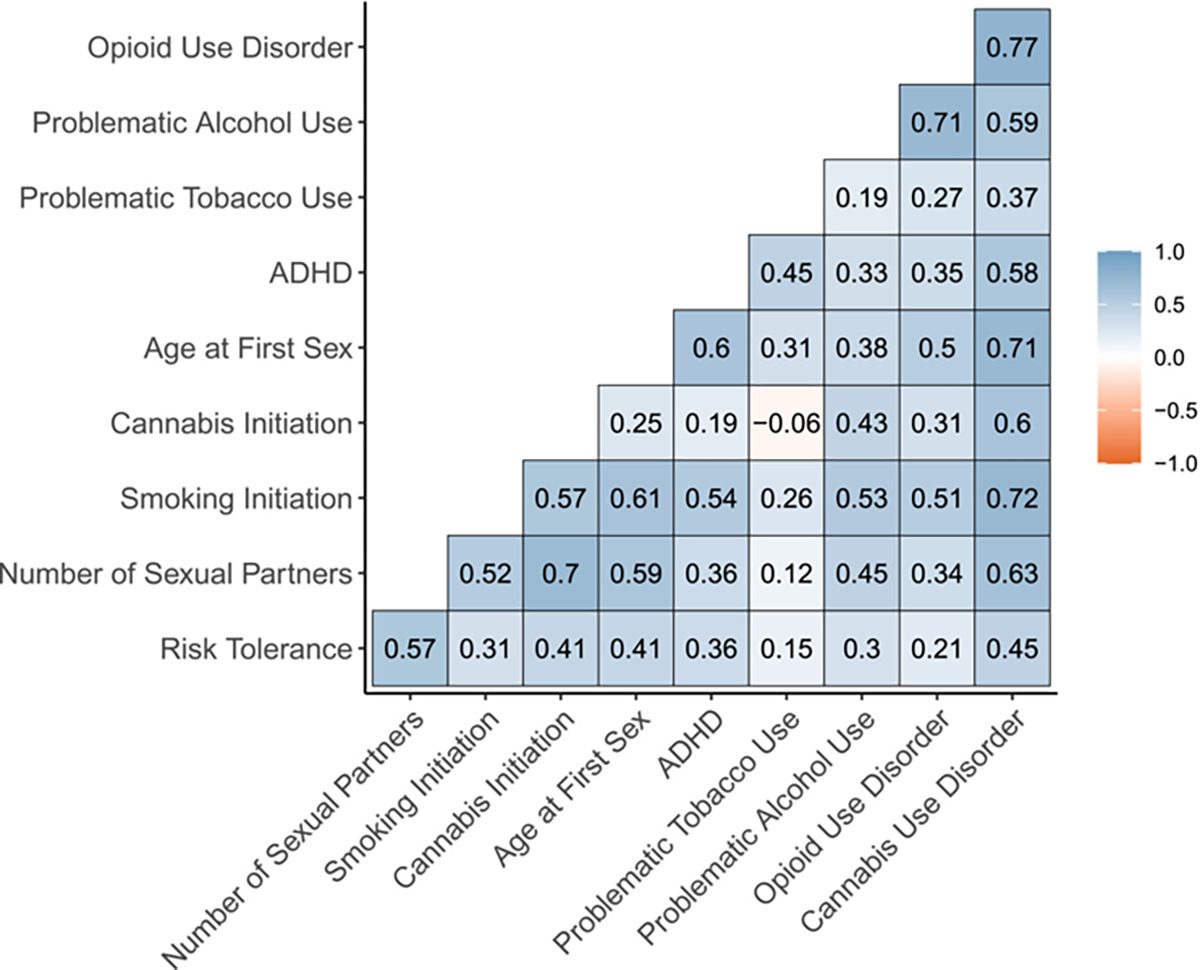
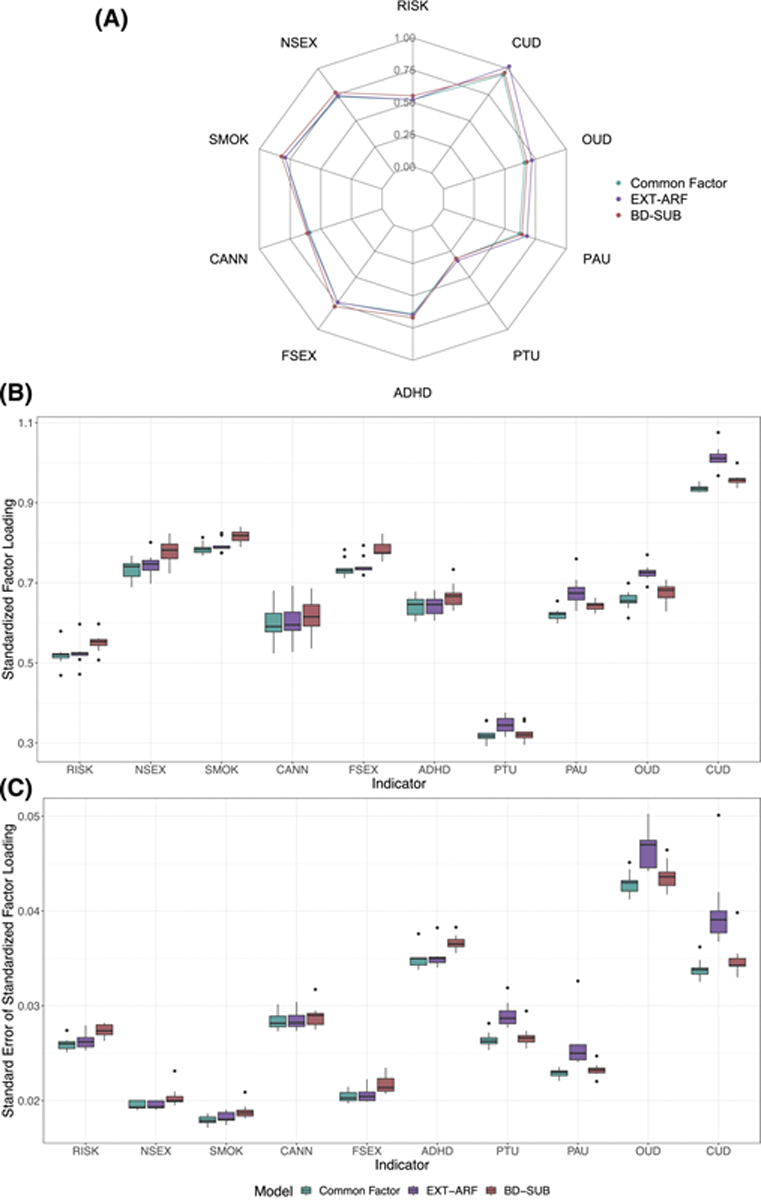
Substance use disorders (SUDs) are phenotypically and genetically correlated with each other and with other psychological traits characterized by behavioural under-control, termed externalizing phenotypes. In this study, we used genomic structural equation modelling to explore the shared genetic architecture among six externalizing phenotypes and four SUDs used in two previous multivariate genome-wide association studies of an externalizing and an addiction risk factor, respectively. We first evaluated five confirmatory factor analytic models, including a common factor model, alternative parameterizations of two-factor structures and a bifactor model. We next explored the genetic correlations between factors identified in these models and other relevant psychological traits. Finally, we quantified the degree of polygenic overlap between externalizing and addiction risk using MiXeR. We found that the common and two-factor structures provided the best fit to the data, evidenced by high factor loadings, good factor reliability and no evidence of concerning model characteristics. The two-factor models yielded high genetic correlations between factors (r s ≥ 0.87), and between the effect sizes of genetic correlations with external traits (r ≥ 0.95). Nevertheless, 21 of the 84 correlations with external criteria showed small, significant differences between externalizing and addiction risk factors. MiXer results showed that approximately 81% of influential externalizing variants were shared with addiction risk, whereas addiction risk shared 56% of its influential variants with externalizing. These results suggest that externalizing and addiction genetic risk are largely shared, though both constructs also retain meaningful unshared genetic variance. These results can inform future efforts to identify specific genetic influences on externalizing and SUDs.
物质使用障碍(SUD)在表型和遗传上与其他心理特征相关,这些特征以行为失控为特征,被称为外化表型。在这项研究中,我们使用基因组结构方程模型来探索六个外化表型和四个 SUD 在两个之前的多变量全基因组关联研究中的共享遗传结构,这些研究分别是外化和成瘾风险因素的研究。我们首先评估了五个验证性因素分析模型,包括一个共同因素模型、两个因素结构的替代参数化和一个双因素模型。接下来,我们探讨了这些模型中确定的因素与其他相关心理特征之间的遗传相关性。最后,我们使用 MiXeR 量化了外化和成瘾风险之间的多基因重叠程度。我们发现,共同和双因素结构为数据提供了最佳拟合,表现为高因子负荷、良好的因子可靠性和没有令人担忧的模型特征的证据。双因素模型在因素之间(r s ≥ 0.87)以及遗传相关性与外部特征的效应大小之间(r ≥ 0.95)产生了很高的遗传相关性。然而,与外部标准的 84 个相关性中的 21 个在外化和成瘾风险因素之间表现出小而显著的差异。MiXer 的结果表明,大约 81%的有影响力的外化变体与成瘾风险共享,而成瘾风险仅与外化共享 56%的有影响力的变体。这些结果表明,外化和成瘾的遗传风险在很大程度上是共享的,尽管这两个结构也保留了有意义的不共享遗传变异。这些结果可以为未来识别外化和 SUD 特定遗传影响的努力提供信息。