Hibberd Matthew C, Webber Daniel M, Rodionov Dmitry A, Henrissat Suzanne, Chen Robert Y, Zhou Cyrus, Lynn Hannah M, Wang Yi, Chang Hao-Wei, Lee Evan M, Lelwala-Guruge Janaki, Kazanov Marat D, Arzamasov Aleksandr A, Leyn Semen A, Lombard Vincent, Terrapon Nicolas, Henrissat Bernard, Castillo Juan J, Couture Garret, Bacalzo Nikita P, Chen Ye, Lebrilla Carlito B, Mostafa Ishita, Das Subhasish, Mahfuz Mustafa, Barratt Michael J, Osterman Andrei L, Ahmed Tahmeed, Gordon Jeffrey I
Edison Family Center for Genome Sciences and Systems Biology, Washington University School of Medicine, St. Louis, MO 63110 USA.
Center for Gut Microbiome and Nutrition Research, Washington University School of Medicine, St. Louis, MO 63110 USA.
medRxiv. 2023 Aug 18:2023.08.14.23293998. doi: 10.1101/2023.08.14.23293998.
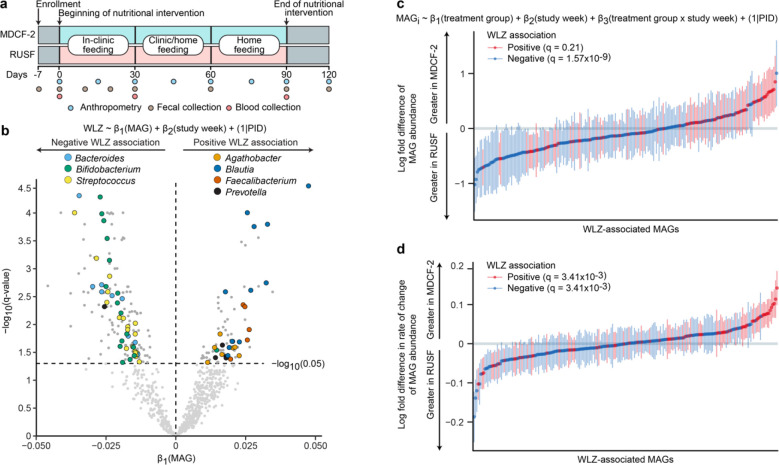
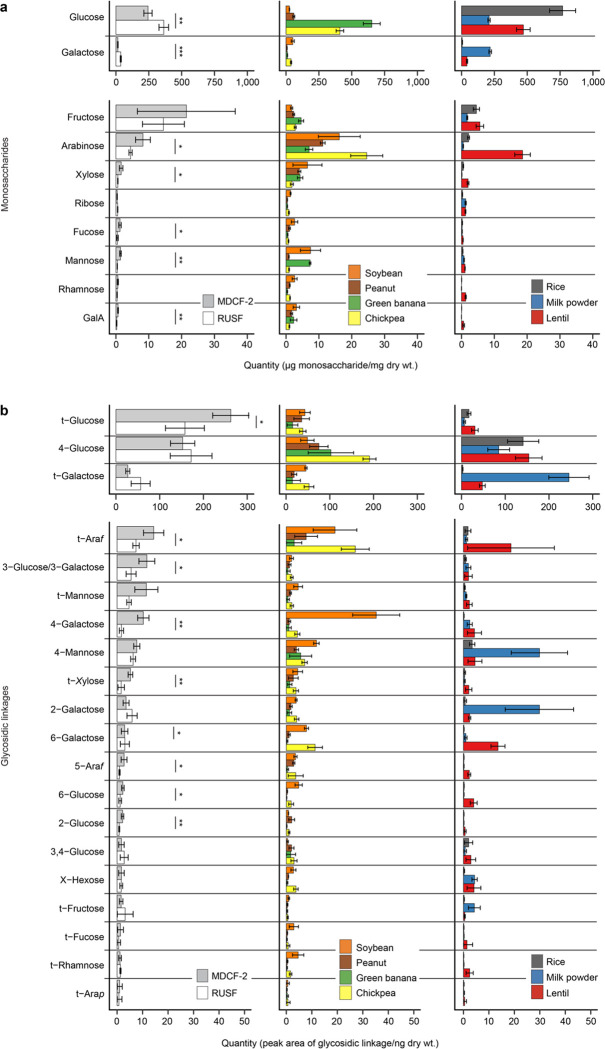
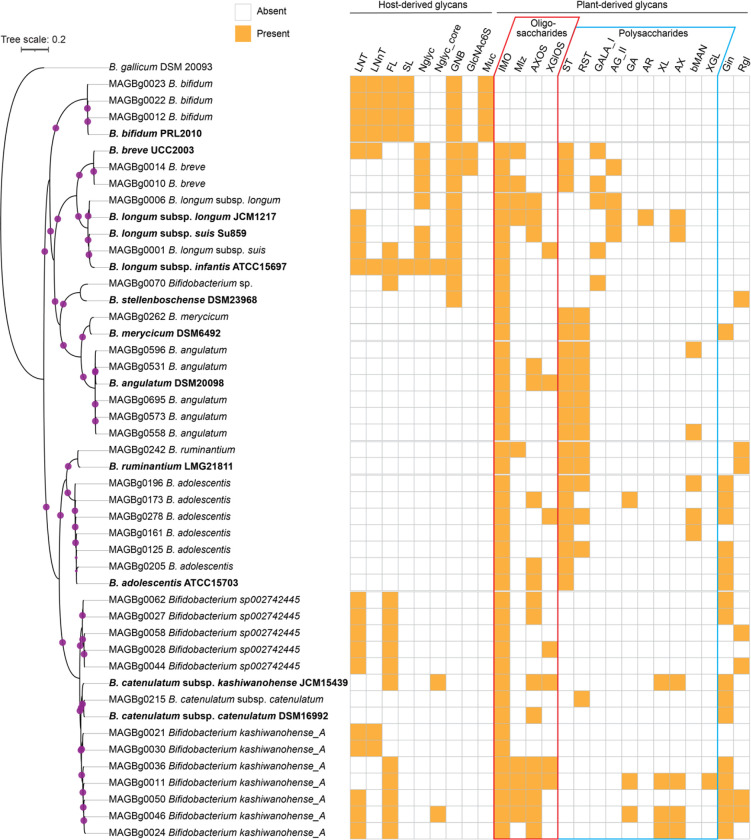
Evidence is accumulating that perturbed postnatal development of the gut microbiome contributes to childhood malnutrition. Designing effective microbiome-directed therapeutic foods to repair these perturbations requires knowledge about how food components interact with the microbiome to alter its expressed functions. Here we use biospecimens from a randomized, controlled trial of a microbiome-directed complementary food prototype (MDCF-2) that produced superior rates of weight gain compared to a conventional ready-to-use supplementary food (RUSF) in 12-18-month-old Bangladeshi children with moderate acute malnutrition (MAM)4. We reconstructed 1000 bacterial genomes (metagenome-assembled genomes, MAGs) present in their fecal microbiomes, identified 75 whose abundances were positively associated with weight gain (change in weight-for-length Z score, WLZ), characterized gene expression changes in these MAGs as a function of treatment type and WLZ response, and used mass spectrometry to quantify carbohydrate structures in MDCF-2 and feces. The results reveal treatment-induced changes in expression of carbohydrate metabolic pathways in WLZ-associated MAGs. Comparing participants consuming MDCF-2 versus RUSF, and MDCF-2-treated children in the upper versus lower quartiles of WLZ responses revealed that two MAGs positively associated with WLZ were principal contributors to MDCF-2-induced expression of metabolic pathways involved in utilization of its component glycans. Moreover, the predicted specificities of carbohydrate active enzymes expressed by polysaccharide utilization loci (PULs) in these two MAGs correlate with the (i) growth of Bangladeshi strains, possessing differing degrees of PUL and overall genomic content similarity to these MAGs, cultured in defined medium containing different purified glycans representative of those in MDCF-2, and (ii) levels of carbohydrate structures identified in feces from clinical trial participants. In the accompanying paper5, we use a gnotobiotic mouse model colonized with age- and WLZ-associated bacterial taxa cultured from this study population, and fed diets resembling those consumed by study participants, to directly test the relationship between , MDCF-2 glycan metabolism, host ponderal growth responses, and intestinal gene expression and metabolism. The ability to identify bioactive glycan structures in MDCFs that are metabolized by growth-associated bacterial taxa will help guide recommendations about use of this MDCF for children with acute malnutrition representing different geographic locales and ages, as well as enable development of bioequivalent, or more efficacious, formulations composed of culturally acceptable and affordable ingredients.
越来越多的证据表明,出生后肠道微生物群的发育紊乱会导致儿童营养不良。设计有效的微生物群导向治疗性食品来修复这些紊乱,需要了解食物成分如何与微生物群相互作用以改变其表达的功能。在这里,我们使用了一项微生物群导向补充食品原型(MDCF-2)随机对照试验中的生物样本,该试验在患有中度急性营养不良(MAM)的12至18个月大的孟加拉儿童中,与传统即食补充食品(RUSF)相比,体重增加率更高。我们重建了他们粪便微生物群中存在的1000个细菌基因组(宏基因组组装基因组,MAGs),鉴定出75个其丰度与体重增加呈正相关(身长体重Z评分变化,WLZ),将这些MAGs中的基因表达变化表征为治疗类型和WLZ反应的函数,并使用质谱法定量MDCF-2和粪便中的碳水化合物结构。结果揭示了治疗诱导的WLZ相关MAGs中碳水化合物代谢途径表达的变化。比较食用MDCF-2与RUSF的参与者,以及WLZ反应上四分位数与下四分位数的MDCF-2治疗儿童,发现与WLZ呈正相关两个MAGs是MDCF-2诱导其成分聚糖利用相关代谢途径表达的主要贡献者。此外,这两个MAGs中由多糖利用位点(PULs)表达的碳水化合物活性酶的预测特异性与(i)在含有代表MDCF-2中不同纯化聚糖的特定培养基中培养的、与这些MAGs具有不同程度PUL和整体基因组内容相似性的孟加拉菌株的生长,以及(ii)临床试验参与者粪便中鉴定出的碳水化合物结构水平相关。在随附论文5中,我们使用一个定菌小鼠模型,该模型定殖有从该研究人群中培养的与年龄和WLZ相关的细菌分类群,并喂食与研究参与者食用的相似的饮食,以直接测试MDCF-2聚糖代谢、宿主体重增长反应以及肠道基因表达和代谢之间的关系。识别MDCFs中被与生长相关的细菌分类群代谢的生物活性聚糖结构的能力,将有助于指导关于将这种MDCF用于代表不同地理区域和年龄的急性营养不良儿童的建议,以及开发由文化上可接受且价格合理的成分组成的生物等效或更有效的配方。