Department of Nursing, Air Force Medical University, Xi'an, China.
Department of Endocrinology, The Second Affiliated Hospital of Air Force Medical University, Xi'an, China.
J Diabetes Res. 2023 Aug 22;2023:5224654. doi: 10.1155/2023/5224654. eCollection 2023.
In recent years, the incidence of type 2 diabetes mellitus (T2DM) has dramatically increased, imposing a heavy financial burden on society and individuals. The most cost-effective way to control diabetes is diabetes self-management, which depends on patients' executive functions (EFs). However, the level of EFs among patients with T2DM varies greatly. In addition to diabetes-related factors contributing to a decline in EFs, trait impulsivity as a relatively stable personality trait may explicate individual differences in EFs. The objective of this study was to verify the mediating effect of negative emotions on the relationship between trait impulsivity and EFs among patients with T2DM in China.
A total of 305 patients with T2DM were enrolled consecutively from the endocrinology departments of three tertiary hospitals in China using convenience sampling. The participants completed the Sociodemographic Questionnaire, Mini-Mental State Examination (MMSE), Barratt Impulsiveness Scale-Brief (BIS-Brief), Depression Anxiety and Stress Scales with 21 items (DASS-21), and Behavior Rating Inventory of Executive Function-Adult (BRIEF-A) version. A structural equation modeling was used to verify the mediating effect of negative emotions on the relationship between trait impulsivity and EFs.
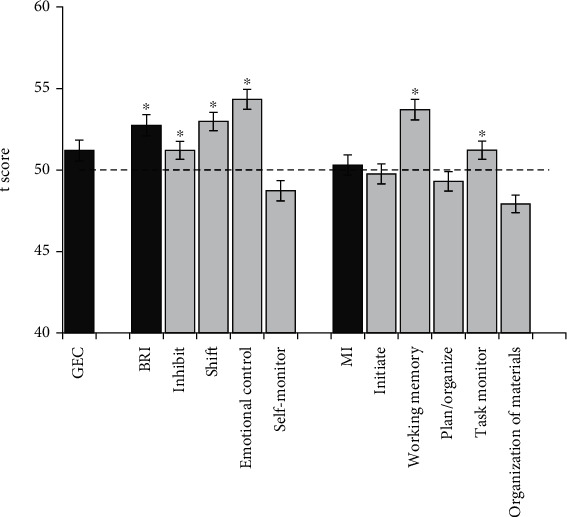
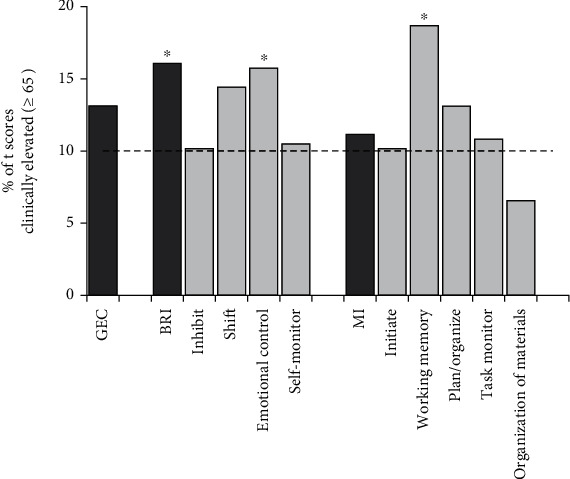
A total of 32.46% of the participants experienced at least one aspect of daily EF decline. The mediating effect of trait impulsivity on the Behavioral Regulation Index (BRI) of EFs through negative emotions was significant, accounting for 29.57% of the total effect. The mediating effect of trait impulsivity on the Metacognitive Index (MI) of EFs through negative emotions was significant, accounting for 31.67% of the total effect.
Trait impulsivity can positively predict EF decline, which can be alleviated by improving the negative emotions of patients with T2DM. Future research exploring interventions to improve the EFs of patients with T2DM should therefore consider their trait impulsivity and negative emotions.
近年来,2 型糖尿病(T2DM)的发病率显著上升,给社会和个人带来了沉重的经济负担。控制糖尿病最具成本效益的方法是糖尿病自我管理,这取决于患者的执行功能(EFs)。然而,T2DM 患者的 EFs 水平差异很大。除了与糖尿病相关的因素导致 EFs 下降外,特质冲动作为一种相对稳定的个性特征,也可能解释 EFs 的个体差异。本研究旨在验证中国 T2DM 患者特质冲动与 EFs 之间的关系中负性情绪的中介作用。
采用便利抽样法,连续纳入中国三家三级医院内分泌科的 305 例 T2DM 患者。参与者完成社会人口学问卷、简易精神状态检查(MMSE)、巴瑞特冲动量表-简明版(BIS-Brief)、21 项抑郁焦虑和压力量表(DASS-21)和行为评定量表-成人版(BRIEF-A)。采用结构方程模型验证负性情绪对特质冲动与 EFs 之间关系的中介作用。
32.46%的参与者至少在一个方面出现日常 EF 下降。特质冲动通过负性情绪对 EFs 的行为调节指数(BRI)的中介作用显著,占总效应的 29.57%。特质冲动通过负性情绪对 EFs 的元认知指数(MI)的中介作用显著,占总效应的 31.67%。
特质冲动可以正向预测 EF 下降,通过改善 T2DM 患者的负性情绪可以缓解 EF 下降。未来探索改善 T2DM 患者 EFs 的干预措施的研究应考虑其特质冲动和负性情绪。