Student Research Committee, Nasibeh Faculty of Nursing and Midwifery, Mazandaran University of Medical Sciences, Sari, Iran.
Student Research Committee, Mazandaran University of Medical Sciences, Sari, Iran.
Sci Rep. 2023 Sep 4;13(1):14511. doi: 10.1038/s41598-023-41845-4.
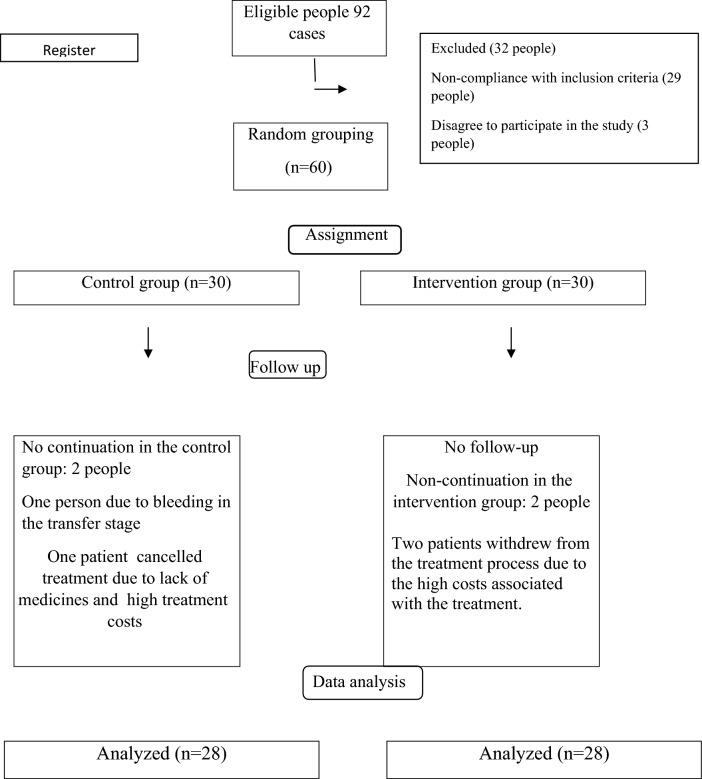
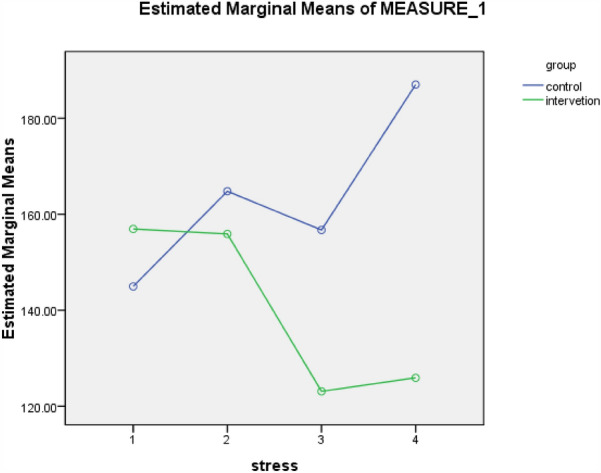
Infertility has been recognized as a distressing experience among couples worldwide, cutting across various cultures. This present study was conducted to assess the impact of a supportive stress management program led by an infertility coach for women undergoing fertility treatment. This randomized controlled clinical trial study was performed on 60 infertile women undergoing assisted reproductive techniques at Maryam Infertility Center located in Sari in 2018. After random allocation in two groups, 30 individuals were in the intervention group and 30 in the control group. The intervention program was implemented according to the infertility coach's counseling protocol in six stages. The control group received only routine ward counseling. In order to measure stress, the Newton Infertility Stress Questionnaire was used firstly before intervention and then after oocyte puncture, embryo transfer, and pregnancy testing. Data analysis was performed using SPSS statistical software version 18 and Shapiro-Wilk, Chi-square, Mann-Whitney, independent t-test, Friedman test, Wilcoxon test, GEE test, and Cohen's effect size. Our analysis approach has also been based on the analysis of (ITT). The significance level was 0.05. The mean ± SD scores of infertility perceived stress before the intervention in the control was 146.16 ± 16.90 and the intervention group was 156.53 ± 9.31, after intervention at the time of oocyte puncture in the controls was 165.36 ± 8.98 and the intervention group was 155.83 ± 10.70, at the day of embryo transfer in the control group was 156.35 ± 14.45 and in the intervention group was 123.58 ± 22.9 and in the pregnancy test day in the control group was 185.76 ± 26.56 and in the intervention group was 127.61 ± 21.57 (P < 0.001). According to Friedman test, the mean of stress in three situations after the intervention showed a significant difference in reduction of the mean of stress (P < 0.001). In the control group, the stress score of the samples had an increasing trend, which was significant during the measurement steps based on Friedman test results (P < 0.001). In the intervention group, paired t-test results showed no significant comparing mean score of Newton's infertility stress before and after oocyte puncture day (P = 0.711), comparing the mean of stress before and after pregnancy test day (P = 0.003) and also comparing of mean stress before and after pregnancy on the day of embryo transfer according to Wilcoxon test (P < 0.001). And comparing mean stress before and after pregnancy test day, paired t-test (P = 0.001) showed significant statistical differences. According to the results of the GEE test, changes in stress scores over time were significant between the two groups (P < 0.001), as well as the effect of stress on oocyte puncture day (0.41), embryo transfer day (1.69), pregnancy test day (P < 0.001) (2.46) had a significant effect on the day of embryo transfer and pregnancy test day. Based on the results of this study, the infertility coach program demonstrated the ability to decrease the perceived stress related to infertility. Additionally, it showed potential in enhancing treatment outcomes, such as oocyte count and positive pregnancy results, among infertile women undergoing assisted reproductive techniques.Trial registration: Iranian Registry for Clinical Trial (the link to trial: https://www.irct.ir/trial/33357 ). Registered 11-11-2018.
不孕不育被认为是全球范围内夫妇的一种痛苦经历,跨越了各种文化。本研究旨在评估由不孕教练主导的支持性压力管理方案对接受生育治疗的女性的影响。这是一项在 2018 年于玛丽安不孕中心(位于伊朗的萨里)进行的随机对照临床试验研究,共有 60 名接受辅助生殖技术的不孕女性参与。随机分为两组后,其中 30 人在干预组,30 人在对照组。干预方案根据不孕教练的咨询方案分六个阶段实施。对照组仅接受常规病房咨询。为了测量压力,我们首先使用牛顿不孕压力问卷(Newton Infertility Stress Questionnaire)进行测量,分别在干预前、取卵后、胚胎移植后和妊娠测试时进行测量。数据分析使用 SPSS 统计软件版本 18 以及 Shapiro-Wilk、卡方检验、Mann-Whitney、独立 t 检验、Friedman 检验、Wilcoxon 检验、广义估计方程(GEE)检验和 Cohen's 效应大小进行。我们的分析方法还基于意向性治疗(ITT)分析。显著性水平为 0.05。对照组干预前的不孕感知压力的平均 ± 标准差分数为 146.16 ± 16.90,干预组为 156.53 ± 9.31,取卵时对照组为 165.36 ± 8.98,干预组为 155.83 ± 10.70,胚胎移植日对照组为 156.35 ± 14.45,干预组为 123.58 ± 22.9,妊娠测试日对照组为 185.76 ± 26.56,干预组为 127.61 ± 21.57(P < 0.001)。根据 Friedman 检验,干预后三种情况的压力平均值显示压力平均值显著降低(P < 0.001)。对照组样本的压力评分呈上升趋势,根据 Friedman 检验结果,在测量步骤中具有显著意义(P < 0.001)。在干预组中,配对 t 检验结果显示取卵日前后牛顿不孕压力的平均评分无显著差异(P = 0.711),妊娠测试日前后的平均评分无显著差异(P = 0.003),胚胎移植日前后的平均评分也无显著差异(P < 0.001),根据 Wilcoxon 检验。而且,妊娠测试日前后的平均压力比较,配对 t 检验(P = 0.001)显示具有显著统计学差异。根据 GEE 检验的结果,两组之间的压力评分随时间的变化有显著差异(P < 0.001),并且压力对取卵日(0.41)、胚胎移植日(1.69)、妊娠测试日(P < 0.001)(2.46)的影响在胚胎移植日和妊娠测试日也具有显著影响。根据本研究的结果,不孕教练方案显示出降低与不孕相关的感知压力的能力。此外,它还显示出增强不孕女性接受辅助生殖技术治疗的卵子计数和阳性妊娠结果等治疗结果的潜力。试验注册:伊朗临床试验注册中心(链接到试验:https://www.irct.ir/trial/33357)。注册于 2018 年 11 月 11 日。