Department of Thyroid and Neck, Affiliated Cancer Hospital of Zhengzhou University, Henan Cancer Hospital, Zhengzhou, China.
Front Immunol. 2023 Aug 22;14:1229397. doi: 10.3389/fimmu.2023.1229397. eCollection 2023.
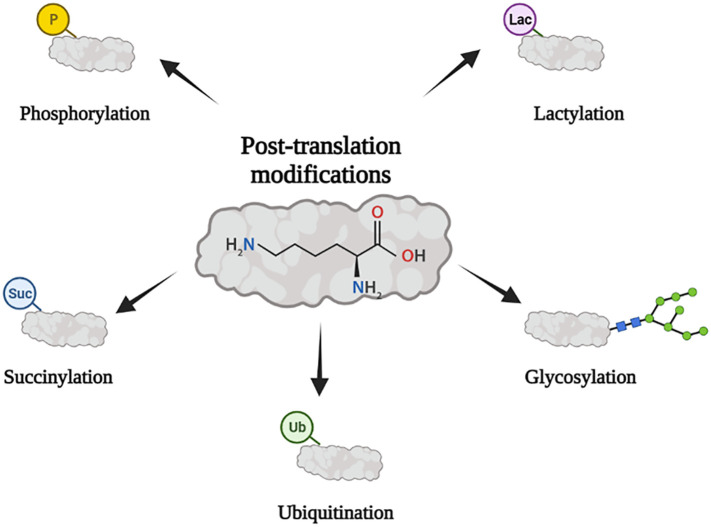
Protein post-translational modification (PTM) is a regulatory mechanism for protein activity modulation, localization, expression, and interactions with other cellular molecules. It involves the addition or removal of specific chemical groups on the amino acid residues of proteins. Its common forms include phosphorylation, ubiquitylation, methylation, and acetylation. Emerging research has highlighted lactylation, succinylation, and glycosylation. PTMs are involved in vital biological processes. The occurrence and development of diseases depends on protein abundance and is regulated by various PTMs. In addition, advancements in tumor immunotherapy have revealed that protein PTM is also involved in the proliferation, activation, and metabolic reprogramming of immune cells in tumor microenvironment. These PTMs play an important role in tumor immunotherapy. In this review, we comprehensively summarize the role of several types of PTMs in tumor immunotherapy. This review could provide new insights and future research directions for tumor immunotherapy.
蛋白质翻译后修饰(PTM)是一种调节蛋白质活性、定位、表达和与其他细胞分子相互作用的机制。它涉及在蛋白质的氨基酸残基上添加或去除特定的化学基团。其常见形式包括磷酸化、泛素化、甲基化和乙酰化。新兴的研究还强调了乳酰化、琥珀酰化和糖基化。PTMs 参与了重要的生物过程。疾病的发生和发展取决于蛋白质的丰度,并受各种 PTMs 的调节。此外,肿瘤免疫治疗的进展表明,蛋白质 PTM 也参与了肿瘤微环境中免疫细胞的增殖、激活和代谢重编程。这些 PTMs 在肿瘤免疫治疗中起着重要作用。在这篇综述中,我们全面总结了几种 PTM 在肿瘤免疫治疗中的作用。这篇综述可能为肿瘤免疫治疗提供新的见解和未来的研究方向。