State Key Laboratory of Resource Insects, Institute of Apicultural Research, Chinese Academy of Agricultural Science, Beijing, China.
Shanghai Suosheng Biotechnology Co., Ltd, Shanghai, 201700, China.
Nat Commun. 2023 Sep 7;14(1):5499. doi: 10.1038/s41467-023-41198-6.
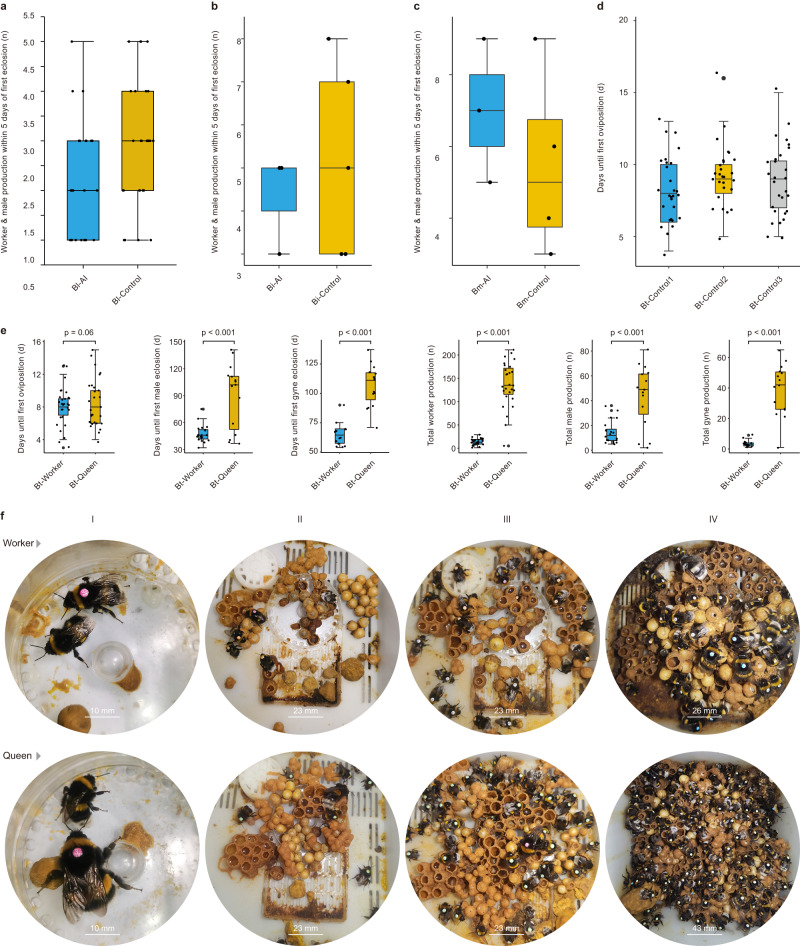
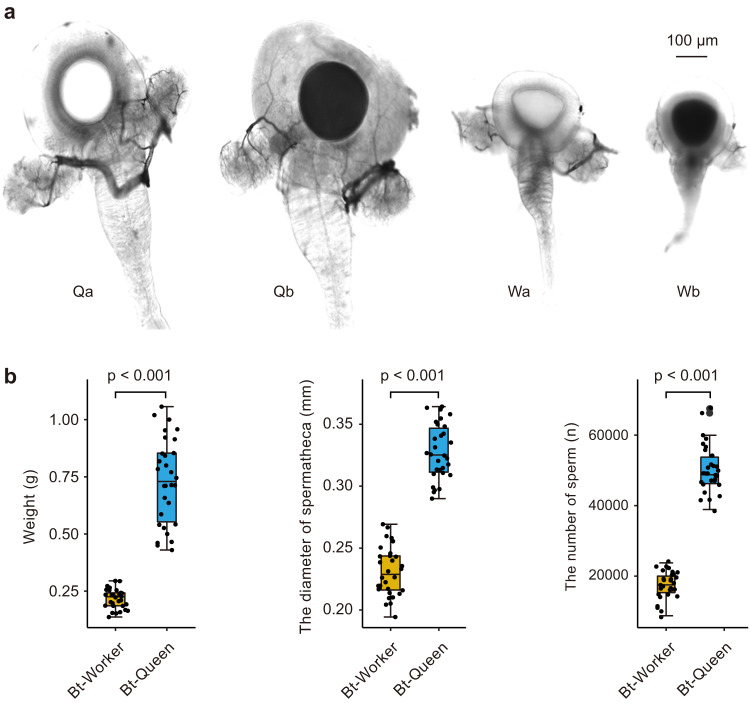
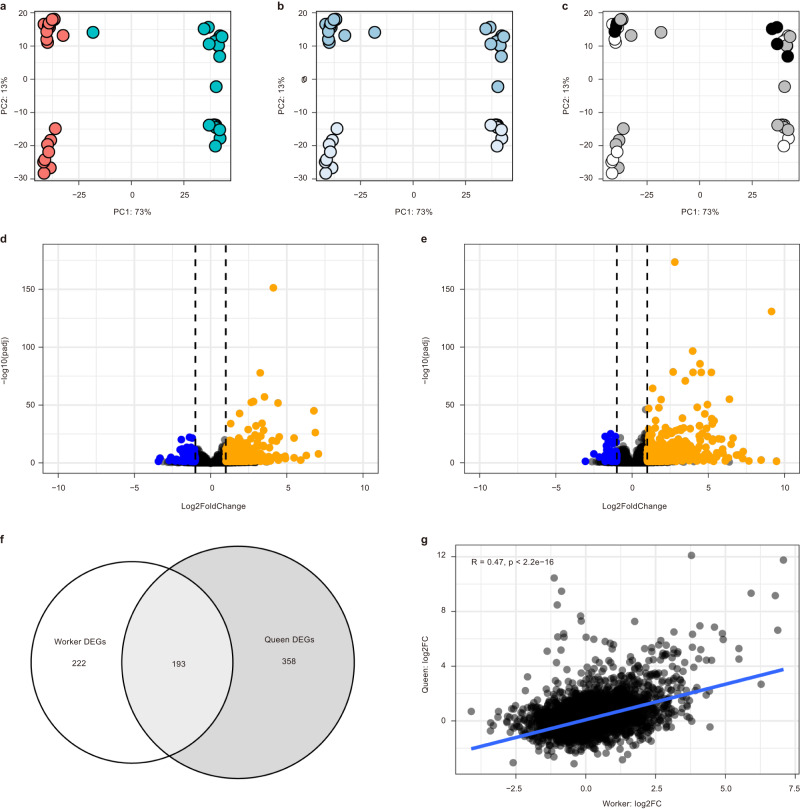
The emergence of caste-differentiated colonies, which have been defined as 'superorganisms', in ants, bees, and wasps represents a major transition in evolution. Lifetime mating commitment by queens, pre-imaginal caste determination and lifetime unmatedness of workers are key features of these animal societies. Workers in superorganismal species like honey bees and many ants have consequently lost, or retain only vestigial spermathecal structures. However, bumble bee workers retain complete spermathecae despite 25-40 million years since their origin of superorganismality, which remains an evolutionary mystery. Here, we show (i) that bumble bee workers retain queen-like reproductive traits, being able to mate and produce colonies, underlain by queen-like gene expression, (ii) the social conditions required for worker mating, and (iii) that these abilities may be selected for by early queen-loss in these annual species. These results challenge the idea of lifetime worker unmatedness in superorganisms, and provide an exciting new tool for the conservation of endangered bumble bee species.
在蚂蚁、蜜蜂和胡蜂中出现的等级分化群体,被定义为“超级生物体”,代表了进化中的一个主要转折点。女王的终身交配承诺、预蛹期的等级决定以及工蜂终身的未交配状态是这些动物社会的关键特征。像蜜蜂和许多蚂蚁这样的超级生物体中的工蜂因此失去了,或者仅保留了退化的受精囊结构。然而,尽管熊蜂起源于超级生物体已经有 2500 万到 4000 万年了,但它们仍然保留着完整的受精囊,这仍然是一个进化之谜。在这里,我们表明(i)熊蜂工蜂保留了类似女王的生殖特征,能够交配并产生殖民地,这是由类似女王的基因表达所支持的,(ii)工蜂交配所需的社会条件,以及(iii)这些能力可能是这些一年生物种中早期女王缺失所选择的。这些结果挑战了超级生物体中工蜂终身未交配的观点,并为保护濒危的熊蜂物种提供了一个令人兴奋的新工具。