Zhao Hongying, Jiang Rongke, Zhang Chunmei, Feng Zhijing, Wang Xue
Department of Oncology, Xuzhou City Cancer Hospital, Xuzhou Third People's Hospital, Xuzhou Hospital Affiliated to Jiangsu University, Xuzhou, 221000, PR China.
Jiangsu University, Zhenjiang, 212013, PR China.
NPJ Precis Oncol. 2023 Sep 7;7(1):86. doi: 10.1038/s41698-023-00436-2.
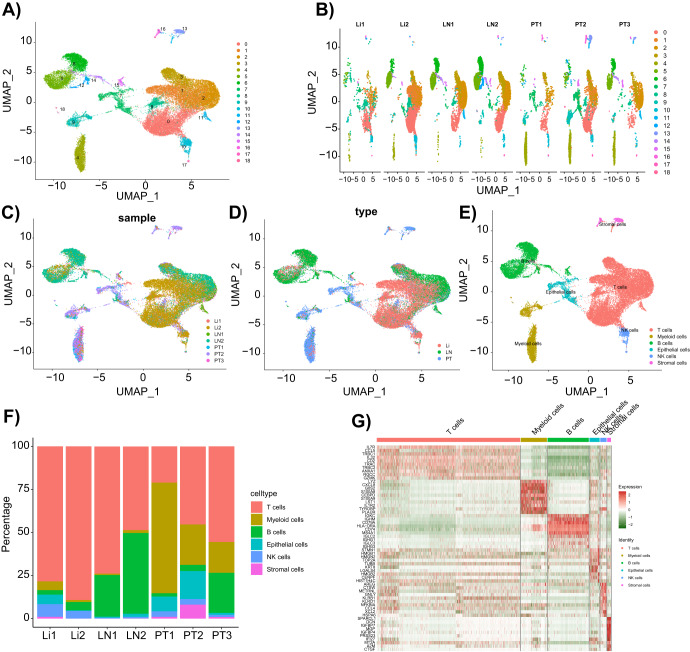
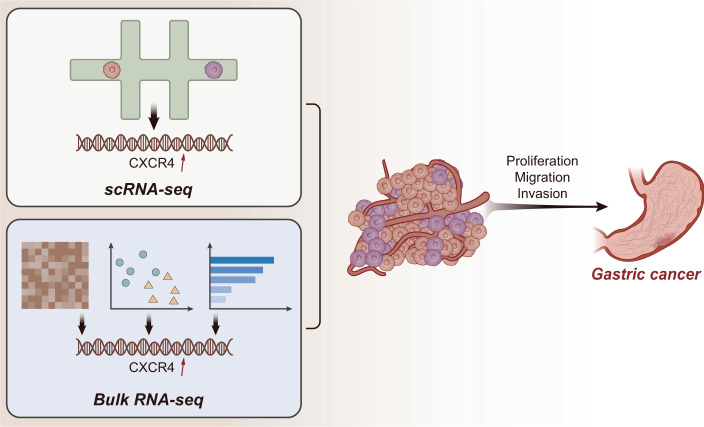
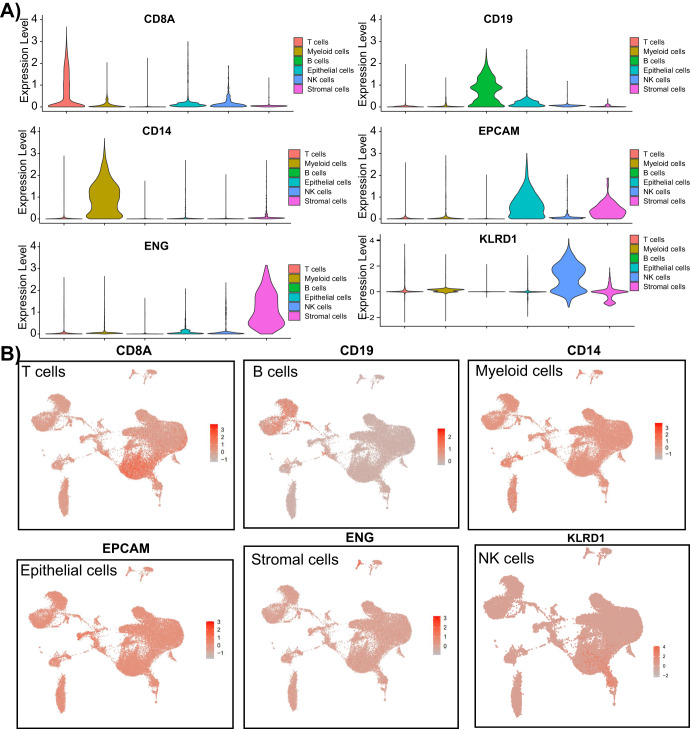
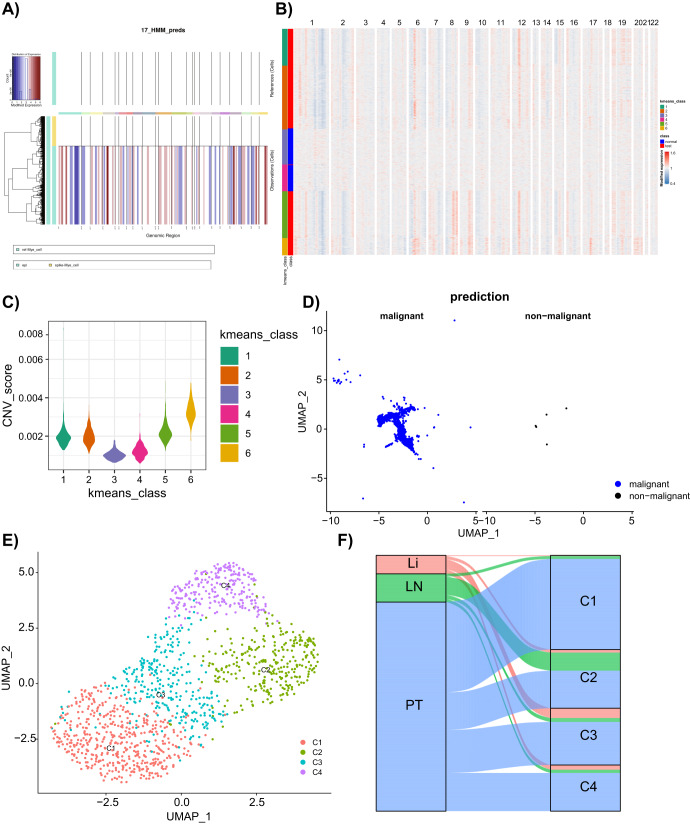
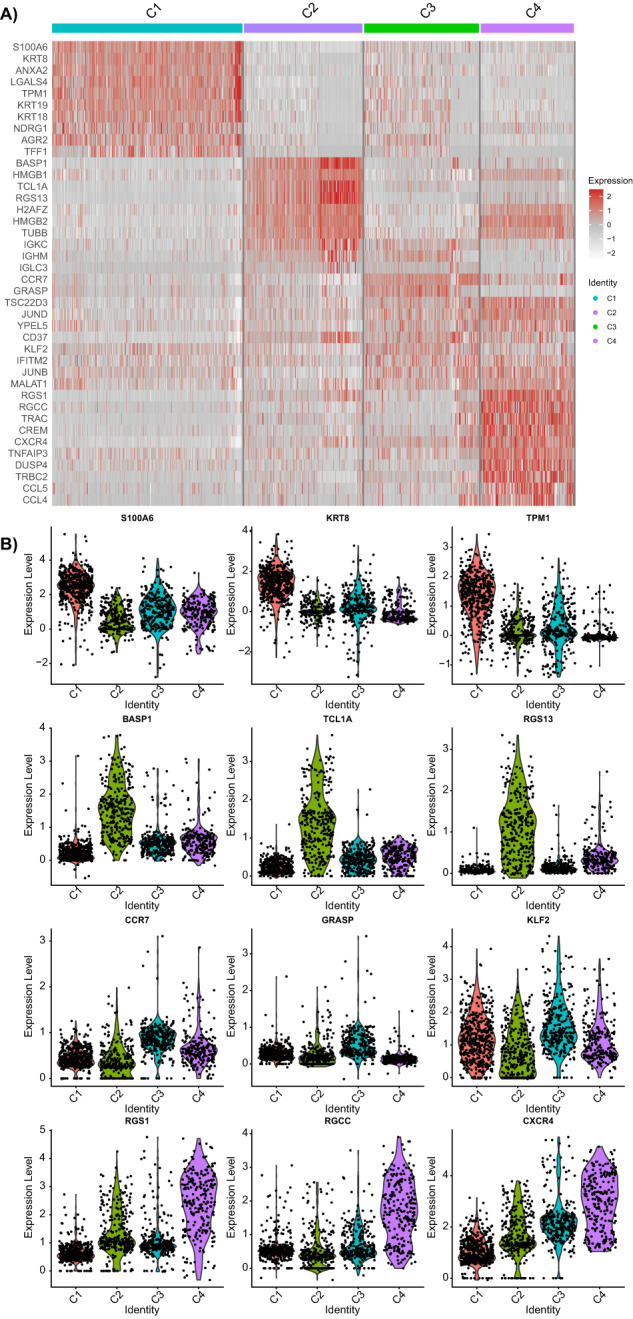
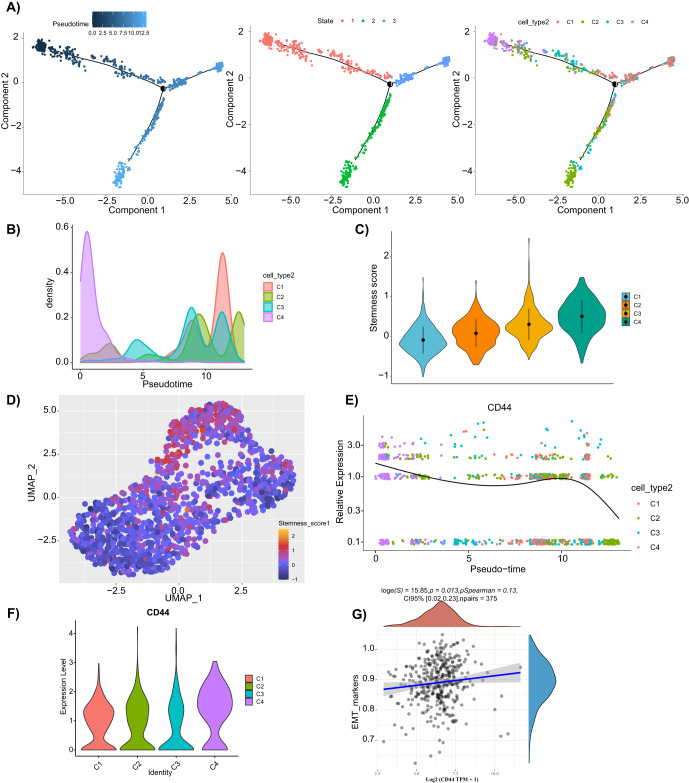
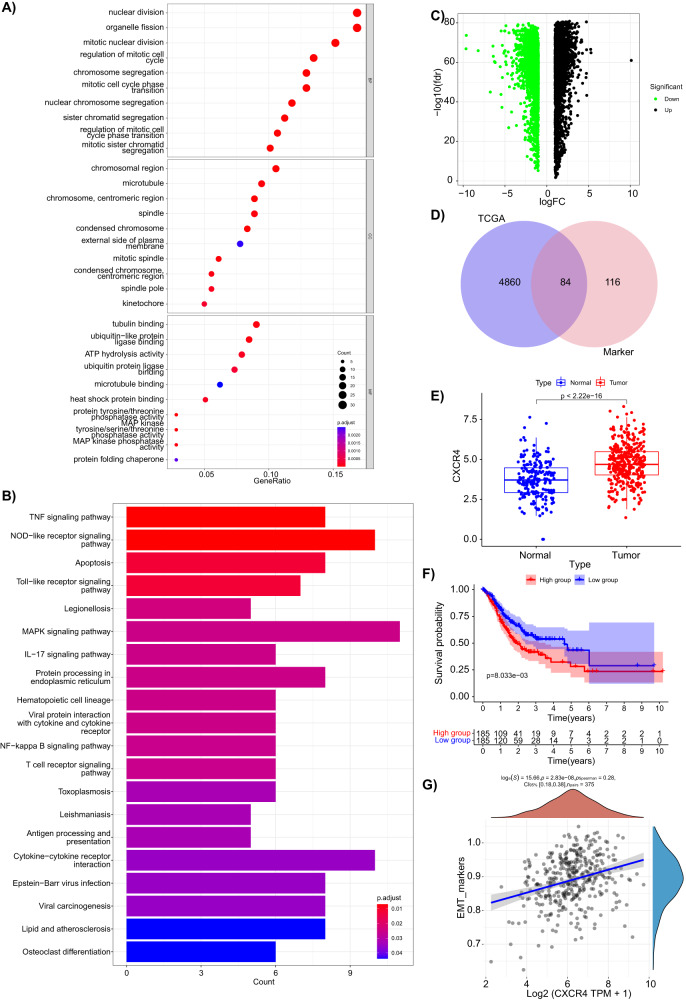
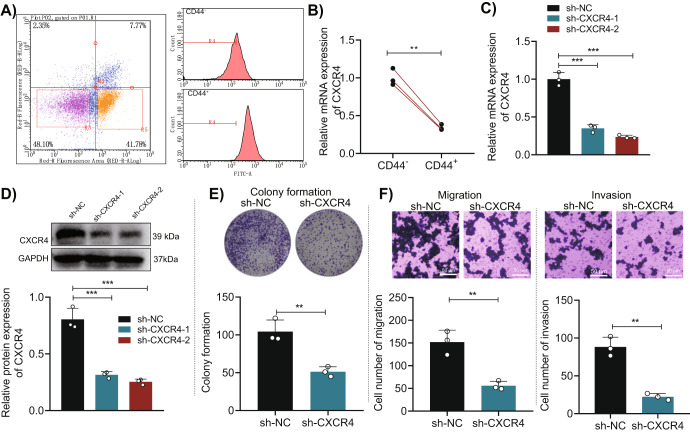
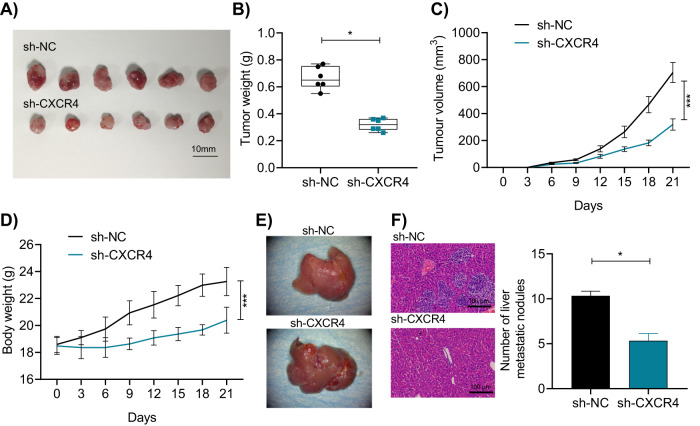
Single-cell RNA sequencing (scRNA-seq) and bulk RNA sequencing (bulk RNA-seq) are increasingly used for screening genes involved in carcinogenesis due to their capacity for dissecting cellular heterogeneity. This study aims to reveal the molecular mechanism of the cancer stem cells (CSCs) marker gene CXCR4 in gastric cancer (GC) growth and metastasis through scRNA-seq combined with bulk RNA-seq. GC-related scRNA-seq data were downloaded from the GEO database, followed by UMAP cluster analysis. Non-malignant cells were excluded by the K-means algorithm. Bulk RNA-seq data and clinical sample information were downloaded from the UCSC Xena database. GO and KEGG pathway analyses validated the correlation between genes and pathways. In vitro and in vivo functional assays were used to examine the effect of perturbed CXCR4 on malignant phenotypes, tumorigenesis, and liver metastasis. A large number of highly variable genes were identified in GC tissue samples. The top 20 principal components were selected, and the cells were clustered into 6 cell types. The C4 cell cluster from malignant epithelial cells might be CSCs. CXCR4 was singled out as a marker gene of CSCs. GC patients with high CXCR4 expression had poor survival. Knockdown of CXCR4 inhibited the malignant phenotypes of CSCs in vitro and curtailed tumorigenesis and liver metastasis in nude mice. CSC marker gene CXCR4 may be a key gene facilitating malignant phenotypes of CSCs, which thus promotes tumor growth and liver metastasis of GC.
单细胞RNA测序(scRNA-seq)和批量RNA测序(bulk RNA-seq)因其剖析细胞异质性的能力,越来越多地用于筛选参与致癌作用的基因。本研究旨在通过scRNA-seq结合bulk RNA-seq揭示癌症干细胞(CSCs)标志物基因CXCR4在胃癌(GC)生长和转移中的分子机制。从GEO数据库下载GC相关的scRNA-seq数据,随后进行UMAP聚类分析。通过K-means算法排除非恶性细胞。从UCSC Xena数据库下载bulk RNA-seq数据和临床样本信息。GO和KEGG通路分析验证了基因与通路之间的相关性。采用体外和体内功能试验来检测CXCR4扰动对恶性表型、肿瘤发生和肝转移的影响。在GC组织样本中鉴定出大量高变基因。选择前20个主成分,将细胞聚类为6种细胞类型。来自恶性上皮细胞的C4细胞簇可能是CSCs。CXCR4被挑选为CSCs的标志物基因。CXCR4高表达的GC患者生存较差。敲低CXCR4可在体外抑制CSCs的恶性表型,并减少裸鼠的肿瘤发生和肝转移。CSC标志物基因CXCR4可能是促进CSCs恶性表型的关键基因,从而促进GC的肿瘤生长和肝转移。