• 文献检索
  • 文档翻译
  • 深度研究
  • 学术资讯
  • Suppr Zotero 插件Zotero 插件
  • 邀请有礼
  • 套餐&价格
  • 历史记录
应用&插件
Suppr Zotero 插件Zotero 插件浏览器插件Mac 客户端Windows 客户端微信小程序
定价
高级版会员购买积分包购买API积分包
服务
文献检索文档翻译深度研究API 文档MCP 服务
关于我们
关于 Suppr公司介绍联系我们用户协议隐私条款
关注我们

Suppr 超能文献

核心技术专利:CN118964589B侵权必究
粤ICP备2023148730 号-1Suppr @ 2026

文献检索

告别复杂PubMed语法,用中文像聊天一样搜索,搜遍4000万医学文献。AI智能推荐,让科研检索更轻松。

立即免费搜索

文件翻译

保留排版,准确专业,支持PDF/Word/PPT等文件格式,支持 12+语言互译。

免费翻译文档

深度研究

AI帮你快速写综述,25分钟生成高质量综述,智能提取关键信息,辅助科研写作。

立即免费体验

中国云南布朗族药用植物的民族植物学研究。

Ethnobotanical study on medicinal plants used by Bulang people in Yunnan, China.

机构信息

School of Geography and Ecotourism, Southwest Forestry University, Kunming, 650224, Yunnan, China.

Center for Integrative Conservation, Xishuangbanna Tropical Botanical Garden, Chinese Academy of Sciences, Menglun, 666303, Yunnan, China.

出版信息

J Ethnobiol Ethnomed. 2023 Sep 7;19(1):38. doi: 10.1186/s13002-023-00609-0.

DOI:10.1186/s13002-023-00609-0
PMID:37679773
原文链接:https://pmc.ncbi.nlm.nih.gov/articles/PMC10486041/
Abstract

BACKGROUND

Despite the popularity of modern medicine, medicinal plants remain a cornerstone of treatment for numerous diseases, particularly among ethnic groups and tribal communities around the globe. Ethnomedicine offers advantages such as ease of use, convenience, and economic benefits. Medicinal plant knowledge within Bulang ethnic community of southwest China is a valuable complement to Chinese ethnomedicine systems. Accumulated medical knowledge is due to the extensive length of occupation by Bulang People, considered the earliest inhabitants of Xishuangbanna; this has resulted in the development of various traditional treatment methods with local characteristics and unique curative effects. Therefore, there is exceeding value in exploring the medical knowledge of Bulang.

METHODS

A total of 175 local informants participated in the interviews and distribution of questionnaires in 10 Bulang villages in Menghai County, Xishuangbanna Prefecture, Yunnan Province, China. We documented the community of Bulang's use of medicinal herbs, and we used both the informant consensus factor (ICF) and use value (UV) methodologies to analyze the data. Furthermore, we conducted a comparative study to explore the potential of Bulang traditional medicine by comparing it to traditional Dai medicine.

RESULTS

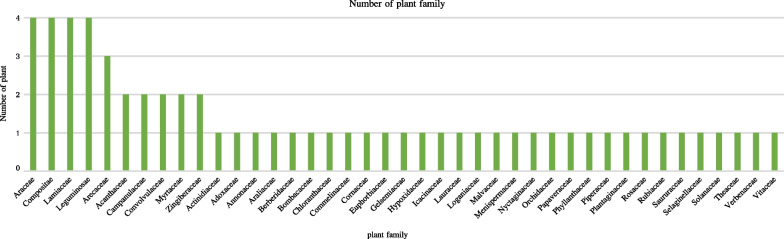
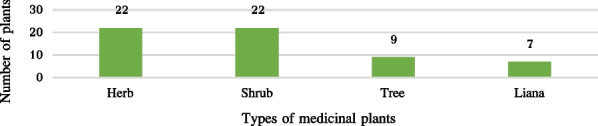
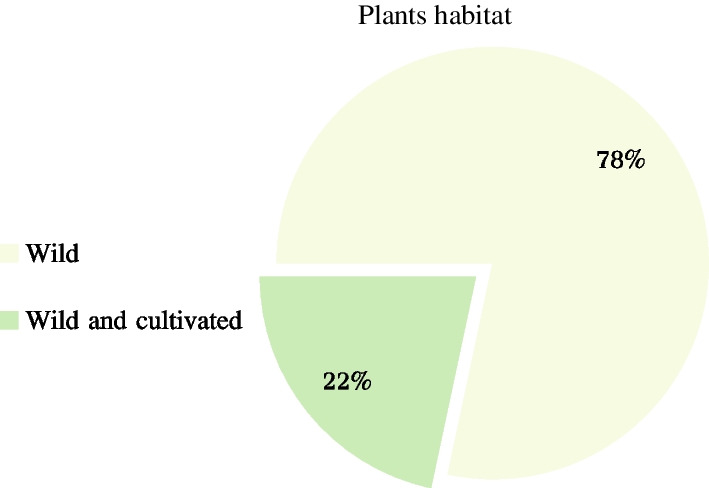
The study recorded 60 medicinal plant species belonging to 41 families and 59 genera, including 22 species of herb, 22 species of shrub, nine species of trees, and seven species of liana. Araceae, Compositae, Lamiaceae and Leguminosae were found to have the highest number of species. The affordability and cultural heritage of Bulang medicine make it advantageous, Investigated Informants report that increased usage of Western medicine (88%), less availability of herbal medicine (95.43%), and the reduction in medicinal plant resources (80.57%) pose significant threats to Bulang medicine. All Bulang medicinal plants are naturally grown, with only 22 per cent being cultivated. Camellia sinensis (0.94) and Zingiber officinale (0.89) showed the highest UV values, while the function of Phyllanthus emblica L. and Houttuynia cordata Thunb. were also noted. The ICF revealed digestive system related diseases were the most commonly treated, with conditions of the motor system using the highest number of plant species. Finally, a comparison with traditional Dai medicine determined that 22 plants (36.67%) of the 60 surveyed had higher medicinal value in Bulang medicine.

CONCLUSION

Bulang communities primarily source medicinal plants from the wild. Should environmental damage lead to the extinction of these medicinal plants, it could result in a shift toward modern Western medicine as a preferred medical treatment. Bulang ethnomedicine is a vital supplement to China's traditional medicine, particularly aspects of ethnic medicine relevant to daily life. Future research should emphasize inter-ethnic medical studies to reveal the untapped potential of medicinal plants.

摘要

背景

尽管现代医学盛行,药用植物仍然是全球许多疾病治疗的基石,尤其是在各民族和部落社区中。民族医学具有易用、方便和经济实惠等优点。中国西南布朗族社区的药用植物知识是中国民族医学体系的宝贵补充。布朗族作为西双版纳最早的居民,其长期的职业积累了丰富的医疗知识,形成了具有地方特色和独特疗效的各种传统治疗方法。因此,探索布朗族的医学知识具有极高的价值。

方法

在云南省西双版纳傣族自治州勐海县的 10 个布朗族村落,共有 175 名当地知情者参与了访谈和问卷调查。我们记录了布朗族社区使用药用植物的情况,并采用 informant consensus factor (ICF) 和 use value (UV) 方法分析数据。此外,我们还进行了一项比较研究,通过与传统傣族医学进行比较,探讨了布朗族传统医学的潜力。

结果

该研究记录了 60 种药用植物,隶属于 41 科 59 属,包括 22 种草本植物、22 种灌木、9 种乔木和 7 种藤本植物。天南星科、菊科、唇形科和豆科植物的物种数最多。布朗族药物具有可负担性和文化遗产优势。调查知情者报告,西医使用率增加(88%)、草药可及性降低(95.43%)和药用植物资源减少(80.57%)对布朗族药物构成了重大威胁。所有布朗族药用植物均为天然生长,仅有 22%为人工栽培。茶树(0.94)和生姜(0.89)的 UV 值最高,而余甘子和鱼腥草的功能也受到关注。ICF 显示,消化系统相关疾病是最常治疗的疾病,运动系统疾病使用的植物种类最多。最后,与传统傣族医学的比较确定,在所调查的 60 种植物中,有 22 种(36.67%)在布朗族药物中具有更高的药用价值。

结论

布朗族社区主要从野外获取药用植物。如果环境破坏导致这些药用植物灭绝,可能会导致人们转而更倾向于使用现代西医作为首选医疗手段。布朗族民族医学是中国传统医学的重要补充,特别是与日常生活相关的民族医学方面。未来的研究应强调民族间医学研究,以揭示药用植物的未开发潜力。
https://cdn.ncbi.nlm.nih.gov/pmc/blobs/2b2c/10486041/ef32116539ea/13002_2023_609_Fig11_HTML.jpg
https://cdn.ncbi.nlm.nih.gov/pmc/blobs/2b2c/10486041/4d92bf80c5ca/13002_2023_609_Fig1_HTML.jpg
https://cdn.ncbi.nlm.nih.gov/pmc/blobs/2b2c/10486041/a3533e2663ba/13002_2023_609_Fig2_HTML.jpg
https://cdn.ncbi.nlm.nih.gov/pmc/blobs/2b2c/10486041/9c274e9fe1ff/13002_2023_609_Fig3_HTML.jpg
https://cdn.ncbi.nlm.nih.gov/pmc/blobs/2b2c/10486041/deef64da8249/13002_2023_609_Fig4_HTML.jpg
https://cdn.ncbi.nlm.nih.gov/pmc/blobs/2b2c/10486041/f443b00bf6f9/13002_2023_609_Fig5_HTML.jpg
https://cdn.ncbi.nlm.nih.gov/pmc/blobs/2b2c/10486041/7981834ff87f/13002_2023_609_Fig6_HTML.jpg
https://cdn.ncbi.nlm.nih.gov/pmc/blobs/2b2c/10486041/a2f6edcc2db0/13002_2023_609_Fig7_HTML.jpg
https://cdn.ncbi.nlm.nih.gov/pmc/blobs/2b2c/10486041/997a75edf3a2/13002_2023_609_Fig8_HTML.jpg
https://cdn.ncbi.nlm.nih.gov/pmc/blobs/2b2c/10486041/2812e753aa6b/13002_2023_609_Fig9_HTML.jpg
https://cdn.ncbi.nlm.nih.gov/pmc/blobs/2b2c/10486041/b0a04af180a5/13002_2023_609_Fig10_HTML.jpg
https://cdn.ncbi.nlm.nih.gov/pmc/blobs/2b2c/10486041/ef32116539ea/13002_2023_609_Fig11_HTML.jpg
https://cdn.ncbi.nlm.nih.gov/pmc/blobs/2b2c/10486041/4d92bf80c5ca/13002_2023_609_Fig1_HTML.jpg
https://cdn.ncbi.nlm.nih.gov/pmc/blobs/2b2c/10486041/a3533e2663ba/13002_2023_609_Fig2_HTML.jpg
https://cdn.ncbi.nlm.nih.gov/pmc/blobs/2b2c/10486041/9c274e9fe1ff/13002_2023_609_Fig3_HTML.jpg
https://cdn.ncbi.nlm.nih.gov/pmc/blobs/2b2c/10486041/deef64da8249/13002_2023_609_Fig4_HTML.jpg
https://cdn.ncbi.nlm.nih.gov/pmc/blobs/2b2c/10486041/f443b00bf6f9/13002_2023_609_Fig5_HTML.jpg
https://cdn.ncbi.nlm.nih.gov/pmc/blobs/2b2c/10486041/7981834ff87f/13002_2023_609_Fig6_HTML.jpg
https://cdn.ncbi.nlm.nih.gov/pmc/blobs/2b2c/10486041/a2f6edcc2db0/13002_2023_609_Fig7_HTML.jpg
https://cdn.ncbi.nlm.nih.gov/pmc/blobs/2b2c/10486041/997a75edf3a2/13002_2023_609_Fig8_HTML.jpg
https://cdn.ncbi.nlm.nih.gov/pmc/blobs/2b2c/10486041/2812e753aa6b/13002_2023_609_Fig9_HTML.jpg
https://cdn.ncbi.nlm.nih.gov/pmc/blobs/2b2c/10486041/b0a04af180a5/13002_2023_609_Fig10_HTML.jpg
https://cdn.ncbi.nlm.nih.gov/pmc/blobs/2b2c/10486041/ef32116539ea/13002_2023_609_Fig11_HTML.jpg

相似文献

1
Ethnobotanical study on medicinal plants used by Bulang people in Yunnan, China.中国云南布朗族药用植物的民族植物学研究。
J Ethnobiol Ethnomed. 2023 Sep 7;19(1):38. doi: 10.1186/s13002-023-00609-0.
2
Ethnomedicine study on traditional medicinal plants in the Wuliang Mountains of Jingdong, Yunnan, China.中国云南景东无量山的民族医学对传统药用植物的研究。
J Ethnobiol Ethnomed. 2019 Aug 19;15(1):41. doi: 10.1186/s13002-019-0316-1.
3
Ethnobotanical study of medicinal plants used by the Yi people in Mile, Yunnan, China.中国云南米里彝族药用植物的民族植物学研究。
J Ethnobiol Ethnomed. 2024 Feb 23;20(1):22. doi: 10.1186/s13002-024-00656-1.
4
Ethnobotany of medicinal plants used by the Yao people in Gongcheng County, Guangxi, China.中国广西恭城县瑶族药用植物民族植物学研究。
J Ethnobiol Ethnomed. 2022 Jun 21;18(1):49. doi: 10.1186/s13002-022-00544-6.
5
Monpa, memory, and change: an ethnobotanical study of plant use in Mêdog County, South-east Tibet, China.门巴、记忆与变迁:中国西藏东南部墨脱县植物利用的民族植物学研究。
J Ethnobiol Ethnomed. 2020 Jan 30;16(1):5. doi: 10.1186/s13002-020-0355-7.
6
Diversity and traditional knowledge of medicinal plants used by Shui people in Southwest China.中国西南水族药用植物的多样性和传统知识。
J Ethnobiol Ethnomed. 2023 May 30;19(1):20. doi: 10.1186/s13002-023-00594-4.
7
Ethnobotanical study on medicinal plants used by Mulam people in Guangxi, China.中国广西仫佬族药用植物的民族植物学研究。
J Ethnobiol Ethnomed. 2020 Jul 2;16(1):40. doi: 10.1186/s13002-020-00387-z.
8
Ethnobotanical study of plants used by the Munda ethnic group living around the Sundarbans, the world's largest mangrove forest in southwestern Bangladesh.对生活在世界上最大的红树林——位于孟加拉国西南部的孙德尔本斯地区的孟达人使用的植物进行民族植物学研究。
J Ethnopharmacol. 2022 Mar 1;285:114853. doi: 10.1016/j.jep.2021.114853. Epub 2021 Nov 23.
9
Ethnobiological study on traditional medicinal plants and fungi recorded in the Naxi Dongba sutras.纳西东巴经中记载的传统药用植物和真菌的民族生物学研究。
J Ethnobiol Ethnomed. 2021 Apr 29;17(1):32. doi: 10.1186/s13002-021-00459-8.
10
Inventorization of some ayurvedic plants and their ethnomedicinal use in Kakrajhore forest area of West Bengal.对西孟加拉邦卡卡乔勒森林地区的一些阿育吠陀植物及其民族医学用途进行编目。
J Ethnopharmacol. 2017 Feb 2;197:231-241. doi: 10.1016/j.jep.2016.08.014. Epub 2016 Aug 30.

引用本文的文献

1
Ethnobotanical study of traditional medicinal plants used by the Miao people in Hainan, China.中国海南苗族使用的传统药用植物的民族植物学研究。
J Ethnobiol Ethnomed. 2025 Jun 16;21(1):43. doi: 10.1186/s13002-025-00795-z.
2
Traditionally used phytomedicines and their associated threats in Bita district, southwestern Ethiopia.埃塞俄比亚西南部比塔地区传统使用的植物药及其相关威胁。
J Ethnobiol Ethnomed. 2025 Feb 18;21(1):8. doi: 10.1186/s13002-025-00753-9.
3
Ethnobotanical study of medicinal plants and their threats in Yeki district, Southwestern Ethiopia.

本文引用的文献

1
An ethnobotanical study on medicinal plants of Shexian Dryland Stone Terraced System in northern China.中国北方涉县旱作石堰梯田药用植物的民族植物学研究。
J Ethnobiol Ethnomed. 2022 Oct 14;18(1):62. doi: 10.1186/s13002-022-00560-6.
2
Ethnobotany of traditional medicinal plants and associated indigenous knowledge in Dawuro Zone of Southwestern Ethiopia.埃塞俄比亚西南部达乌罗地区传统药用植物的民族植物学及相关本土知识。
J Ethnobiol Ethnomed. 2022 Jun 21;18(1):48. doi: 10.1186/s13002-022-00546-4.
3
Chemical constituents and biological properties of Pu-erh tea.
埃塞俄比亚西南部耶基地区药用植物的民族植物学研究及其面临的威胁
J Ethnobiol Ethnomed. 2024 Dec 21;20(1):107. doi: 10.1186/s13002-024-00748-y.
4
Traditionally used medicinal plants for human ailments and their threats in Guraferda District, Benchi-Sheko zone, Southwest Ethiopia.传统上用于治疗人类疾病的药用植物及其在埃塞俄比亚西南部本齐-谢科地区古拉费尔达区的威胁。
J Ethnobiol Ethnomed. 2024 Sep 2;20(1):82. doi: 10.1186/s13002-024-00709-5.
5
Ethnobotanical study of medicinal plants used by the Yi people in Mile, Yunnan, China.中国云南米里彝族药用植物的民族植物学研究。
J Ethnobiol Ethnomed. 2024 Feb 23;20(1):22. doi: 10.1186/s13002-024-00656-1.
6
Study on medicinal food plants in the Gaoligongshan Biosphere Reserve, the richest biocultural diversity center in China.中国生物文化多样性最丰富的高黎贡山生物保护区药用植物研究。
J Ethnobiol Ethnomed. 2024 Jan 15;20(1):10. doi: 10.1186/s13002-023-00638-9.
7
Ethnobotanical study of medicinal plants used by the indigenous community of the western region of Mizoram, India.印度米佐拉姆邦西部地区土著社区使用的药用植物民族植物学研究。
J Ethnobiol Ethnomed. 2024 Jan 3;20(1):2. doi: 10.1186/s13002-023-00642-z.
普洱茶的化学成分和生物活性。
Food Res Int. 2022 Apr;154:110899. doi: 10.1016/j.foodres.2021.110899. Epub 2021 Dec 15.
4
Traditional knowledge of edible plants used as flavoring for fish-grilling in Southeast Guizhou, China.中国贵州东南部用于烤鱼调味的食用植物传统知识。
J Ethnobiol Ethnomed. 2022 Mar 18;18(1):19. doi: 10.1186/s13002-022-00519-7.
5
A global review of rubber plantations: Impacts on ecosystem functions, mitigations, future directions, and policies for sustainable cultivation.橡胶种植园的全球综述:对生态系统功能的影响、缓解措施、未来方向以及可持续种植的政策。
Sci Total Environ. 2021 Nov 20;796:148948. doi: 10.1016/j.scitotenv.2021.148948. Epub 2021 Jul 10.
6
Advances in biotechnology of Gaertn. syn. L.: a nutraceuticals-rich fruit tree with multifaceted ethnomedicinal uses.盖尔特恩(Gaertn.)同义词(L.)生物技术进展:一种富含营养保健品且具有多方面民族药用价值的果树。
3 Biotech. 2021 Feb;11(2):62. doi: 10.1007/s13205-020-02615-5. Epub 2021 Jan 11.
7
[Application and analysis of medicinal plant resources of six major ethnic minorities living in Xishuangbanna].[西双版纳世居六大少数民族药用植物资源的应用与分析]
Zhongguo Zhong Yao Za Zhi. 2020 Oct;45(20):5034-5041. doi: 10.19540/j.cnki.cjcmm.20200628.101.
8
Traditional medicine usage among adult women in Ibadan, Nigeria: a cross-sectional study.尼日利亚伊巴丹成年女性使用传统医学的情况:一项横断面研究。
BMC Complement Med Ther. 2020 Mar 20;20(1):93. doi: 10.1186/s12906-020-02881-z.
9
Diversity and use of medicinal plants for soup making in traditional diets of the Hakka in West Fujian, China.中国闽西客家传统饮食中汤料的药用植物多样性及其应用。
J Ethnobiol Ethnomed. 2019 Nov 28;15(1):60. doi: 10.1186/s13002-019-0335-y.
10
Wild edible plants collected by Hani from terraced rice paddy agroecosystem in Honghe Prefecture, Yunnan, China.哈尼族采集于云南红河州梯田稻作生态系统中的野生食用植物。
J Ethnobiol Ethnomed. 2019 Nov 27;15(1):56. doi: 10.1186/s13002-019-0336-x.