School of Clinical Medicine, UNSW Medicine and Health, Discipline of Paediatrics and Child Health, Sydney, Australia.
Behavioral Sciences Unit, Kids Cancer Centre, Sydney Children's Hospital, Randwick, Australia.
Orphanet J Rare Dis. 2023 Sep 7;18(1):277. doi: 10.1186/s13023-023-02859-3.
Childhood dementias are a group of rare and ultra-rare paediatric conditions clinically characterised by enduring global decline in central nervous system function, associated with a progressive loss of developmentally acquired skills, quality of life and shortened life expectancy. Traditional research, service development and advocacy efforts have been fragmented due to a focus on individual disorders, or groups classified by specific mechanisms or molecular pathogenesis. There are significant knowledge and clinician skill gaps regarding the shared psychosocial impacts of childhood dementia conditions. This systematic review integrates the existing international evidence of the collective psychosocial experiences of parents of children living with dementia.
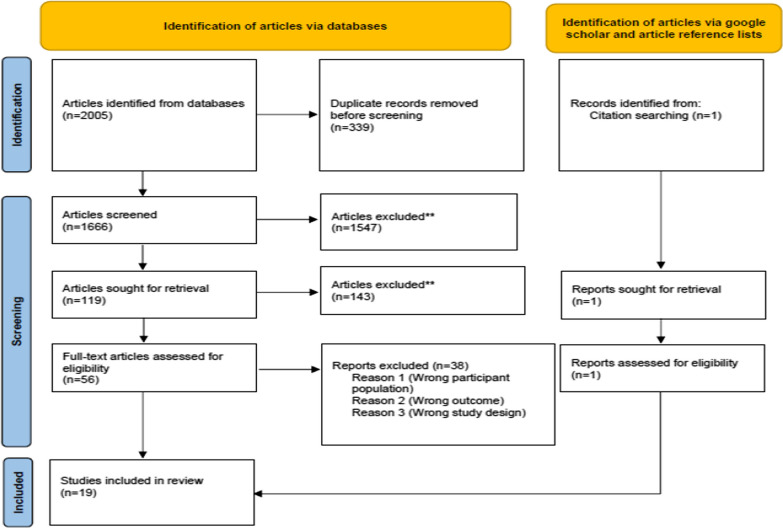
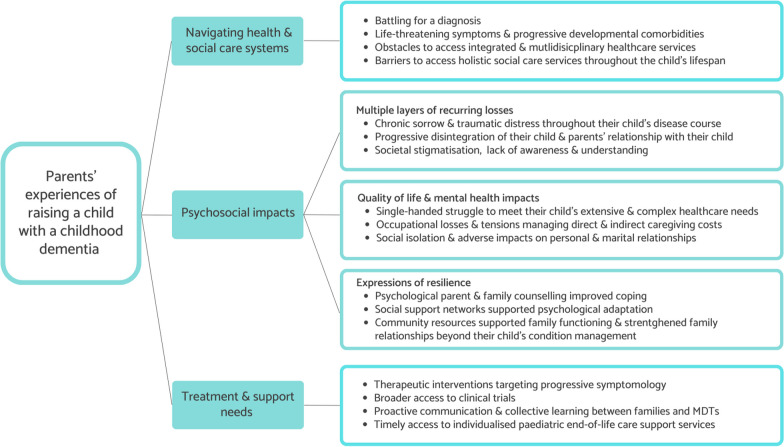
We used the Preferred Reporting Items for Systematic Reviews and Meta-Analyses (PRISMA) guidelines. We systematically searched four databases to identify original, peer-reviewed research reporting on the psychosocial impacts of childhood dementia, from the parent perspective. We synthesised the data into three thematic categories: parents' healthcare experiences, psychosocial impacts, and information and support needs.
Nineteen articles met review criteria, representing 1856 parents. Parents highlighted extensive difficulties connecting with an engaged clinical team and navigating their child's rare, life-limiting, and progressive condition. Psychosocial challenges were manifold and encompassed physical, economic, social, emotional and psychological implications. Access to coordinated healthcare and community-based psychosocial supports was associated with improved parent coping, psychological resilience and reduced psychological isolation. Analysis identified a critical need to prioritize access to integrated family-centred psychosocial supports throughout distinct stages of their child's condition trajectory.
This review will encourage and guide the development of evidence-based and integrated psychosocial resources to optimise quality of life outcomes for of children with dementia and their families.
儿童痴呆症是一组罕见和超罕见的儿科疾病,其临床特征为中枢神经系统功能持久下降,伴有发育获得的技能、生活质量和预期寿命逐渐丧失。由于关注个别疾病,或按特定机制或分子发病机制分类的群体,传统的研究、服务开发和宣传工作已经支离破碎。对于儿童痴呆症的共同社会心理影响,存在着显著的知识和临床医生技能差距。本系统评价综合了现有的国际证据,这些证据涉及父母对患有痴呆症的儿童的集体社会心理体验。
我们使用了系统评价和荟萃分析的首选报告项目 (PRISMA) 指南。我们系统地搜索了四个数据库,以确定从父母角度报告儿童痴呆症的社会心理影响的原始同行评审研究。我们将数据综合成三个主题类别:父母的医疗保健经验、社会心理影响以及信息和支持需求。
19 篇文章符合审查标准,代表了 1856 位父母。父母强调了与积极参与的临床团队联系以及了解孩子罕见、生命有限和进行性疾病的困难。社会心理挑战是多方面的,包括身体、经济、社会、情感和心理方面的影响。获得协调的医疗保健和社区为基础的社会心理支持与改善父母应对能力、心理韧性和减少心理孤立有关。分析确定了一个关键需求,即需要优先考虑在孩子疾病轨迹的不同阶段获得综合的以家庭为中心的社会心理支持。
本综述将鼓励和指导制定基于证据的综合社会心理资源,以优化痴呆症儿童及其家庭的生活质量结果。