The Third People's Hospital of Shenzhen, The Second Affiliated Hospital of Southern University of Science and Technology, Shenzhen, China.
BGI Genomics, BGI Shenzhen, Shenzhen, China.
Front Cell Infect Microbiol. 2023 Aug 22;13:1227537. doi: 10.3389/fcimb.2023.1227537. eCollection 2023.
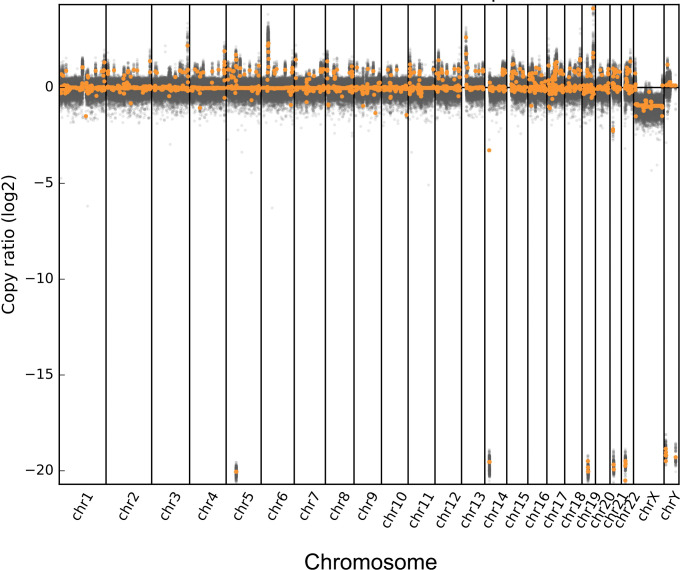
In this report, we describe the first case of infective endocarditis caused by in a 45-year-old male patient who presented with a 10-day fever and decompensated cirrhosis. Despite negative results in blood culture and pathology, we employed metagenomic next-generation sequencing (mNGS) to analyze the genome sequences of both the host and microbe. The copy number variation (CNV) indicated a high risk of liver disease in the patient, which correlated with biochemical examination findings. Notably, sequences were detected in peripheral blood samples and confirmed through Sanger sequencing. Unfortunately, the patient's condition deteriorated, leading to his demise prior to heart surgery. Nevertheless, we propose that mNGS could be a novel approach for diagnosing infection, particularly in cases where blood culture and pathology results are unavailable. It is important to consider infection as a potential cause of endocarditis and initiate appropriate anti-infection treatment.
在本报告中,我们描述了首例由 引起的感染性心内膜炎病例,该患者为 45 岁男性,表现为发热 10 天,且肝硬化失代偿。尽管血培养和病理学结果均为阴性,但我们采用宏基因组下一代测序(mNGS)分析了宿主和微生物的基因组序列。拷贝数变异(CNV)提示患者存在高风险的肝病,与生化检查结果相符合。值得注意的是,在外周血样本中检测到了 序列,并通过 Sanger 测序得到了确认。不幸的是,患者的病情恶化,导致在心脏手术前死亡。然而,我们提出 mNGS 可能是一种诊断 感染的新方法,特别是在血培养和病理学结果不可用的情况下。应考虑 将 感染作为心内膜炎的潜在病因,并启动适当的抗感染治疗。