Jiangsu Province "Sports and Health Project" Collaborative Innovation Center, Nanjing Sport Institute, Nanjing, China.
Department of Sports and Health Sciences, Nanjing, China.
Front Endocrinol (Lausanne). 2023 Aug 21;14:1194364. doi: 10.3389/fendo.2023.1194364. eCollection 2023.
The present study aimed to investigate the effects of blood flow restriction training on muscle strength, bone tissue structure material, and biomechanical properties in rats applying various exercise interventions and to analyze the process by identifying the bone turnover markers, it provides a theoretical basis for the application of BFRT in clinical rehabilitation.
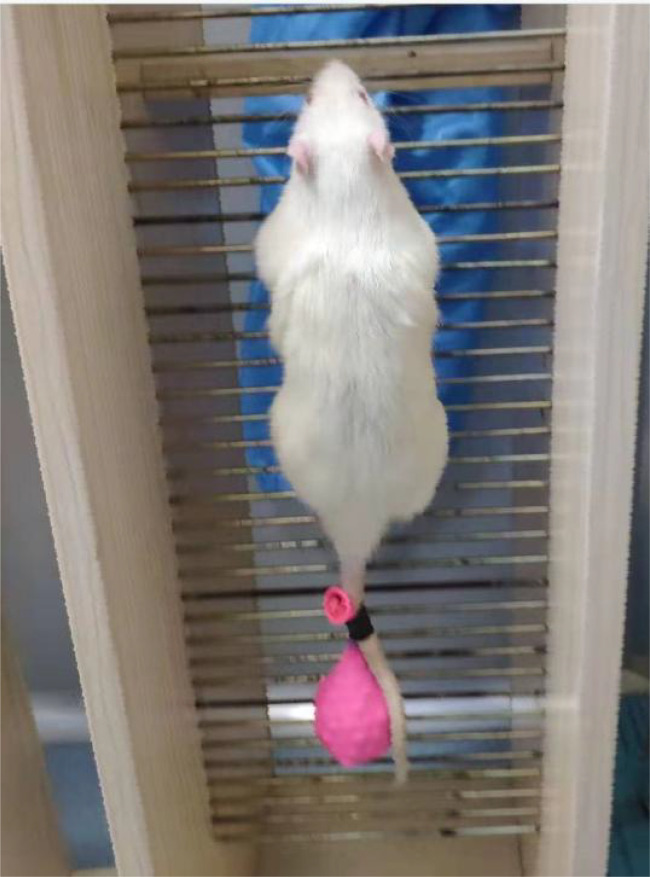
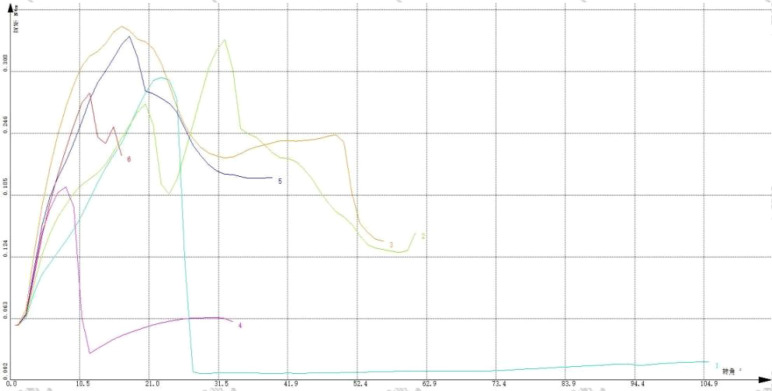
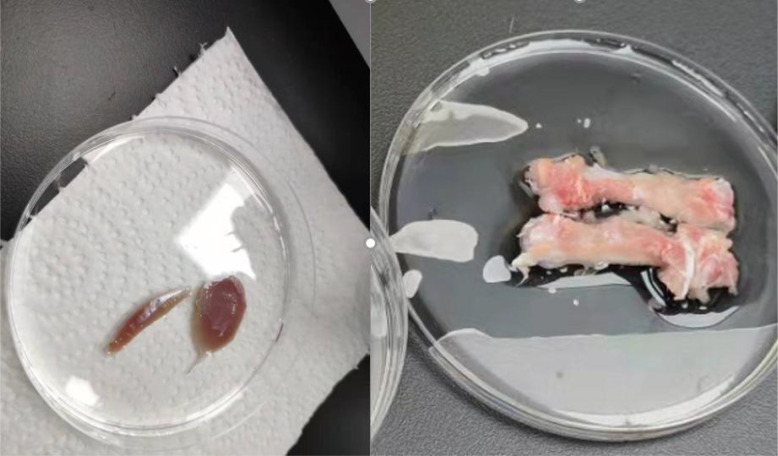
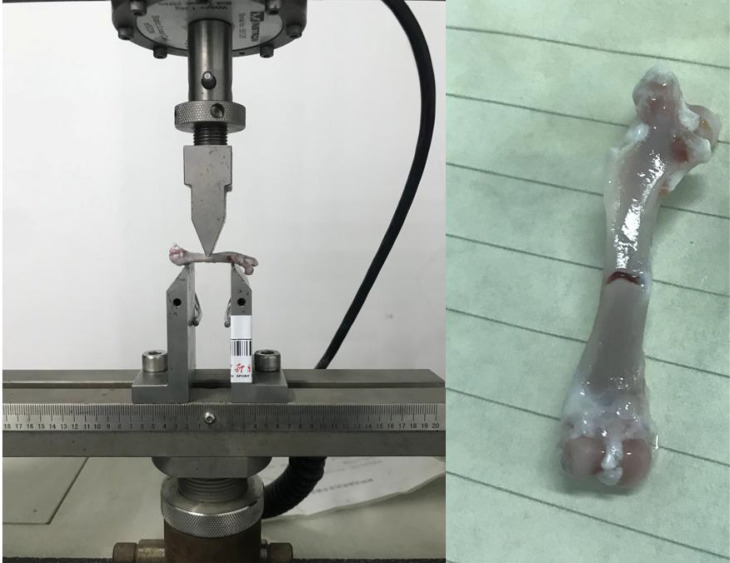
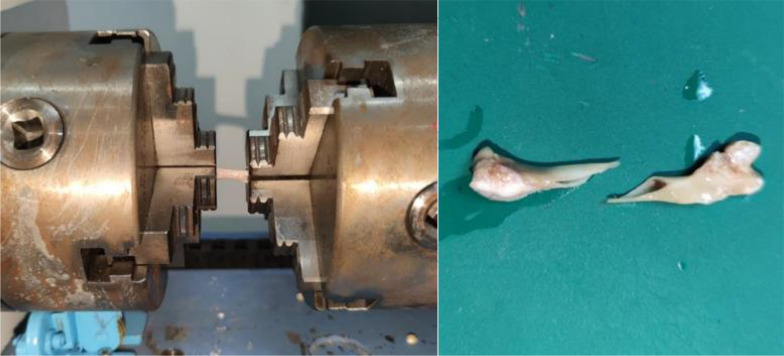
A total of 24, 3-month-old male SD (Sprague Dawley) rats were randomly divided into pressurized control group (CON, n=6), low-intensity training group (LIRT, n=6), high-intensity training group (HIRT, n=6), and blood flow restriction training group (LIBFR, n=6) for 8-week ladder-climbing exercises. The pressured control group were given only ischemia treatments and did not undertake any burden. The low-intensity training group was allowed to climb the ladder with 30% of the maximum voluntary carrying capacity (MVCC). The rats in the high-intensity training group were allowed to climb the ladder with 70% MVCC. The blood flow restriction training group climbed the ladder with 30% MVCC while imposing blood flow restriction. Before sampling, the final MVCC was measured using a ladder-climbing protocol with progressively increasing weight loading. The serum, muscle, and bone were removed for sampling. The concentrations of the bone turnover markers PINP, BGP, and CTX in the serum were measured using ELISA. The bone mineral density and microstructure of femur bones were measured using micro-CT. Three-point bending and torsion tests were performed by a universal testing machine to measure the material mechanics and structural mechanics indexes of the femur bone.
The results of maximum strength test showed that the MVCC in LIRT, HIRT, and LIBFR groups was significantly greater than in the CON group, while the MVCC in the HIRT group was significantly higher than that in the LIRT group (P<0.05). According to the results of the bone turnover marker test, the concentrations of bone formation indexes PINP (amino-terminal extension peptide of type I procollagen) and BGP (bone gla protein) were significantly lower in the CON group than in the HIRT group (P<0.01), while those were significantly higher in the LIRT group compared to the HIRT group (P<0.01). In terms of bone resorption indexes, significant differences were identified only between the HIRT and other groups (P<0.05). The micro-CT examination revealed that the HIRT group had significantly greater bone density index values than the CON and LIRT groups (P<0.05). The results of three-point bending and torsion test by the universal material testing machine showed that the elastic modulus and maximum load indexes of the HIRT group were significantly smaller than those of the LIBFR group (P<0.05). The fracture load indexes in the HIRT group were significantly smaller than in the LIBFR group (P<0.05).
本研究旨在探讨血流限制训练对不同运动干预大鼠肌肉力量、骨组织结构材料和生物力学性能的影响,并通过鉴定骨转换标志物来分析其过程,为 BFRT 在临床康复中的应用提供理论依据。
将 24 只 3 月龄雄性 SD(Sprague Dawley)大鼠随机分为加压对照组(CON,n=6)、低强度训练组(LIRT,n=6)、高强度训练组(HIRT,n=6)和血流限制训练组(LIBFR,n=6),进行 8 周的爬梯运动。加压对照组仅接受缺血处理,不进行任何负重。低强度训练组允许以 30%最大自愿携带能力(MVCC)的负荷爬梯。高强度训练组允许以 70%MVCC 的负荷爬梯。血流限制训练组以 30%MVCC 爬梯,同时施加血流限制。在采样前,采用逐渐增加负重的爬梯方案测量最终 MVCC。取出血清、肌肉和骨骼进行采样。采用 ELISA 法测定血清中骨转换标志物 PINP(I 型前胶原氨基端延长肽)、BGP(骨 gla 蛋白)的浓度。采用微 CT 测量股骨的骨密度和骨微结构。采用万能试验机进行三点弯曲和扭转试验,测量股骨的材料力学和结构力学指标。
最大强度测试结果显示,LIRT、HIRT 和 LIBFR 组的 MVCC 明显高于 CON 组,而 HIRT 组的 MVCC 明显高于 LIRT 组(P<0.05)。根据骨转换标志物检测结果,CON 组骨形成标志物 PINP(I 型前胶原氨基端延长肽)和 BGP(骨 gla 蛋白)的浓度明显低于 HIRT 组(P<0.01),而 LIRT 组明显高于 HIRT 组(P<0.01)。在骨吸收标志物方面,仅在 HIRT 组与其他组之间存在显著差异(P<0.05)。微 CT 检查显示,HIRT 组的骨密度指数值明显大于 CON 和 LIRT 组(P<0.05)。万能材料试验机三点弯曲和扭转试验结果表明,HIRT 组的弹性模量和最大载荷指标明显小于 LIBFR 组(P<0.05)。HIRT 组的骨折载荷指标明显小于 LIBFR 组(P<0.05)。