College of Medicine, Alfaisal University, Riyadh, Saudi Arabia.
King Abdullah International Medical Research Centre, Riyadh, Saudi Arabia, King Saud Bin Abdulaziz University for Health Sciences, Riyadh, Saudi Arabia.
PLoS One. 2023 Sep 8;18(9):e0291136. doi: 10.1371/journal.pone.0291136. eCollection 2023.
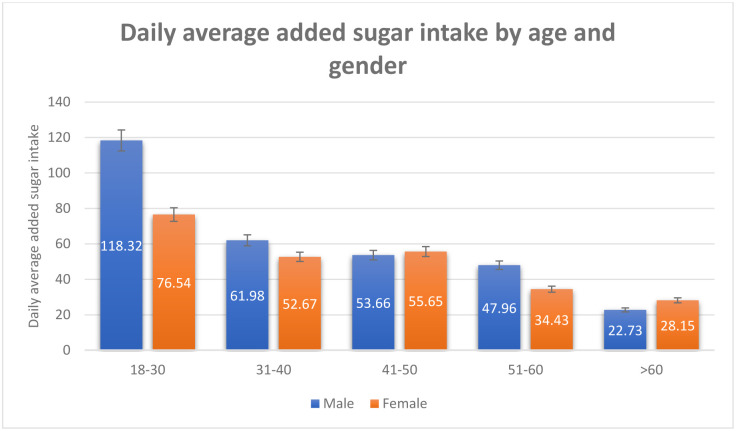
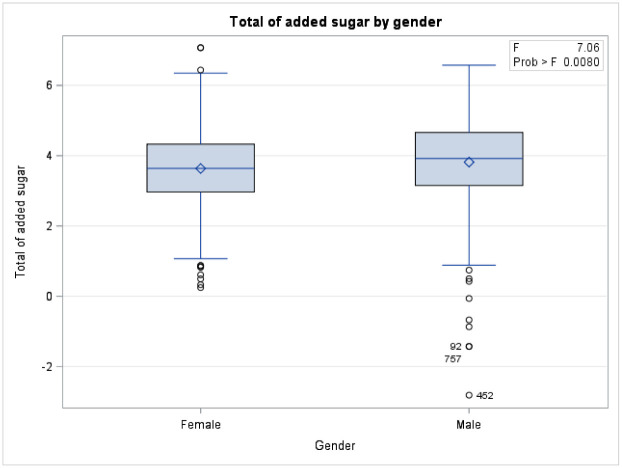
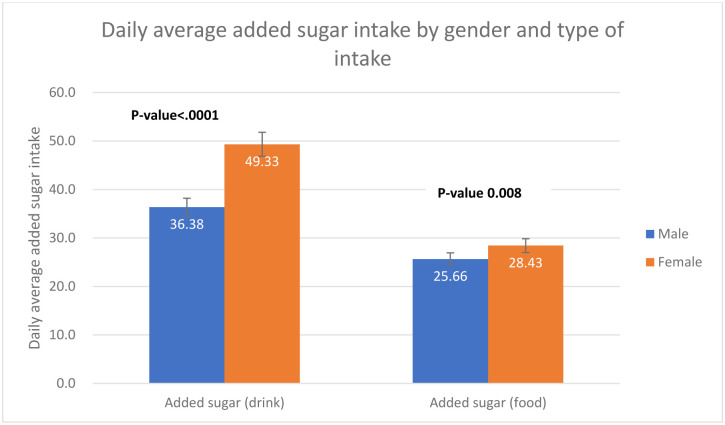
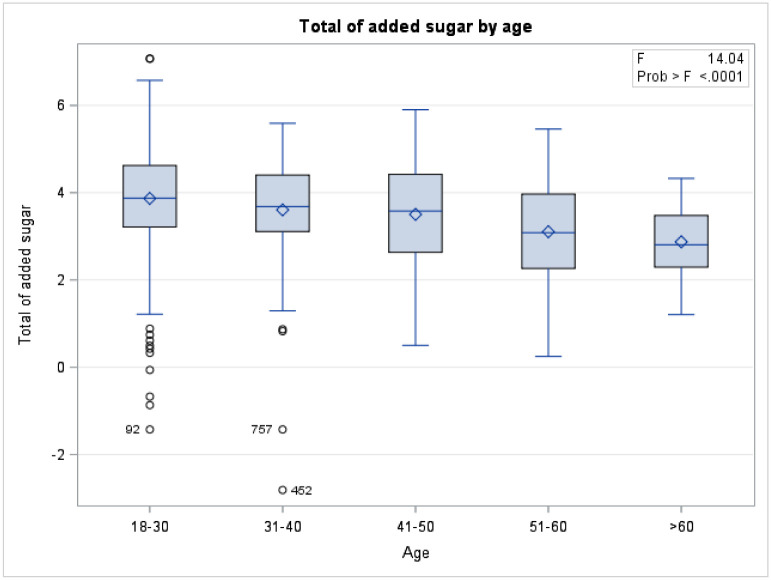
Diet is a contributor to the pathogenesis of many non-communicable diseases. Among contributors to poor diet is high added sugar consumption, which is unfortunately on the rise nowadays. The recommended sugar intake by The American Heart Association (AHA) is 24g/day and 36g/day for women and men, respectively. The study's aim is to assess added sugar intake among adults in Saudi Arabia. A cross-sectional study design was used via an online survey among adults in Saudi Arabia using convenience sampling, and social media platforms were used to collect the data. The authors conducted descriptive statistics to present demographic variables using Chi-square χ2 tests for categorical and t-tests for continuous variables. All statistical tests used a 95% confidence interval with a two-sided P-value <0.05 as significance level. A total of 1163 respondents were included in the study. The study has shown an overall added sugar intake average of 73 g/day. There was a significant difference in means of overall added sugar intake across genders for the age group 18-30 and the age group >60. Equivalently, there was a statistically significant difference in means of added sugar intake food across gender (P-value 0.008). Females tended to consume more added sugar in their food than males. The highest consumption was in the Northern region (123.71 g/day), followed by the Southern region (98.52 g/day), the Western region (86.14 g/day), and lastly, the Central and Eastern regions (66.95 and 62.02 g/day, respectively). The total added sugar intake of added sugar is extremely high in Saudi Arabia. Poor dietary habits lead to many adverse health consequences, including obesity and diabetes. Healthcare providers and public health officials are highly encouraged to shed light on added sugar consumption and create opportunities to promote healthy dietary patterns. The Saudi population is recommended to abide by the added sugar dietary recommendations to avoid future chronic medical conditions.
饮食是许多非传染性疾病发病机制的一个因素。不良饮食的一个促成因素是高糖摄入量,而不幸的是,现在糖摄入量正在上升。美国心脏协会 (AHA) 建议的糖摄入量为女性每天 24 克,男性每天 36 克。本研究旨在评估沙特阿拉伯成年人的糖摄入量。采用横断面研究设计,通过方便抽样对沙特阿拉伯成年人进行在线调查,并使用社交媒体平台收集数据。作者使用卡方 χ2 检验进行分类变量和 t 检验进行连续变量的描述性统计,以呈现人口统计学变量。所有统计检验均使用双侧 P 值 <0.05 作为显著性水平的 95%置信区间。共有 1163 名受访者纳入研究。研究表明,总体糖摄入量平均为 73 克/天。在年龄组 18-30 岁和年龄组>60 岁,性别之间的总体糖摄入量均值存在显著差异。同样,性别之间的添加糖摄入食物均值存在统计学显著差异(P 值 0.008)。女性在食物中摄入的添加糖多于男性。摄入量最高的是北部地区(123.71 克/天),其次是南部地区(98.52 克/天)、西部地区(86.14 克/天),最后是中部和东部地区(分别为 66.95 和 62.02 克/天)。沙特阿拉伯的总添加糖摄入量极高。不良的饮食习惯导致许多不良健康后果,包括肥胖和糖尿病。医疗保健提供者和公共卫生官员应大力宣传糖的摄入量,并创造机会促进健康的饮食模式。建议沙特人口遵守添加糖的饮食建议,以避免未来出现慢性疾病。