Ma Xin, Wang Qin, Li Guozheng, Li Hui, Xu Shouping, Pang Da
Department of Breast Surgery, Harbin Medical University Cancer Hospital, Harbin, Heilongjiang 150081, China.
Sino-Russian Medical Research Center, Harbin Medical University Cancer Hospital, Harbin, Heilongjiang 150081, China.
Genes Dis. 2023 Apr 12;11(2):614-632. doi: 10.1016/j.gendis.2023.02.052. eCollection 2024 Mar.
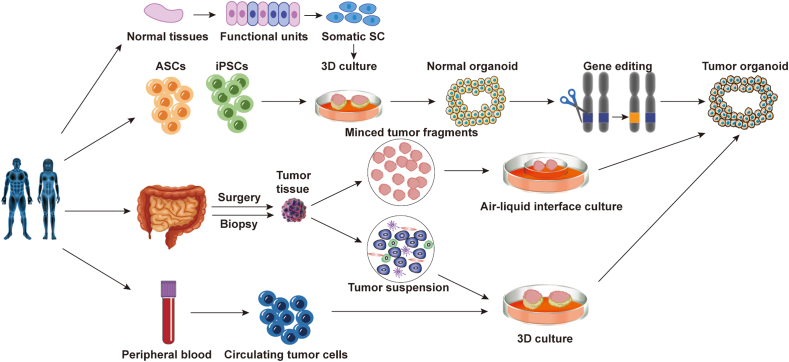
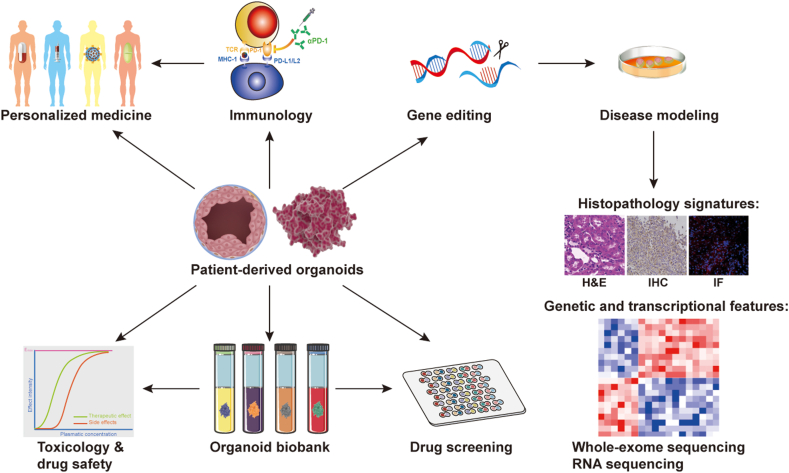
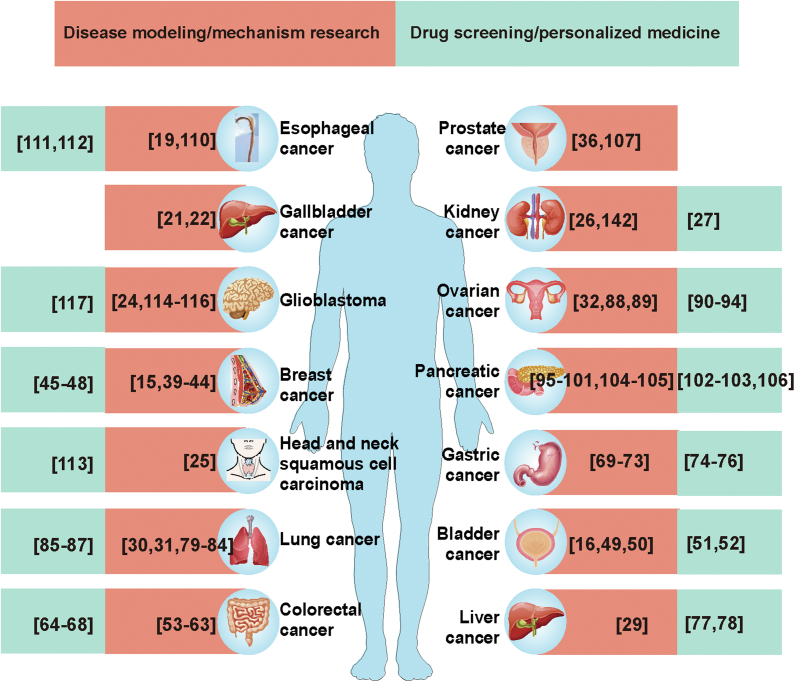
An accumulation of previous work has established organoids as good preclinical models of human tumors, facilitating translation from basic research to clinical practice. They are changing the paradigm of preclinical cancer research because they can recapitulate the heterogeneity and pathophysiology of human cancers and more closely approximate the complex tissue environment and structure found in clinical tumors than cell lines and animal models. However, the potential applications of cancer organoids remain to be comprehensively summarized. In the review, we firstly describe what is currently known about cancer organoid culture and then discuss in depth the basic mechanisms, including tumorigenesis and tumor metastasis, and describe recent advances in patient-derived tumor organoids (PDOs) for drug screening and immunological studies. Finally, the present challenges faced by organoid technology in clinical practice and its prospects are discussed. This review highlights that organoids may offer a novel therapeutic strategy for cancer research.
此前的大量研究已将类器官确立为人类肿瘤良好的临床前模型,有助于从基础研究向临床实践转化。它们正在改变临床前癌症研究的模式,因为它们能够概括人类癌症的异质性和病理生理学,并且比细胞系和动物模型更能近似临床肿瘤中发现的复杂组织环境和结构。然而,癌症类器官的潜在应用仍有待全面总结。在这篇综述中,我们首先描述目前已知的癌症类器官培养方法,然后深入讨论其基本机制,包括肿瘤发生和肿瘤转移,并介绍患者来源肿瘤类器官(PDO)在药物筛选和免疫学研究方面的最新进展。最后,讨论了类器官技术在临床实践中面临的当前挑战及其前景。这篇综述强调,类器官可能为癌症研究提供一种新的治疗策略。