Laboratory of Molecular Medicine, Department of Clinical Immunology, Section 7631, Copenhagen University Hospital, Rigshospitalet, Copenhagen, Denmark.
Department of Genetics, Stanford University School of Medicine, Stanford, 94305, CA, USA.
Nat Commun. 2023 Sep 12;14(1):5624. doi: 10.1038/s41467-023-41342-2.
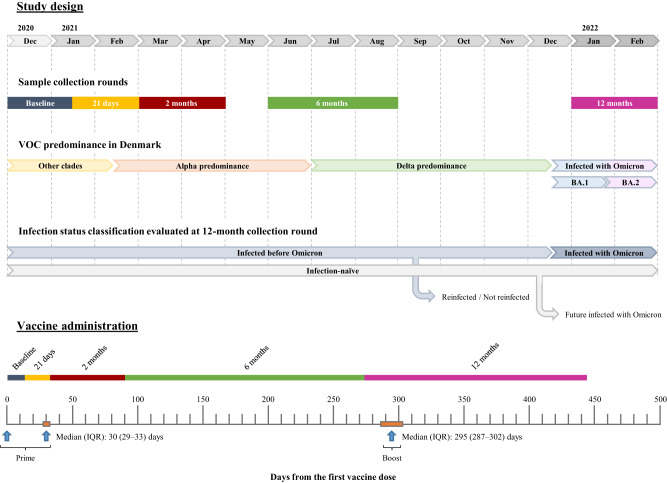
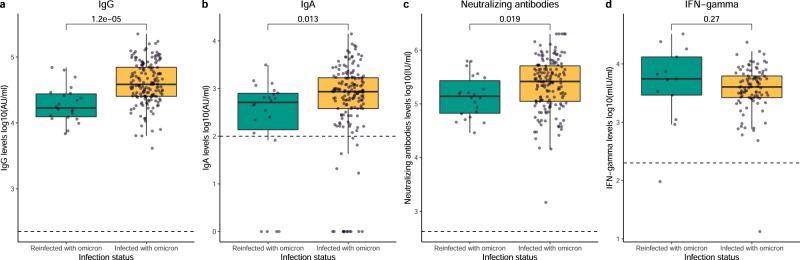
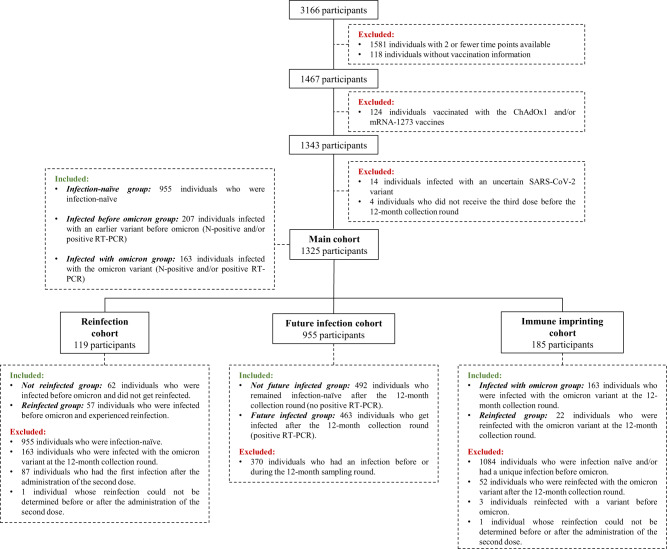
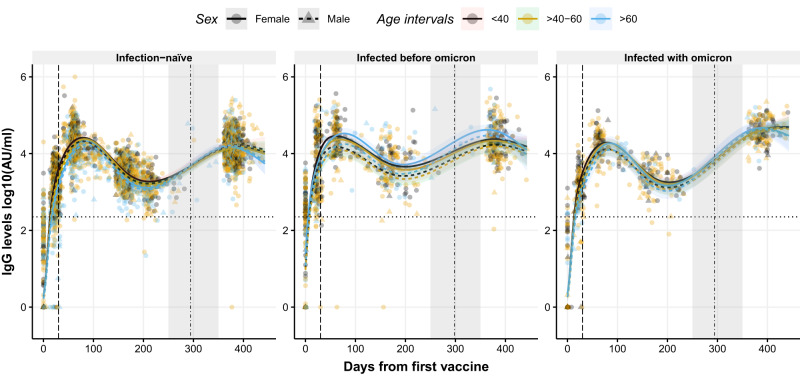
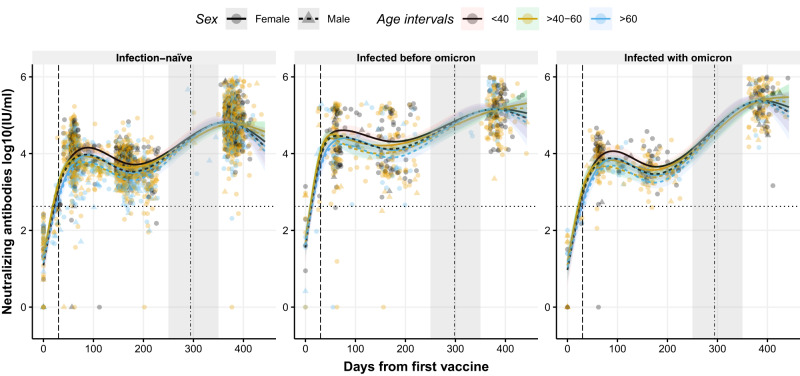
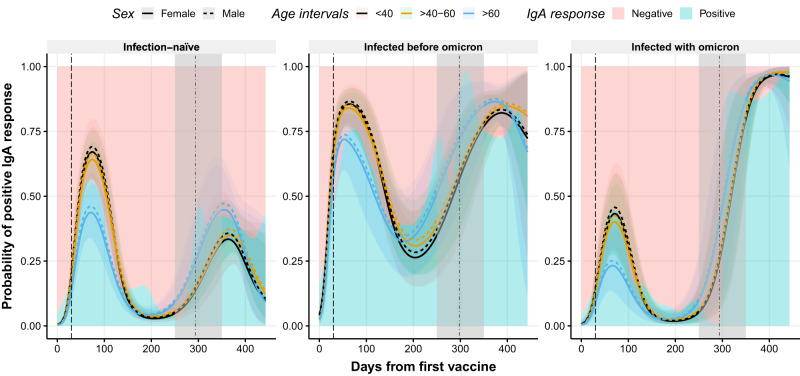
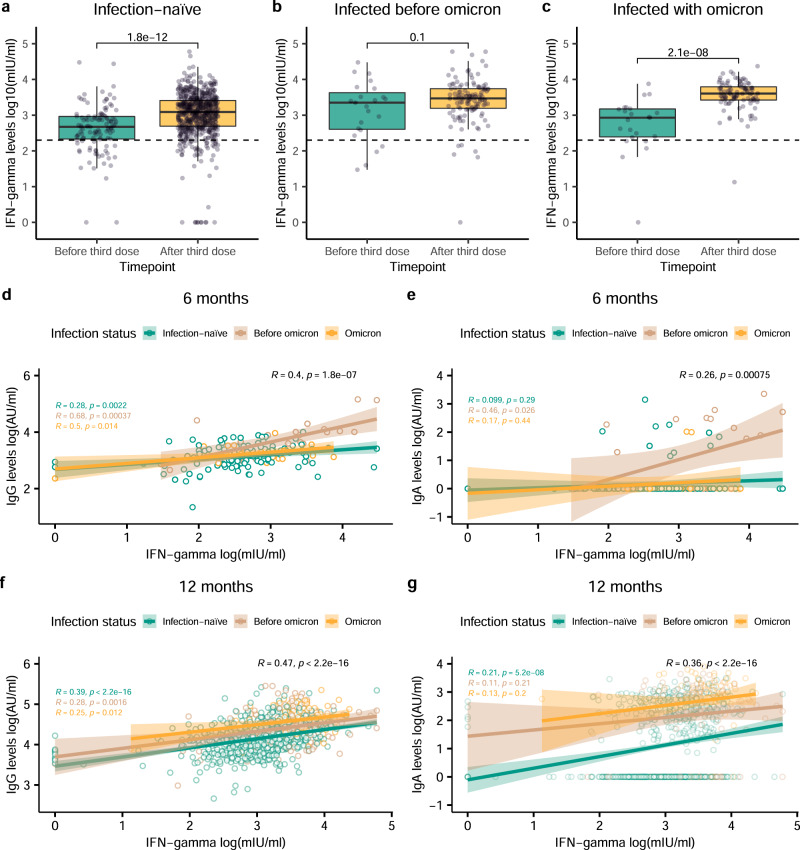
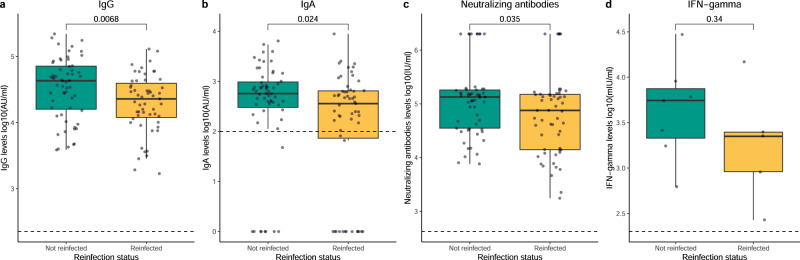
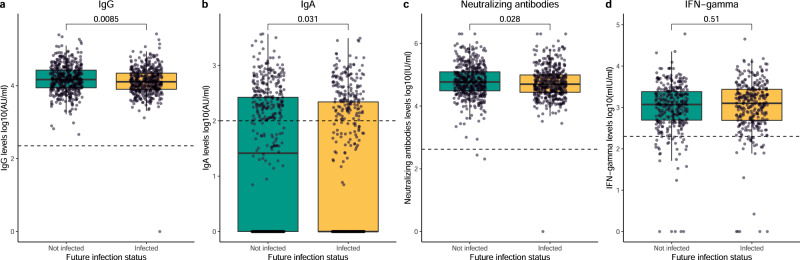
The heterogeneity of the SARS-CoV-2 immune responses has become considerably more complex over time and diverse immune imprinting is observed in vaccinated individuals. Despite vaccination, following the emergence of the Omicron variant, some individuals appear more susceptible to primary infections and reinfections than others, underscoring the need to elucidate how immune responses are influenced by previous infections and vaccination. IgG, IgA, neutralizing antibodies and T-cell immune responses in 1,325 individuals (955 of which were infection-naive) were investigated before and after three doses of the BNT162b2 vaccine, examining their relation to breakthrough infections and immune imprinting in the context of Omicron. Our study shows that both humoral and cellular responses following vaccination were generally higher after SARS-CoV-2 infection compared to infection-naive. Notably, viral exposure before vaccination was crucial to achieving a robust IgA response. Individuals with lower IgG, IgA, and neutralizing antibody responses postvaccination had a significantly higher risk of reinfection and future Omicron infections. This was not observed for T-cell responses. A primary infection before Omicron and subsequent reinfection with Omicron dampened the humoral and cellular responses compared to a primary Omicron infection, consistent with immune imprinting. These results underscore the significant impact of hybrid immunity for immune responses in general, particularly for IgA responses even after revaccination, and the importance of robust humoral responses in preventing future infections.
SARS-CoV-2 免疫反应的异质性随着时间的推移变得更加复杂,并且在接种疫苗的个体中观察到不同的免疫印记。尽管接种了疫苗,但在奥密克戎变异出现后,一些人似乎比其他人更容易受到初次感染和再次感染的影响,这突显出需要阐明先前感染和接种疫苗如何影响免疫反应。在奥密克戎背景下,研究了 1325 个人(其中 955 人无感染史)接种三剂 BNT162b2 疫苗前后的 IgG、IgA、中和抗体和 T 细胞免疫反应,研究了它们与突破性感染和免疫印记的关系。我们的研究表明,与无感染史相比,接种疫苗后体液和细胞反应通常在 SARS-CoV-2 感染后更高。值得注意的是,接种疫苗前的病毒暴露对于实现强大的 IgA 反应至关重要。接种疫苗后 IgG、IgA 和中和抗体反应较低的个体再次感染和未来感染奥密克戎的风险显著增加。这在 T 细胞反应中没有观察到。与初次感染奥密克戎后再次感染奥密克戎相比,奥密克戎之前的初次感染会减弱体液和细胞反应,这与免疫印记一致。这些结果强调了混合免疫对一般免疫反应的重大影响,特别是对 IgA 反应的影响,即使在再次接种疫苗后,以及强大的体液反应在预防未来感染中的重要性。