College of Landscape Architecture, Sichuan Agricultural University, Chengdu, China.
Guangdong Academy of Forestry, Guangdong Provincial Key Laboratory of Silviculture Protection and Utilization, Guangzhou, China.
Front Public Health. 2023 Aug 28;11:1258848. doi: 10.3389/fpubh.2023.1258848. eCollection 2023.
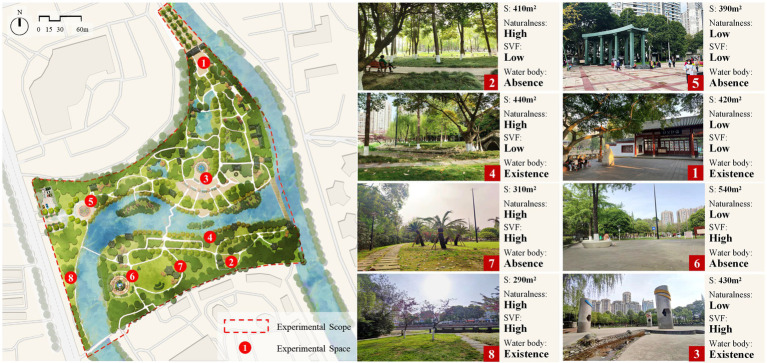
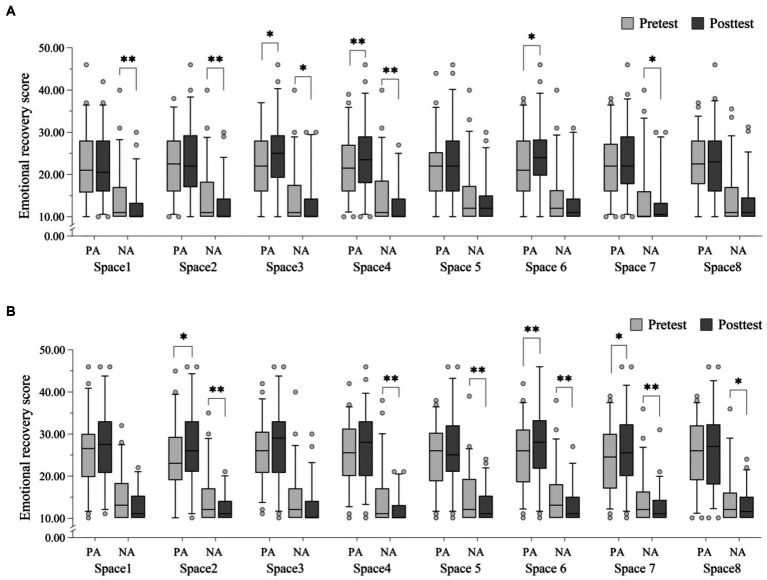
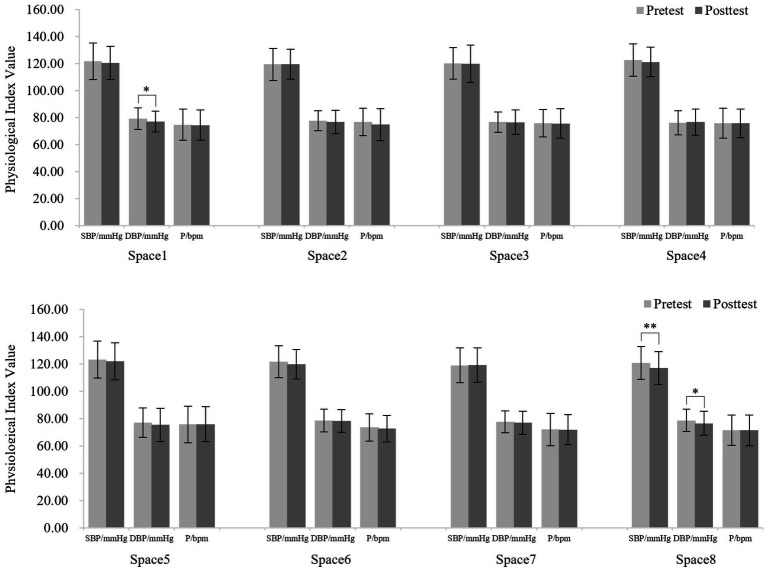
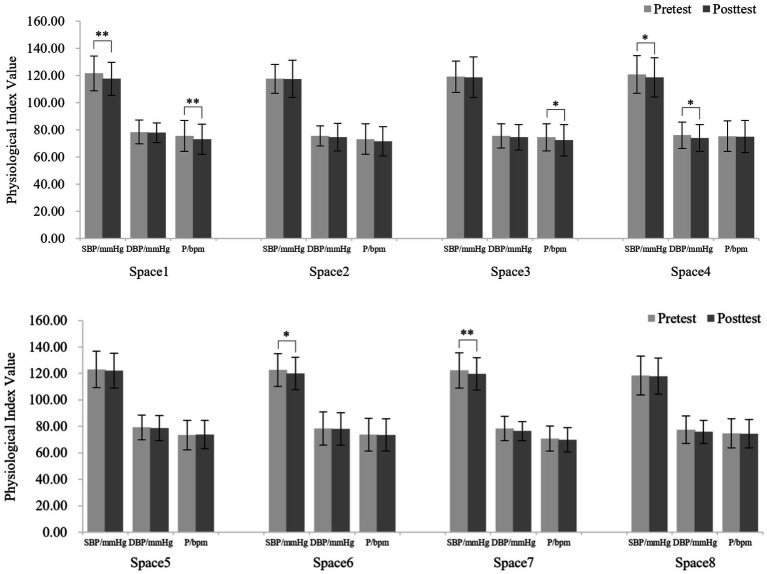
Numerous studies have demonstrated that urban green spaces (UGSs) benefit human health, but few have focused on the influence of weather on environmental restorativeness. This study assessed how different weather conditions and environments affect human health. We exposed 50 participants to different UGS environments under cloudy and sunny conditions and collected physiological, psychological and aesthetic preference data. The result showed that the physical and mental benefits of UGSs were stronger on sunny days (pulse: [ = 2.169, < 0.05]; positive affect: [ = -10.299, < 0.001]; perceived restortiveness: [ = -3.224, < 0.01]). The spaces with exposed sky had greater physiological restorativeness on sunny days; the spaces with calm water had greater emotional restorativeness on cloudy days, and natural spaces with less sky exposure had greater perceived restoration in both weather conditions. The spaces with water and less sky exposure promoted psychophysiological restoration in both weather conditions. This study demonstrates that weather significantly influences the restorative potential of UGSs, and there are also restorative variations in different green space environments under two weather conditions. In future UGS planning practices, it would be advisable to select appropriate environmental types and features based on the climatic characteristics of different regions. For instance, in areas with frequent overcast conditions, incorporating serene water bodies could be advantageous, while regions with predominantly sunny weather should encompass spaces with expansive sky views. By conducting comprehensive research on restoration environments that take weather conditions into account, new insights and nature-based solutions can be provided for creating healthy human habitats in the context of global climate change.
大量研究表明城市绿地(UGS)有益于人类健康,但很少关注天气对环境恢复力的影响。本研究评估了不同的天气条件和环境如何影响人类健康。我们让 50 名参与者在阴天和晴天分别暴露在不同的 UGS 环境中,并收集生理、心理和审美偏好数据。结果表明,晴天 UGS 的身心益处更强(脉搏:[ = 2.169, < 0.05];积极情绪:[ = -10.299, < 0.001];感知恢复力:[ = -3.224, < 0.01])。晴天时,暴露天空的空间具有更大的生理恢复力;阴天时,平静水面的空间具有更大的情感恢复力,天空暴露较少的自然空间在两种天气条件下都具有更大的感知恢复力。有水面和较少天空暴露的空间促进了两种天气条件下的心理生理恢复。本研究表明,天气显著影响 UGS 的恢复潜力,在两种天气条件下,不同的绿地环境也存在恢复差异。在未来的 UGS 规划实践中,根据不同地区的气候特点选择合适的环境类型和特征是明智的。例如,在经常阴天的地区,融入宁静的水体可能是有利的,而阳光充足的地区应包含广阔的天空景观。通过对考虑天气条件的恢复环境进行全面研究,可以为在全球气候变化背景下创造健康的人类栖息地提供新的见解和基于自然的解决方案。