Institute of Health Exercise and Sport, Victoria University, Melbourne, Australia.
School of Medicine, Stanford University, Stanford, California, United States of America.
PLoS One. 2023 Sep 13;18(9):e0276999. doi: 10.1371/journal.pone.0276999. eCollection 2023.
To step over an unexpected obstacle, individuals adapt gait; they adjust step length in the anterior-posterior direction prior to the obstacle and minimum toe clearance height in the vertical direction during obstacle avoidance. Inability to adapt gait may lead to falls in older adults with diabetes as the results of the effects of diabetes on the sensory-motor control system. Therefore, this study aimed to investigate gait adaptability in older adults with diabetes.
Would diabetes impair gait adaptability and increase sagittal foot adjustment errors?
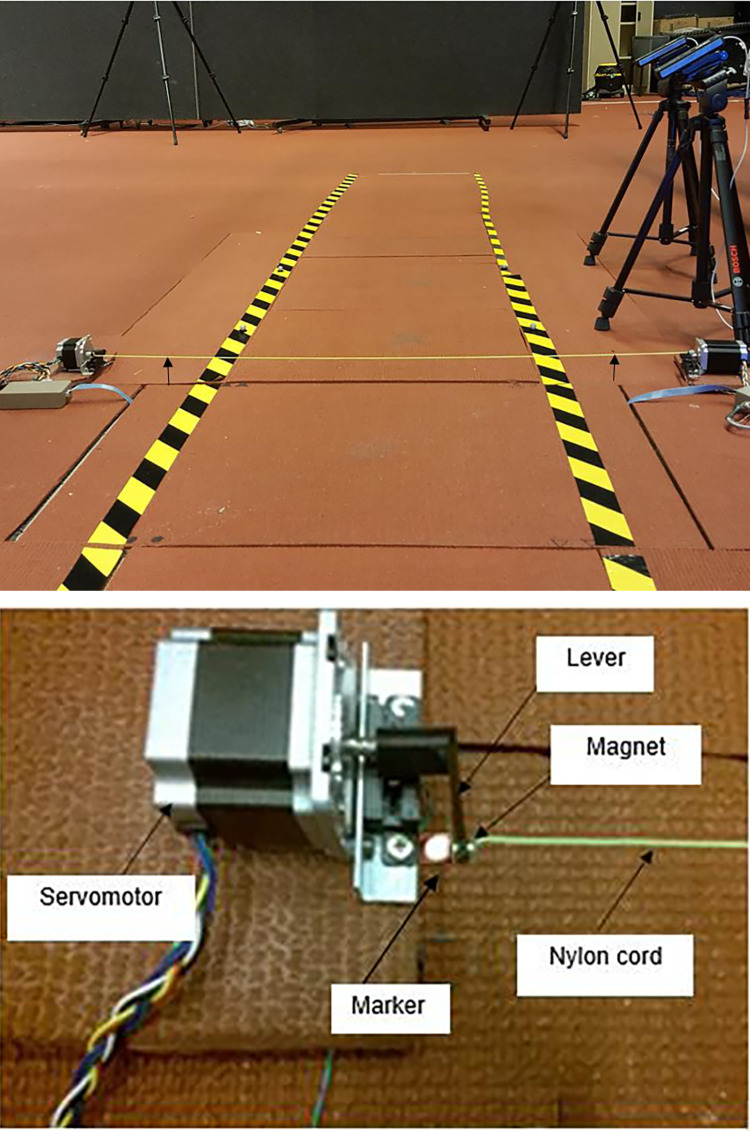
Three cohorts of 16 people were recruited: young adults (Group I), healthy older adults (Group II), and older adults with diabetes (Group III). Participants walked in baseline at their comfortable speeds. They then walked and responded to what was presented in gait adaptability tests, which included 40 trials with four random conditions: step shortening, step lengthening, obstacle avoiding, and walking through. Virtual step length targets were 40% of the baseline step length longer or shorter than the mean baseline step length; the actual obstacle was a 5-cm height across the walkway. A Vicon three-dimensional motion capture system and four A.M.T.I force plates were used to quantify spatiotemporal parameters of a gait cycle and sagittal foot adjustment errors (differences between desired and actual responses). Analyses of variance (ANOVA) repeated measured tests were used to investigate group and condition effects on dependent gait parameters at a significance level of 0.05.
Statistical analyses of Group I (n = 16), Group II (n = 14) and Group III (n = 13) revealed that gait parameters did not differ between groups in baseline. However, they were significantly different in adaptability tests. Group III significantly increased their stance and double support times in adaptability tests, but these adaptations did not reduce their sagittal foot adjustment errors. They had the greatest step length errors and lowest toe-obstacle clearance, which could cause them to touch the obstacle more.
The presented gait adaptability tests may serve as entry tests for falls prevention programs.
为了跨过意外障碍物,个体调整步态;他们在障碍物前调整前后方向的步长,在障碍物回避过程中调整垂直方向的最小脚趾间隙高度。由于糖尿病对感觉运动控制系统的影响,糖尿病患者可能无法适应步态,从而导致跌倒。因此,本研究旨在研究糖尿病老年人的步态适应性。
糖尿病是否会损害步态适应性并增加矢状面足调整误差?
招募了三组 16 人:年轻人(I 组)、健康老年人(II 组)和糖尿病老年人(III 组)。参与者以舒适速度在基线行走。然后,他们在步态适应性测试中行走并做出反应,测试包括 40 个随机条件的试验:步长缩短、步长延长、障碍物回避和步行通过。虚拟步长目标比基线步长长或短 40%,实际障碍物是横跨人行道的 5 厘米高。使用 Vicon 三维运动捕捉系统和四个 AMTI 力板来量化步态周期的时空参数和矢状面足调整误差(期望和实际响应之间的差异)。使用方差分析(ANOVA)重复测量测试来研究组和条件对依赖于步态参数的影响,显著性水平为 0.05。
对 I 组(n = 16)、II 组(n = 14)和 III 组(n = 13)的统计分析表明,在基线时,组间步态参数没有差异。然而,它们在适应性测试中差异显著。III 组在适应性测试中显著增加了他们的站立和双支撑时间,但这些适应并没有减少他们的矢状面足调整误差。他们的步长误差最大,脚趾障碍物间隙最低,这可能导致他们更频繁地触碰到障碍物。
所提出的步态适应性测试可以作为跌倒预防计划的入门测试。