Nutrition Department, West China Hospital of Stomatology, Sichuan University, State Key Laboratory of Oral Diseases, National Clinical Research Center for Oral Diseases, No. 14, Section Three, Ren Min Nan Road, Chengdu, Sichuan, China.
Medical Record Room, West China Hospital of Stomatology, Sichuan University, State Key Laboratory of Oral Diseases, National Clinical Research Center for Oral Diseases, No. 14, Section Three, Ren Min Nan Road, Chengdu, Sichuan, China.
BMC Oral Health. 2023 Sep 14;23(1):663. doi: 10.1186/s12903-023-03371-7.
The factors associated with postoperative hypokalemia in patients with oral cancer remain unclear. We determined the preoperative factors associated with postoperative hypokalemia in patients with oral cancer following en bloc cancer resection and established a nomogram for postoperative hypokalemia prediction.
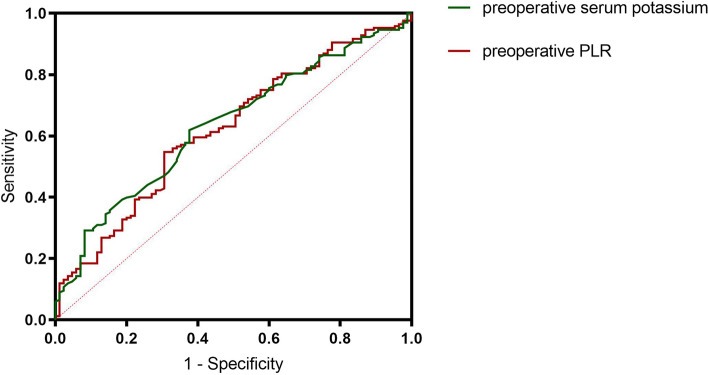
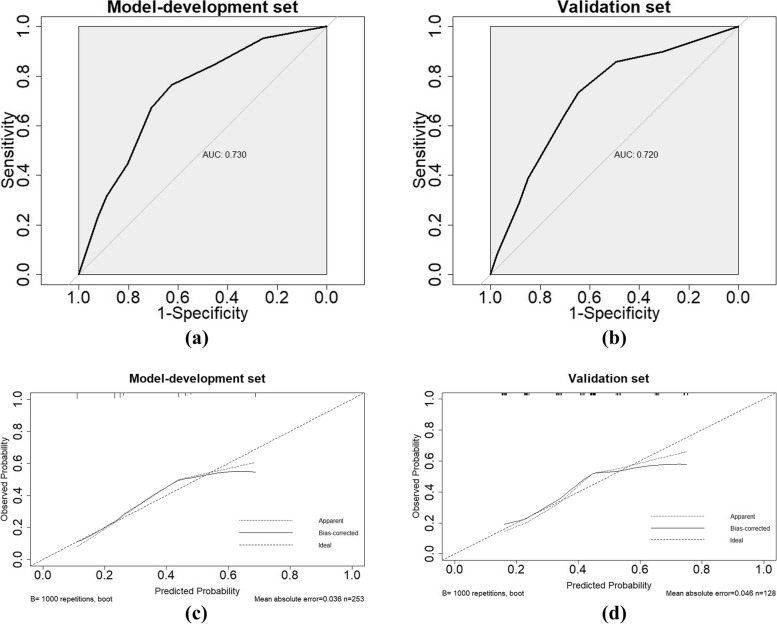
Data from 381 patients with oral cancer who underwent en bloc cancer resection were retrospectively analyzed. Univariate and multivariate analyses were performed to identify the risk factors for postoperative hypokalemia. We used receiver operating characteristic (ROC) curves to quantify the factors' effectiveness. A nomogram was created to show each predictor's relative weight and the likelihood of postoperative hypokalemia development. The multinomial regression model's effectiveness was also evaluated.
Preoperative factors, including sex, preoperative serum potassium level, and preoperative platelet-to-lymphocyte ratio (PLR), were significantly associated with postoperative hypokalemia. Based on the ROC curve, the preoperative serum potassium and PLR cut-off levels were 3.98 mmol/L and 117, respectively. Further multivariate analysis indicated that female sex, preoperative serum potassium level < 3.98 mmol/L, and preoperative PLR ≥ 117 were independently associated with postoperative hypokalemia. We constructed a predictive nomogram with all these factors for the risk of postoperative hypokalemia with good discrimination and internal validation.
The predictive nomogram for postoperative hypokalemia risk constructed with these factors had good discrimination and internal validation. The developed nomogram will add value to these independent risk factors that can be identified at admission in order to predict postoperative hypokalemia.
口腔癌患者术后低钾血症的相关因素仍不清楚。我们确定了口腔癌整块癌症切除术后与术后低钾血症相关的术前因素,并建立了术后低钾血症预测的列线图。
回顾性分析了 381 例接受整块癌症切除术的口腔癌患者的数据。进行单因素和多因素分析以确定术后低钾血症的危险因素。我们使用接受者操作特征(ROC)曲线来量化这些因素的有效性。创建一个列线图来显示每个预测因子的相对权重和发生术后低钾血症的可能性。还评估了多项回归模型的有效性。
术前因素,包括性别、术前血清钾水平和术前血小板与淋巴细胞比值(PLR),与术后低钾血症显著相关。基于 ROC 曲线,术前血清钾和 PLR 的截断值分别为 3.98mmol/L 和 117。进一步的多因素分析表明,女性、术前血清钾水平<3.98mmol/L 和术前 PLR≥117 与术后低钾血症独立相关。我们构建了一个包含所有这些因素的预测列线图,用于预测术后低钾血症的风险,具有良好的区分度和内部验证。
该列线图预测术后低钾血症风险的构建具有良好的区分度和内部验证。该开发的列线图将在入院时识别这些独立的危险因素方面增加价值,以预测术后低钾血症。