Gibney Kyla D, Kypriotakis George, Versace Francesco
Neuroscience Graduate Program MD Anderson UTHealth Graduate School of Biomedical Sciences, Houston, TX, United States.
Department of Behavioral Science, The University of Texas MD Anderson Cancer Center, Houston, TX, United States.
Addict Neurosci. 2023 Sep;7. doi: 10.1016/j.addicn.2023.100106. Epub 2023 Jun 7.
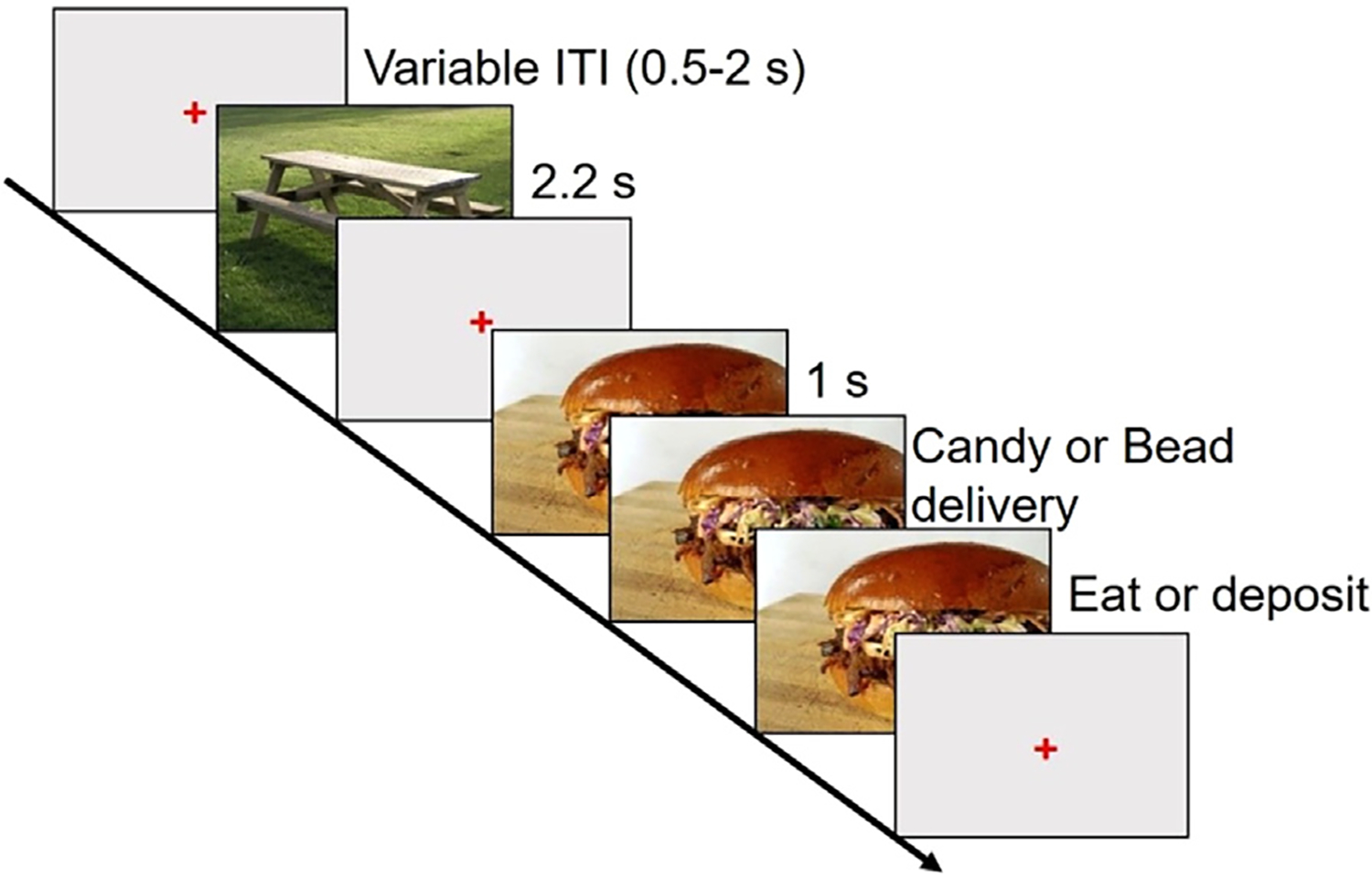
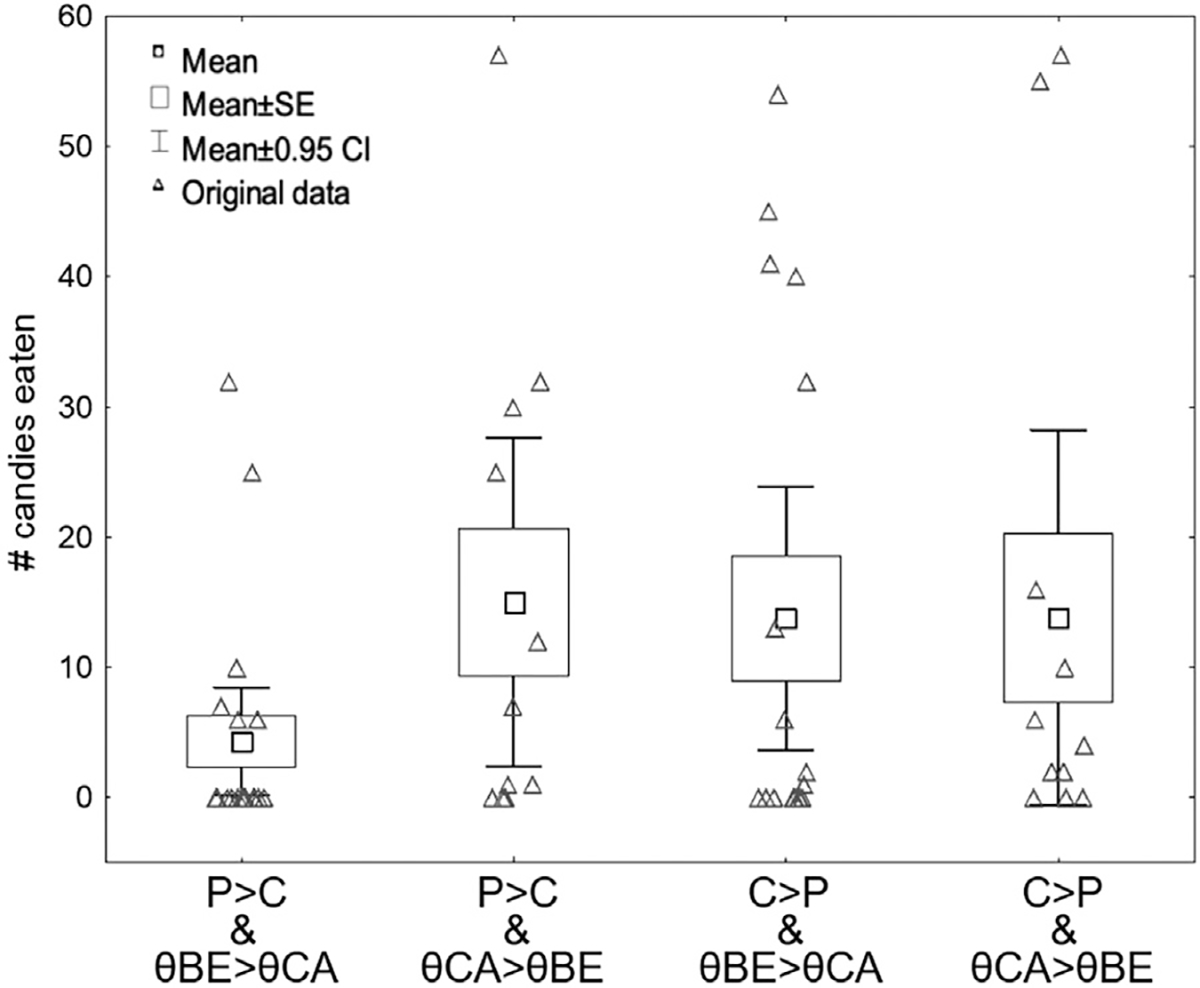
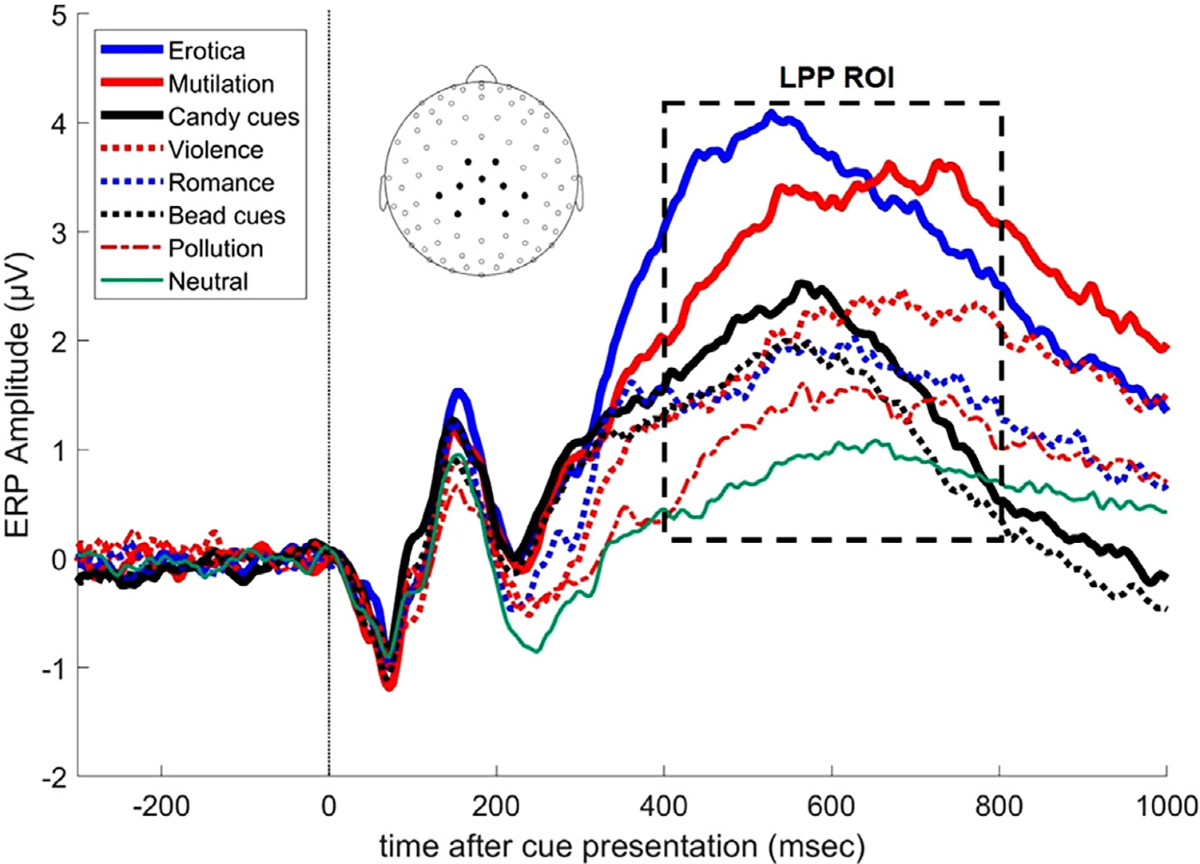
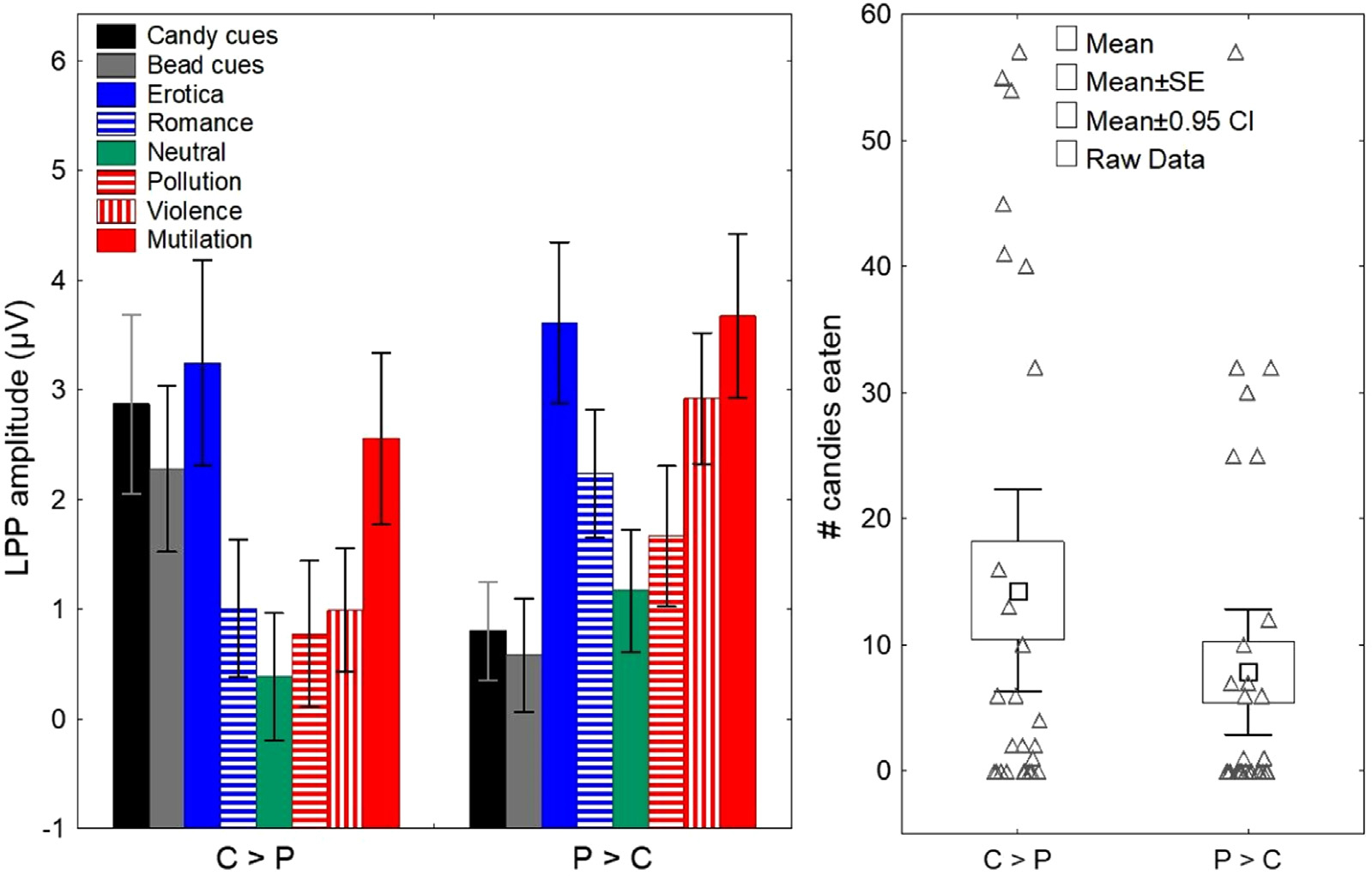
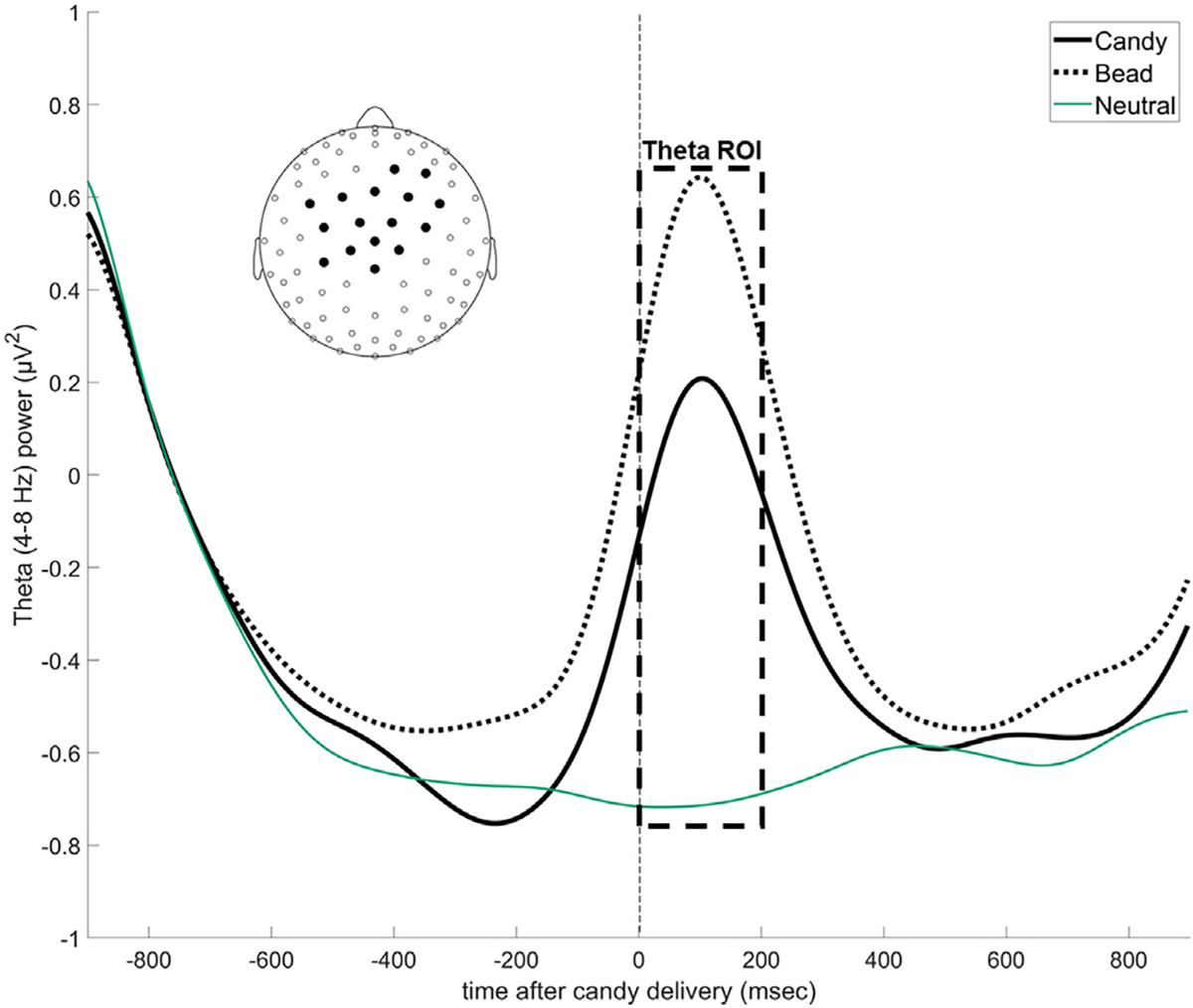
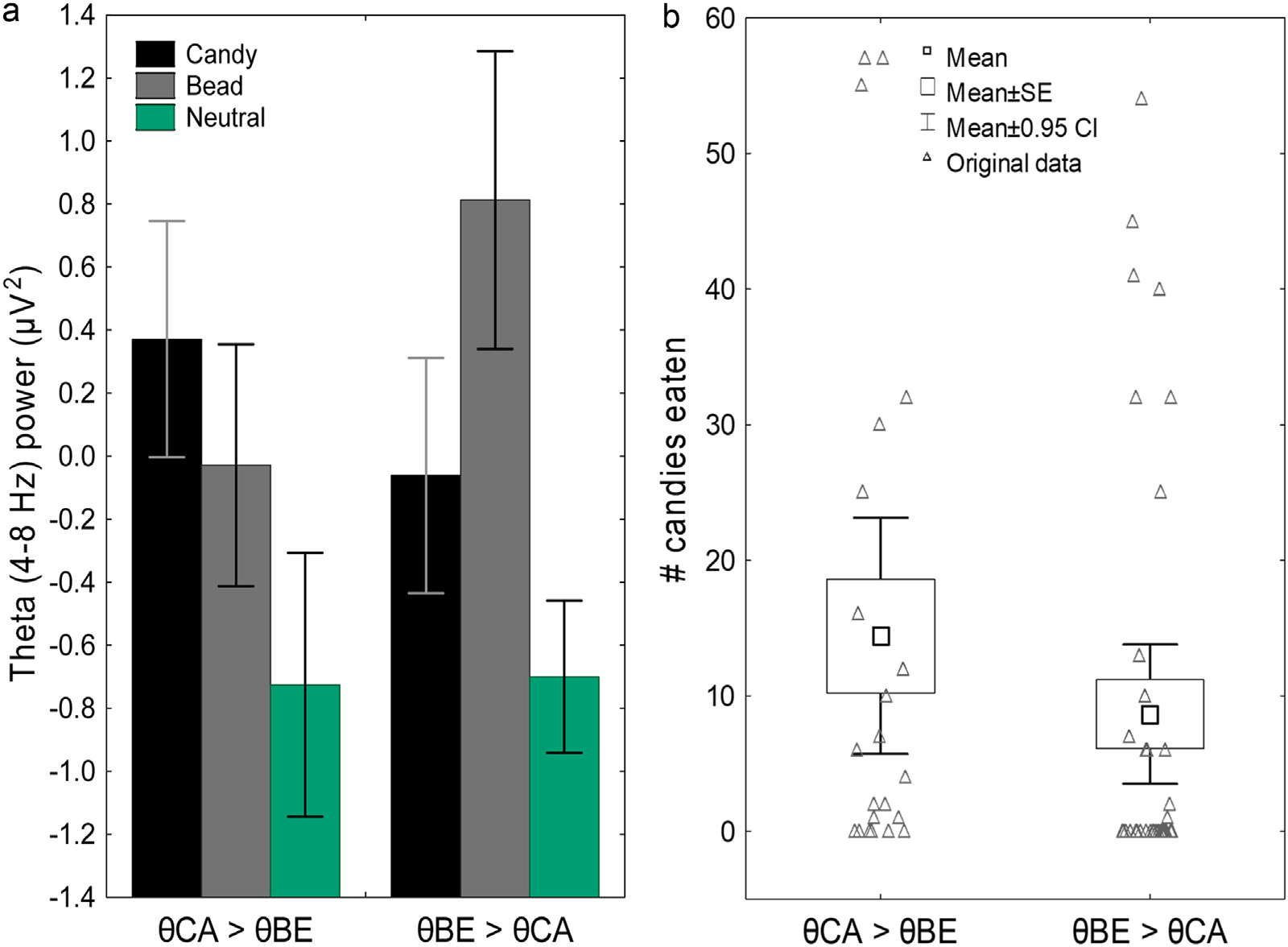
Cue-induced reward-seeking behaviors are regulated by both the affective and cognitive control systems of the brain. This study aimed at investigating how individual differences in affective and cognitive responses to cues predicting food rewards contribute to the regulation of cue-induced eating. We recorded electroencephalogram (EEG) from 59 adults while they viewed emotional and food-related images that preceded the delivery of food rewards (candies) or non-food objects (beads). We measured the amplitude of the late positive potential (LPP) in response to a variety of motivationally relevant images and power in the theta (4-8 Hz) frequency band after candies or beads were dispensed to the participants. We found that individuals with larger LPP responses to food images than to pleasant images (C>P group) ate significantly more during the experiment than those with the opposite response pattern (P>C group, < 0.001). Furthermore, we found that individuals with higher theta power after dispensation of the candy than of the bead (θCA>θBE) ate significantly more than those with the opposite response pattern (θBE>θCA, < 0.001). Finally, we found that the crossed P>C and θBE>θCA group ate less ( < 0.001) than did the other three groups formed by crossing the LPP and theta group assignments, who exhibited similar eating behavior on average ( = 0.662). These findings demonstrate that individual differences in both affective and cognitive responses to reward-related cues underlie vulnerability to cue-induced behaviors, underscoring the need for individualized treatments to mitigate maladaptive behaviors.
线索诱导的奖赏寻求行为受大脑的情感和认知控制系统调节。本研究旨在探究对预测食物奖赏的线索的情感和认知反应中的个体差异如何影响线索诱导进食的调节。我们记录了59名成年人在观看食物奖赏(糖果)或非食物物品(珠子)发放前的情感和食物相关图像时的脑电图(EEG)。在向参与者发放糖果或珠子后,我们测量了对各种动机相关图像的晚期正电位(LPP)的振幅以及θ波(4-8赫兹)频段的功率。我们发现,与对愉悦图像的LPP反应相比,对食物图像的LPP反应更大的个体(C>P组)在实验期间的进食量显著多于反应模式相反的个体(P>C组,<0.001)。此外,我们发现,发放糖果后的θ波功率高于发放珠子后的个体(θCA>θBE)的进食量显著多于反应模式相反的个体(θBE>θCA,<0.001)。最后,我们发现交叉的P>C和θBE>θCA组的进食量(<0.001)低于由LPP和θ波分组交叉形成的其他三组,这三组平均表现出相似的进食行为(=0.662)。这些发现表明,对奖赏相关线索的情感和认知反应中的个体差异是线索诱导行为易感性的基础,强调了采取个性化治疗以减轻适应不良行为的必要性。