School of Biotechnology, Shri Mata Vaishno Devi University, Katra, Jammu and Kashmir, 182320, India.
Institute of Human Genetics, University of Jammu, Jammu and Kashmir, 180001, India.
BMC Cancer. 2023 Sep 18;23(1):874. doi: 10.1186/s12885-023-11387-z.
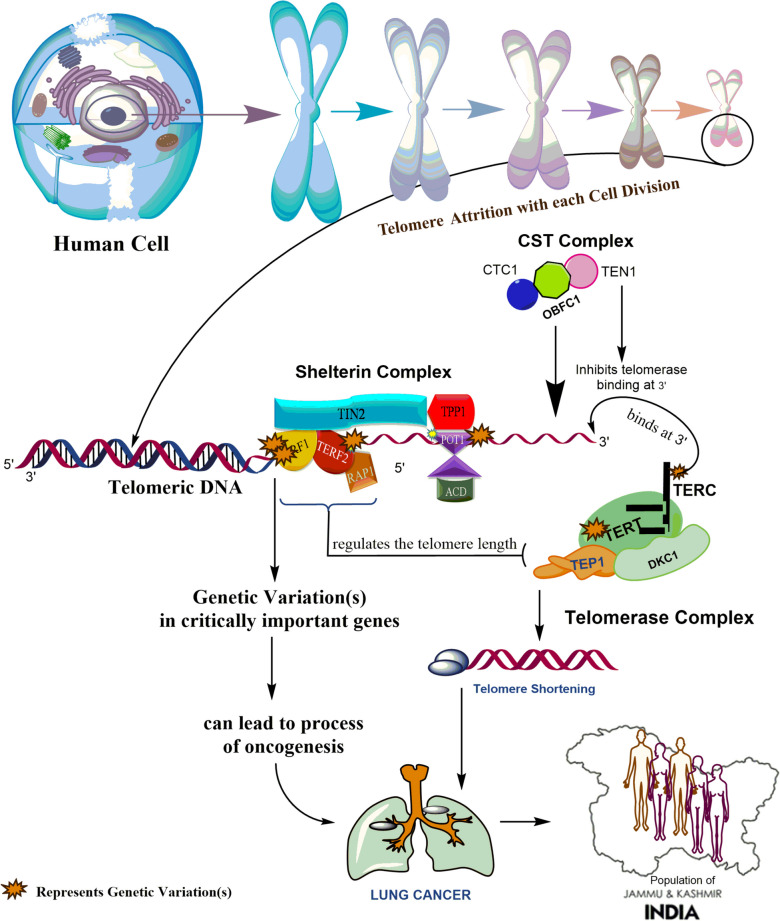
Telomeres are repetitive DNA sequences located at the ends of chromosomes, playing a vital role in maintaining chromosomal integrity and stability. Dysregulation of telomeres has been implicated in the development of various cancers, including non-small cell lung cancer (NSCLC), which is the most common type of lung cancer. Genetic variations within telomere maintenance genes may influence the risk of developing NSCLC. The present study aimed to evaluate the genetic associations of select variants within telomere maintenance genes in a population from Jammu and Kashmir, North India, and to investigate the relationship between telomere length and NSCLC risk.
We employed the cost-effective and high-throughput MassARRAY MALDI-TOF platform to assess the genetic associations of select variants within telomere maintenance genes in a population from Jammu and Kashmir, North India. Additionally, we used TaqMan genotyping to validate our results. Furthermore, we investigated telomere length variation and its relation to NSCLC risk in the same population using dual-labeled fluorescence-based qPCR.
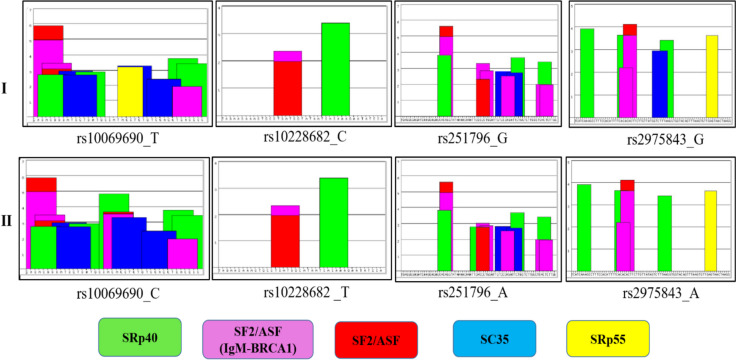
Our findings revealed significant associations of TERT rs10069690 and POT1 rs10228682 with NSCLC risk (adjusted p-values = 0.019 and 0.002, respectively), while TERF2 rs251796 and rs2975843 showed no significant associations. The TaqMan genotyping validation further substantiated the associations of TERT rs10069690 and rs2242652 with NSCLC risk (adjusted p-values = 0.02 and 0.003, respectively). Our results also demonstrated significantly shorter telomere lengths in NSCLC patients compared to controls (p = 0.0004).
This study highlights the crucial interplay between genetic variation in telomere maintenance genes, telomere attrition, and NSCLC risk in the Jammu and Kashmir population of North India. Our findings suggest that TERT and POT1 gene variants, along with telomere length, may serve as potential biomarkers and therapeutic targets for NSCLC in this population. Further research is warranted to elucidate the underlying mechanisms and to explore the potential clinical applications of these findings.
端粒是位于染色体末端的重复 DNA 序列,在维持染色体的完整性和稳定性方面起着至关重要的作用。端粒功能失调与各种癌症的发展有关,包括非小细胞肺癌(NSCLC),这是最常见的肺癌类型。端粒维持基因内的遗传变异可能会影响 NSCLC 的发病风险。本研究旨在评估印度北部查谟和克什米尔地区人群中端粒维持基因内特定变体的遗传关联,并研究端粒长度与 NSCLC 风险之间的关系。
我们使用具有成本效益且高通量的 MassARRAY MALDI-TOF 平台来评估印度北部查谟和克什米尔地区人群中端粒维持基因内特定变体的遗传关联。此外,我们使用 TaqMan 基因分型来验证我们的结果。此外,我们使用双标记荧光定量 PCR 技术在同一人群中研究端粒长度的变化及其与 NSCLC 风险的关系。
我们的研究结果表明,TERT rs10069690 和 POT1 rs10228682 与 NSCLC 风险显著相关(调整后的 p 值分别为 0.019 和 0.002),而 TERF2 rs251796 和 rs2975843 则没有显著相关性。TaqMan 基因分型验证进一步证实了 TERT rs10069690 和 rs2242652 与 NSCLC 风险的相关性(调整后的 p 值分别为 0.02 和 0.003)。我们的研究结果还表明,与对照组相比,NSCLC 患者的端粒长度明显更短(p=0.0004)。
本研究强调了端粒维持基因遗传变异、端粒损耗与印度北部查谟和克什米尔地区 NSCLC 风险之间的关键相互作用。我们的研究结果表明,TERT 和 POT1 基因变异以及端粒长度可能成为该人群 NSCLC 的潜在生物标志物和治疗靶点。需要进一步研究以阐明潜在的机制,并探索这些发现的潜在临床应用。