• 文献检索
  • 文档翻译
  • 深度研究
  • 学术资讯
  • Suppr Zotero 插件Zotero 插件
  • 邀请有礼
  • 套餐&价格
  • 历史记录
应用&插件
Suppr Zotero 插件Zotero 插件浏览器插件Mac 客户端Windows 客户端微信小程序
定价
高级版会员购买积分包购买API积分包
服务
文献检索文档翻译深度研究API 文档MCP 服务
关于我们
关于 Suppr公司介绍联系我们用户协议隐私条款
关注我们

Suppr 超能文献

核心技术专利:CN118964589B侵权必究
粤ICP备2023148730 号-1Suppr @ 2026

文献检索

告别复杂PubMed语法,用中文像聊天一样搜索,搜遍4000万医学文献。AI智能推荐,让科研检索更轻松。

立即免费搜索

文件翻译

保留排版,准确专业,支持PDF/Word/PPT等文件格式,支持 12+语言互译。

免费翻译文档

深度研究

AI帮你快速写综述,25分钟生成高质量综述,智能提取关键信息,辅助科研写作。

立即免费体验

“盒子已成为我生活中不可或缺的一部分”:维多利亚大麻购买俱乐部及其消费空间的案例研究

"The Box Has Become an Indispensable Part of My Life": A Case Study of Victoria Cannabis Buyers Club and its Consumption Space.

作者信息

Gagnon Marilou, Payne Alayna, Walsh Zach, Guta Adrian, Strike Carol

机构信息

School of Nursing, University of Victoria, Victoria, British Columbia, Canada.

Canadian Institute for Substance Use Research, University of Victoria, Victoria, British Columbia, Canada.

出版信息

Contemp Drug Probl. 2023 Sep;50(3):426-450. doi: 10.1177/00914509231183147. Epub 2023 Jun 22.

DOI:10.1177/00914509231183147
PMID:37719986
原文链接:https://pmc.ncbi.nlm.nih.gov/articles/PMC10504615/
Abstract

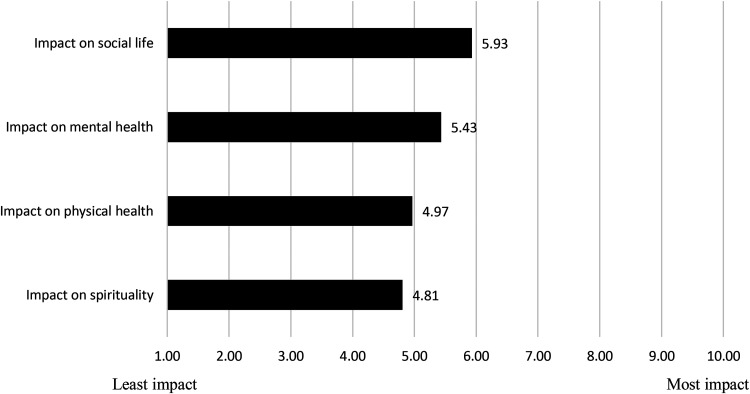
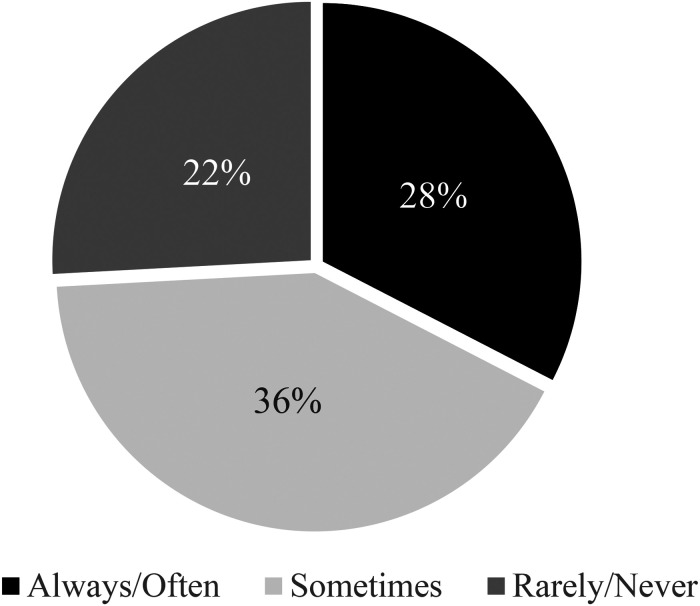
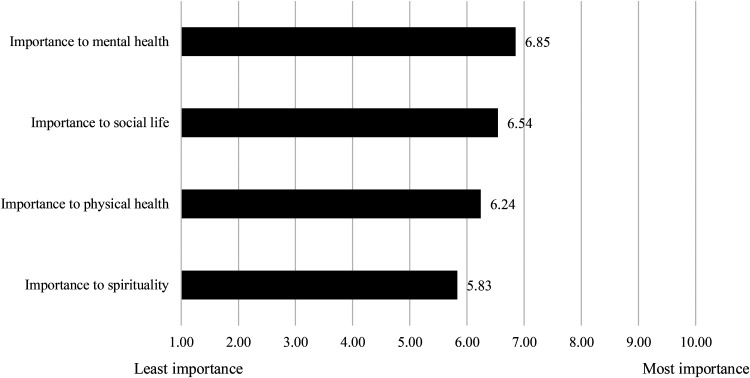
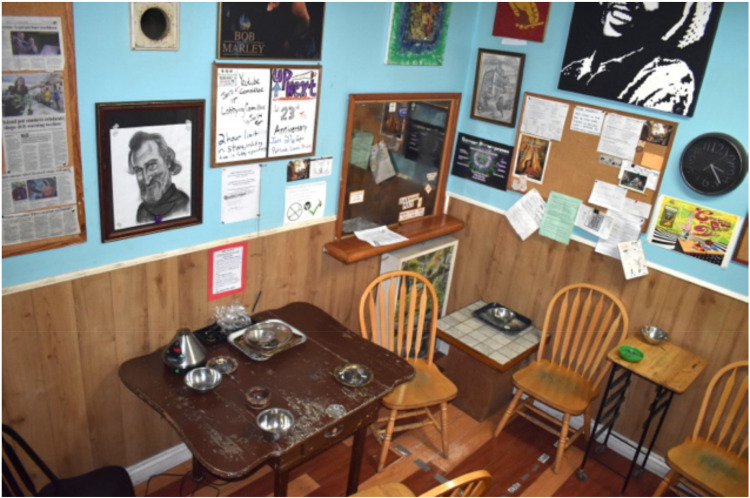
Community-based models of cannabis cultivation, distribution, and consumption-such as cannabis clubs-have been documented across Europe, North America, South America, and New Zealand since the 1990s. For the most part, these models have a history of operating outside existing legislation and regulations. Jurisdictions that have legalized cannabis have approached community-based models in opposite ways (eliminate vs. regulate). Canada legalizing cannabis has resulted in more stringent enforcement and concerted efforts to close these models despite documented health and social benefits. This paper presents a case study of the Victoria Cannabis Buyers Club (VCBC) and its consumption space-The Box. We conducted a survey of VCBC members to explore four domains: demographics, cannabis consumption, access to and use of The Box, and the impact of its temporary closure due to COVID-19. From the survey data ( = 104), descriptive statistics were generated and three conceptual avenues were identified. The majority of respondents were 40 years old and older and identified as White (European descent) cisgendered men and women. The majority reported an income of $40,000 or less and a housing status that prevented them from smoking. Close to 75% of our sample consumed cannabis multidaily for therapeutic purposes primarily, but also for a mix of recreation, social, spiritual, and traditional healing purposes. Smoking was the preferred mode of consumption. Respondents accessed The Box daily or weekly. Reasons and benefits for using The Box fell into three categories: public health, harm reduction, and wellness perspectives. Conceptually, we found that The Box acted as a therapeutic space and offered a much-needed consumption space for smokers. We also identified a need to unpack the concept of safety. Overall, the survey reinforces the need for an equity-informed approach to community-based models and cannabis consumption spaces in Canada.

摘要

自20世纪90年代以来,以社区为基础的大麻种植、分销和消费模式——如大麻俱乐部——在欧洲、北美、南美和新西兰都有记录。在很大程度上,这些模式有在现有法律法规之外运作的历史。将大麻合法化的司法管辖区以相反的方式对待以社区为基础的模式(取缔与监管)。加拿大将大麻合法化导致了更严格的执法,并齐心协力关闭这些模式,尽管有记录表明它们具有健康和社会效益。本文介绍了维多利亚大麻购买者俱乐部(VCBC)及其消费场所——盒子(The Box)的案例研究。我们对VCBC成员进行了一项调查,以探索四个领域:人口统计学、大麻消费、对盒子的使用和进入情况,以及因COVID-19导致其临时关闭的影响。根据调查数据(n = 104),生成了描述性统计数据,并确定了三个概念途径。大多数受访者年龄在40岁及以上,身份为白人(欧洲血统)顺性别男性和女性。大多数人报告收入为4万美元或以下,住房状况使他们无法吸烟。我们样本中近75%的人主要出于治疗目的每日多次消费大麻,但也用于娱乐、社交、精神和传统治疗等多种目的。吸烟是首选的消费方式。受访者每天或每周都会前往盒子。使用盒子的原因和好处分为三类:公共卫生、减少危害和健康角度。从概念上讲,我们发现盒子起到了治疗空间的作用,为吸烟者提供了急需的消费空间。我们还发现有必要剖析安全的概念。总体而言,该调查强化了在加拿大对以社区为基础的模式和大麻消费场所采取公平知情方法的必要性。
https://cdn.ncbi.nlm.nih.gov/pmc/blobs/cf23/10504615/2deee791a2f3/10.1177_00914509231183147-fig4.jpg
https://cdn.ncbi.nlm.nih.gov/pmc/blobs/cf23/10504615/006db3164685/10.1177_00914509231183147-fig1.jpg
https://cdn.ncbi.nlm.nih.gov/pmc/blobs/cf23/10504615/b2f07f626bb0/10.1177_00914509231183147-fig2.jpg
https://cdn.ncbi.nlm.nih.gov/pmc/blobs/cf23/10504615/e9fb42ceaa42/10.1177_00914509231183147-fig3.jpg
https://cdn.ncbi.nlm.nih.gov/pmc/blobs/cf23/10504615/2deee791a2f3/10.1177_00914509231183147-fig4.jpg
https://cdn.ncbi.nlm.nih.gov/pmc/blobs/cf23/10504615/006db3164685/10.1177_00914509231183147-fig1.jpg
https://cdn.ncbi.nlm.nih.gov/pmc/blobs/cf23/10504615/b2f07f626bb0/10.1177_00914509231183147-fig2.jpg
https://cdn.ncbi.nlm.nih.gov/pmc/blobs/cf23/10504615/e9fb42ceaa42/10.1177_00914509231183147-fig3.jpg
https://cdn.ncbi.nlm.nih.gov/pmc/blobs/cf23/10504615/2deee791a2f3/10.1177_00914509231183147-fig4.jpg

相似文献

1
"The Box Has Become an Indispensable Part of My Life": A Case Study of Victoria Cannabis Buyers Club and its Consumption Space.“盒子已成为我生活中不可或缺的一部分”:维多利亚大麻购买俱乐部及其消费空间的案例研究
Contemp Drug Probl. 2023 Sep;50(3):426-450. doi: 10.1177/00914509231183147. Epub 2023 Jun 22.
2
An analysis of cannabis home cultivation and associated risks in Canada, before and after legalization.对加拿大大麻家庭种植及其相关风险的分析,在合法化前后。
Health Rep. 2022 Sep 15;33(9):21-31. doi: 10.25318/82-003-x202200900003-eng.
3
Non-medical cannabis in North America: an overview of regulatory approaches.北美洲的非医用大麻:监管方法概述。
Public Health. 2020 Jan;178:7-14. doi: 10.1016/j.puhe.2019.08.018. Epub 2019 Oct 7.
4
Legalization as more effective control? Parallels between the end of alcohol prohibition (1927) and the legalization of cannabis (2018) in Ontario, Canada.合法化是更有效的管控手段?加拿大安大略省酒精禁令的终结(1927年)与大麻合法化(2018年)的相似之处。
Int J Drug Policy. 2021 Nov;97:103367. doi: 10.1016/j.drugpo.2021.103367. Epub 2021 Jul 24.
5
The Canadian Cannabis Act legalizes and regulates recreational cannabis use in 2018.2018 年,加拿大《大麻法案》使休闲大麻合法化并对其进行监管。
Health Policy. 2018 Mar;122(3):205-209. doi: 10.1016/j.healthpol.2018.01.009. Epub 2018 Jan 31.
6
Consumer agency in cannabis supply - Exploring auto-regulatory documents of the cannabis social clubs in Spain.消费者在大麻供应中的作用 - 探索西班牙大麻社交俱乐部的自我监管文件。
Int J Drug Policy. 2018 Apr;54:26-34. doi: 10.1016/j.drugpo.2017.12.018. Epub 2018 Feb 8.
7
Assessing the prevalence and correlates of prenatal cannabis consumption in an urban Canadian population: a cross-sectional survey.评估城市加拿大人群中产前大麻消费的流行率和相关性:一项横断面调查。
CMAJ Open. 2021 Jun 23;9(2):E703-E710. doi: 10.9778/cmajo.20200181. Print 2021 Apr-Jun.
8
Prevalence and forms of cannabis use in legal vs. illegal recreational cannabis markets.合法与非法娱乐用大麻市场中大麻使用的流行情况及形式。
Int J Drug Policy. 2020 Feb;76:102658. doi: 10.1016/j.drugpo.2019.102658. Epub 2020 Jan 9.
9
Municipal regulation of cannabis and public health in Canada: A comparison of Alberta, Ontario, and Québec.加拿大的城市大麻监管与公共健康:艾伯塔省、安大略省和魁北克省的比较。
Behav Sci Law. 2022 Mar;40(2):271-291. doi: 10.1002/bsl.2572. Epub 2022 Apr 25.
10
Access to cannabis retail stores across Canada 6 months following legalization: a descriptive study.加拿大合法化6个月后全国范围内大麻零售店的可及性:一项描述性研究。
CMAJ Open. 2019 Aug 13;7(3):E454-E461. doi: 10.9778/cmajo.20190012. Print 2019 Jul-Sep.

引用本文的文献

1
"Becoming a Medical Cannabis User" Revisited: Understanding the Role of Low-Threshold Access Points in British Columbia, Canada.再谈“成为医用大麻使用者”:理解加拿大不列颠哥伦比亚省低门槛接入点的作用
Contemp Drug Probl. 2025 Jan 22;52(3):344-367. doi: 10.1177/00914509241312872. eCollection 2025 Sep.
2
Conceptualizing 'cannabis harm reduction': lessons learned from cannabis compassion clubs and medical dispensaries in British Columbia (Canada).“大麻危害减少”的概念化:从加拿大不列颠哥伦比亚省的大麻同情俱乐部和医用大麻药房中吸取的经验教训。
Harm Reduct J. 2025 Apr 30;22(1):70. doi: 10.1186/s12954-025-01199-8.

本文引用的文献

1
Legalization of cannabis in Canada-Local media analysis.加拿大大麻合法化-本地媒体分析。
Am J Addict. 2022 Mar;31(2):148-151. doi: 10.1111/ajad.13263. Epub 2022 Jan 31.
2
The state of science on including inhalation within supervised consumption services: A scoping review of academic and grey literature.关于将吸入纳入监督消费服务的科学现状:学术和灰色文献的范围综述。
Int J Drug Policy. 2022 Apr;102:103589. doi: 10.1016/j.drugpo.2022.103589. Epub 2022 Jan 29.
3
Harm reduction and cannabis social clubs: Exploring their true potential.
减少伤害与大麻社交俱乐部:探索其真正潜力。
Int J Drug Policy. 2021 Nov;97:103358. doi: 10.1016/j.drugpo.2021.103358. Epub 2021 Jul 10.
4
The role of cannabis in pain management among people living with HIV who use drugs: A qualitative study.大麻在药物使用的 HIV 感染者疼痛管理中的作用:一项定性研究。
Drug Alcohol Rev. 2021 Nov;40(7):1325-1333. doi: 10.1111/dar.13294. Epub 2021 Apr 11.
5
Use of Cannabis for Harm Reduction Among People at High Risk for Overdose in Vancouver, Canada (2016-2018).加拿大温哥华高危药物过量人群的大麻危害减少使用情况(2016-2018 年)。
Am J Public Health. 2021 May;111(5):969-972. doi: 10.2105/AJPH.2021.306168. Epub 2021 Mar 18.
6
Online health survey research during COVID-19.新冠疫情期间的在线健康调查研究。
Lancet Digit Health. 2021 Feb;3(2):e76-e77. doi: 10.1016/S2589-7500(21)00002-9.
7
Cannabis Significantly Reduces the Use of Prescription Opioids and Improves Quality of Life in Authorized Patients: Results of a Large Prospective Study.大麻显著减少了授权患者对处方类阿片的使用,并改善了他们的生活质量:一项大型前瞻性研究的结果。
Pain Med. 2021 Mar 18;22(3):727-739. doi: 10.1093/pm/pnaa396.
8
Cannabis use is associated with reduced risk of exposure to fentanyl among people on opioid agonist therapy during a community-wide overdose crisis.大麻使用与在社区范围内阿片类药物过量危机期间接受阿片类激动剂治疗的人群中接触芬太尼的风险降低有关。
Drug Alcohol Depend. 2021 Feb 1;219:108420. doi: 10.1016/j.drugalcdep.2020.108420. Epub 2020 Dec 17.
9
Frequent Cannabis Use and Cessation of Injection of Opioids, Vancouver, Canada, 2005-2018.2005-2018 年加拿大温哥华频繁使用大麻与阿片类药物注射的终止情况。
Am J Public Health. 2020 Oct;110(10):1553-1560. doi: 10.2105/AJPH.2020.305825. Epub 2020 Aug 20.
10
Research with Marginalized Communities: Challenges to Continuity During the COVID-19 Pandemic.对边缘化社区的研究:新冠疫情期间连续性面临的挑战
AIDS Behav. 2020 Jul;24(7):2009-2012. doi: 10.1007/s10461-020-02920-3.