Gagnon Marilou, Hobbs Heather
School of Nursing, University of Victoria, Victoria, BC, Canada.
Canadian Institute for Substance Use Research, University of Victoria, 2300 McKenzie Avenue, Victoria, BC, V8N 5M8, Canada.
Harm Reduct J. 2025 Apr 30;22(1):70. doi: 10.1186/s12954-025-01199-8.
Drawing on a qualitative case study of cannabis compassion clubs and medical dispensaries in British Columbia (Canada), the main goal of this paper is to generate insights that have the potential to advance and broaden the conceptualization of 'cannabis harm reduction'.
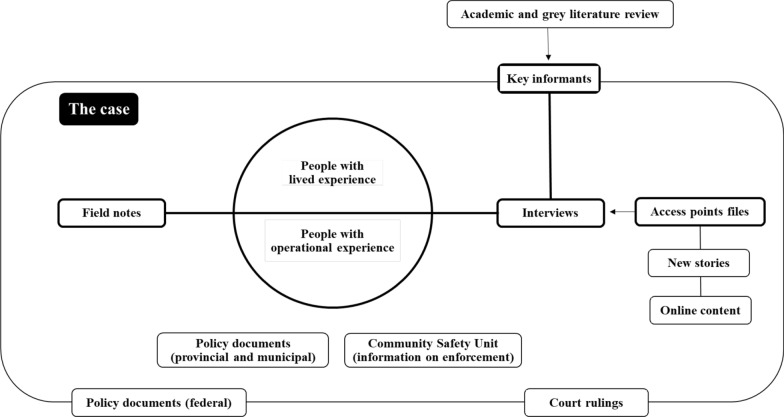
We undertook a qualitative case study by drawing on seven data sources: (1) online content, (2) news stories, (3) legal documents, (4) policy documents, (5) information about enforcement, (6) interviews with (i) key informants, (ii) participants with operational experience (i.e., people engaged in the active operations of compassion clubs/dispensaries in various roles), and (iii) participants with lived experience of medicating with cannabis, and finally (7) field notes. For this paper, we applied a harm reduction lens to the participant interview data.
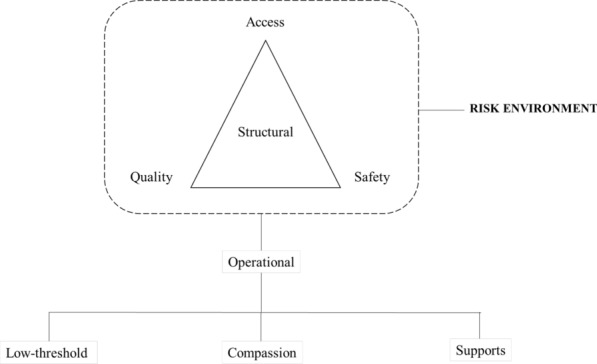
Applying a harm reduction lens to the participant interview data allowed us to identify two main conceptual dimensions: structural and operational. The structural dimension focused on the work undertaken by cannabis compassion clubs and medical dispensaries to address a risk environment created by systems, laws, and policies. The main themes identified here were access, safety, and quality. The operational dimension focused on the characteristics of the services provided cannabis compassion clubs and medical dispensaries. The main themes identified here were low-threshold, compassion, and supports. Our findings suggest that these two dimensions worked together to generate conditions conducive to 'cannabis harm reduction'.
Based on our findings, we identified research, policy, and advocacy implications. We argue that research should focus on loss of access, regulation, a broader conceptualization of cannabis substitution, and better integration between cannabis and harm reduction. We also highlight the need for a harm reduction analysis of the Cannabis Act, new community-oriented models to meet the needs of people who medicate with cannabis, and non-profit supply pathways. Finally, we suggest that structurally-oriented advocacy is needed to achieve community-oriented models of cannabis cultivation, distribution, and consumption and that this advocacy would benefit harm reduction more broadly.
基于对加拿大不列颠哥伦比亚省大麻同情俱乐部和医用大麻药房的定性案例研究,本文的主要目标是得出有助于推进和拓宽“大麻危害减少”概念化的见解。
我们通过利用七个数据源进行了定性案例研究:(1)在线内容,(2)新闻报道,(3)法律文件,(4)政策文件,(5)执法信息,(6)访谈(i)关键 informant,(ii)有运营经验的参与者(即从事同情俱乐部/药房各种角色的积极运营的人员),以及(iii)有使用大麻进行药物治疗亲身经历的参与者,最后(7)实地笔记。在本文中,我们对参与者访谈数据应用了危害减少视角。
对参与者访谈数据应用危害减少视角使我们能够识别出两个主要概念维度:结构维度和运营维度。结构维度关注大麻同情俱乐部和医用大麻药房为应对由系统、法律和政策造成的风险环境所开展的工作。这里确定的主要主题是获取、安全和质量。运营维度关注大麻同情俱乐部和医用大麻药房提供的服务的特征。这里确定的主要主题是低门槛、同情和支持。我们的研究结果表明,这两个维度共同作用,产生了有利于“大麻危害减少”的条件。
基于我们的研究结果,我们确定了研究、政策和宣传方面的影响。我们认为研究应关注获取机会的丧失、监管、对大麻替代的更广泛概念化,以及大麻与危害减少之间更好的整合。我们还强调需要对《大麻法案》进行危害减少分析,需要新的以社区为导向的模式来满足使用大麻进行药物治疗的人群的需求,以及需要非营利供应途径。最后,我们建议需要进行以结构为导向的宣传,以实现以社区为导向的大麻种植、分销和消费模式,并且这种宣传将更广泛地有利于危害减少。