Cao Shinuo, Jia Peng, Wu Zhi, Lu Huipeng, Cheng Yuting, Chen Changchun, Zhou Mo, Zhu Shanyuan
Swine Infectious Diseases Division, Jiangsu Key Laboratory for High-Tech Research and Development of Veterinary Biopharmaceuticals, Engineering Technology Research Center for Modern Animal Science and Novel Veterinary Pharmaceutic Development, Jiangsu Agri-animal Husbandry Vocational College, Taizhou, Jiangsu Province, China.
Shenzhen Technology University, Shenzhen, Guangdong Province, China.
Front Vet Sci. 2023 Aug 31;10:1239926. doi: 10.3389/fvets.2023.1239926. eCollection 2023.
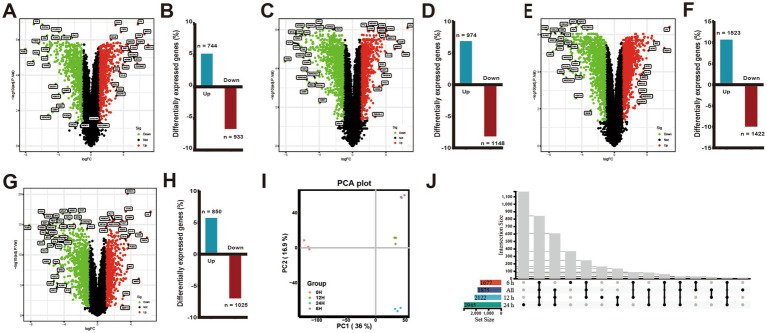
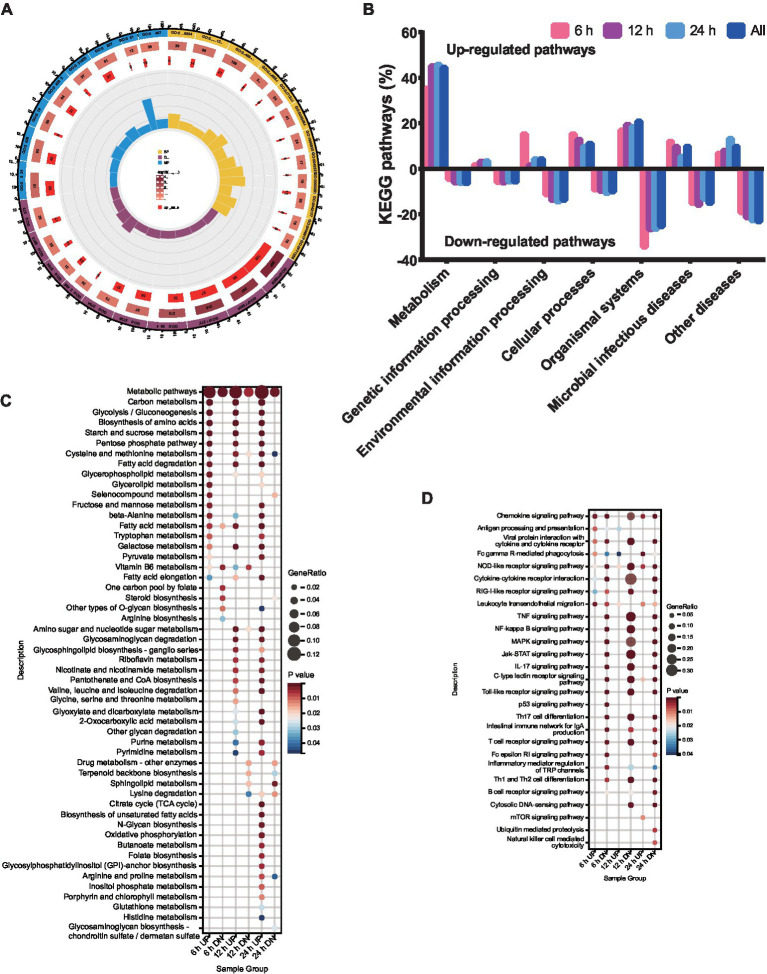
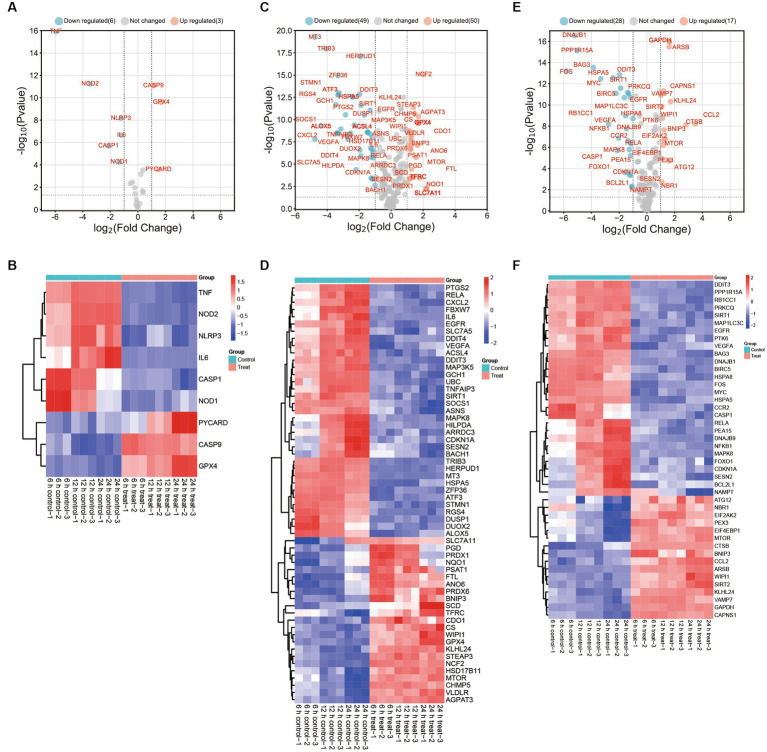
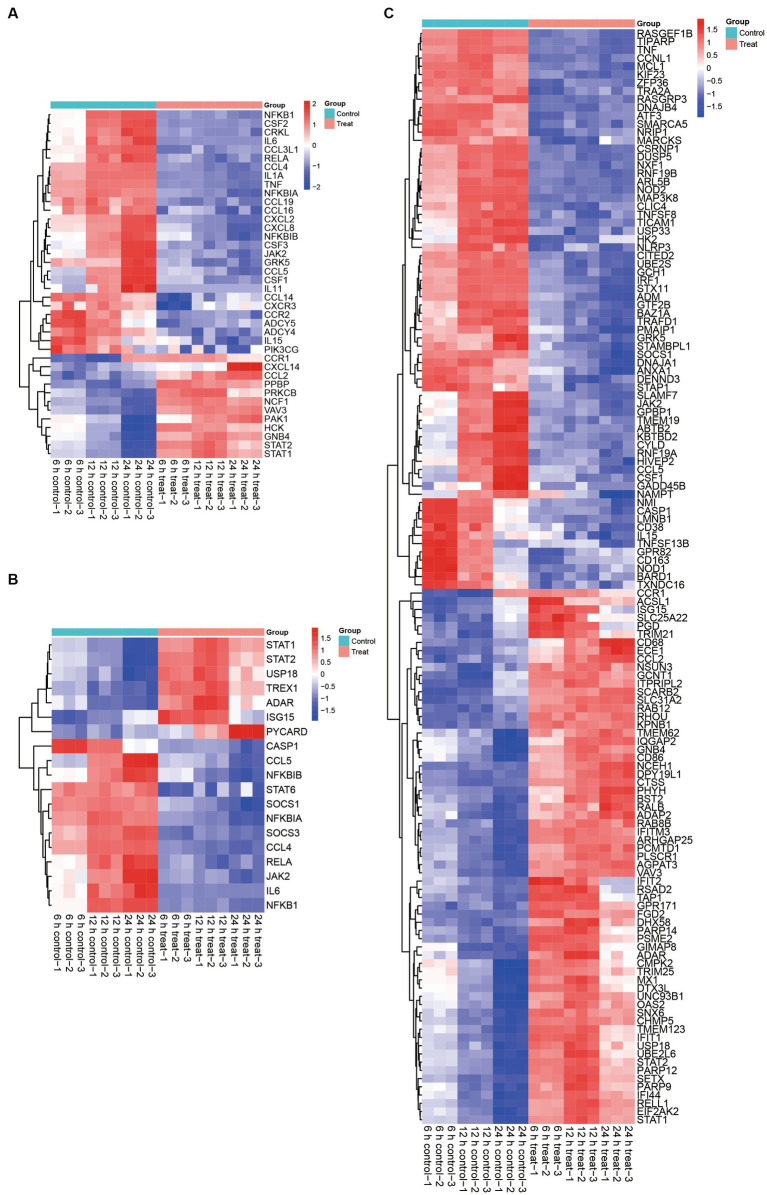
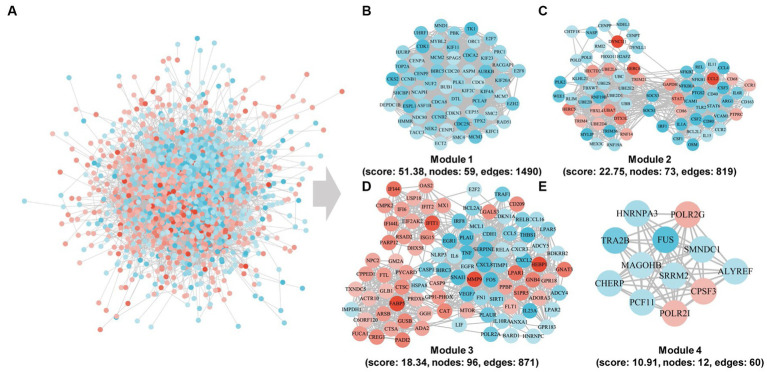
The African swine fever virus is a virulent and communicable viral disease that can be transmitted by infected swine, contaminated pork products, or soft tick vectors. Nonstructural proteins encoded by ASFV regulate viral replication, transcription, and evasion. However, the mechanisms underlying the host response to ASFV infection remain incompletely understood. In order to enhance comprehension of the biology and molecular mechanisms at distinct time intervals (6, 12, 24 h) post infection, transcriptome analyses were executed to discern differentially expressed genes (DEGs) between ASFV and mock-infected PAMs. The transcriptomic analysis unveiled a total of 1,677, 2,122, and 2,945 upregulated DEGs and 933, 1,148, and 1,422 downregulated DEGs in ASFV- and mock-infected groups at 6, 12, and 24 h.p.i.. The results of the transcriptomic analysis demonstrated that the infection of ASFV significantly stimulated host metabolism pathways while concurrently inhibiting the expression of various immune responses and cell death pathways. Our study offers crucial mechanistic insights into the comprehension of ASFV viral pathogenesis and the multifaceted host immune responses. The genes that were dysregulated may serve as potential candidates for further exploration of anti-ASFV strategies.
非洲猪瘟病毒是一种烈性传染病病毒,可通过感染的猪、受污染的猪肉产品或软蜱传播媒介传播。非洲猪瘟病毒编码的非结构蛋白可调节病毒复制、转录和免疫逃逸。然而,宿主对非洲猪瘟病毒感染的反应机制仍不完全清楚。为了更好地理解感染后不同时间间隔(6、12、24小时)的生物学和分子机制,进行了转录组分析,以识别非洲猪瘟病毒感染组和模拟感染的猪肺泡巨噬细胞(PAMs)之间的差异表达基因(DEGs)。转录组分析显示,在感染后6、12和24小时,非洲猪瘟病毒感染组分别有1677、2122和2945个上调的差异表达基因,以及933、1148和1422个下调的差异表达基因。转录组分析结果表明,非洲猪瘟病毒感染显著刺激宿主代谢途径,同时抑制各种免疫反应和细胞死亡途径的表达。我们的研究为理解非洲猪瘟病毒发病机制和宿主多方面免疫反应提供了关键的机制性见解。失调的基因可能作为进一步探索抗非洲猪瘟病毒策略的潜在候选基因。