Department of Dermatology.
Department of Molecular Genetics and Microbiology.
JCI Insight. 2023 Oct 23;8(20):e171548. doi: 10.1172/jci.insight.171548.
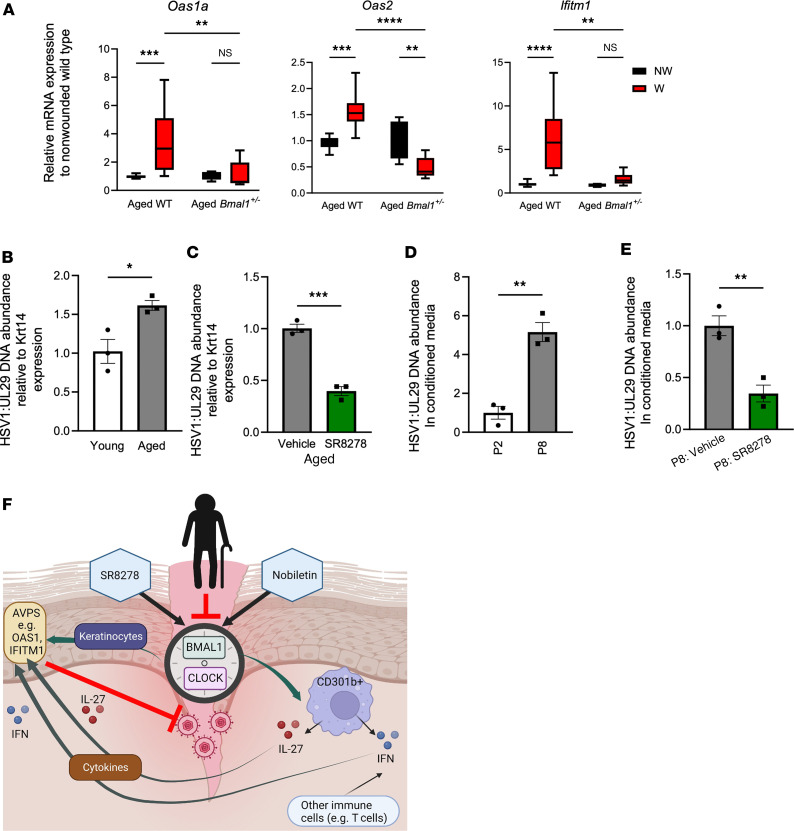
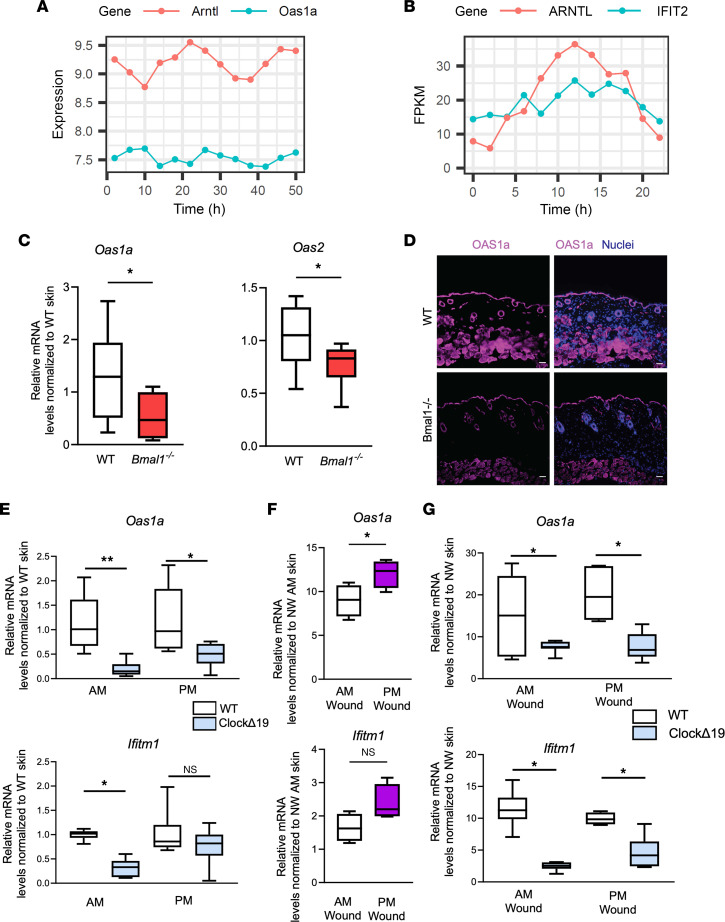
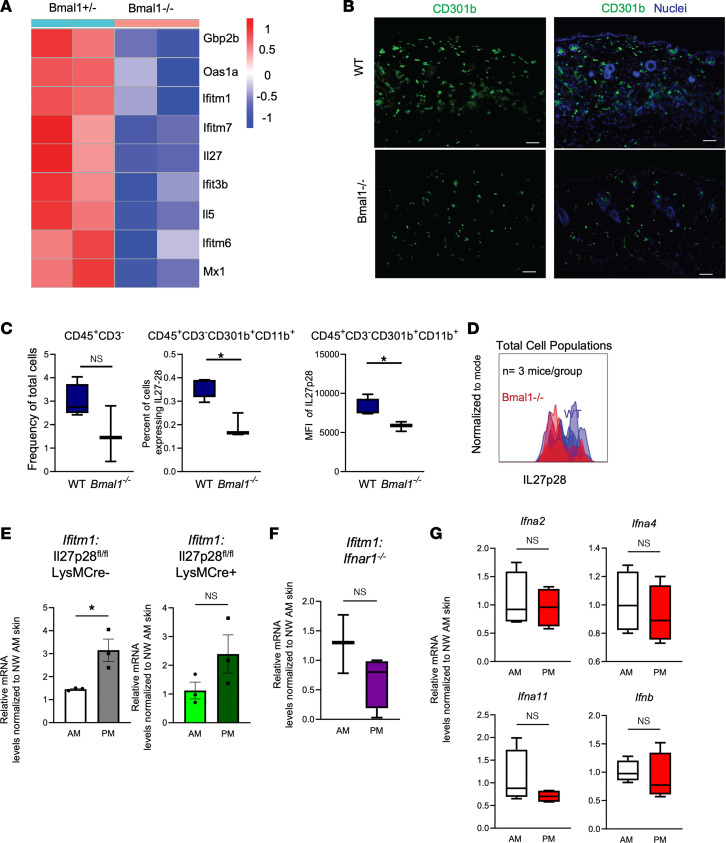
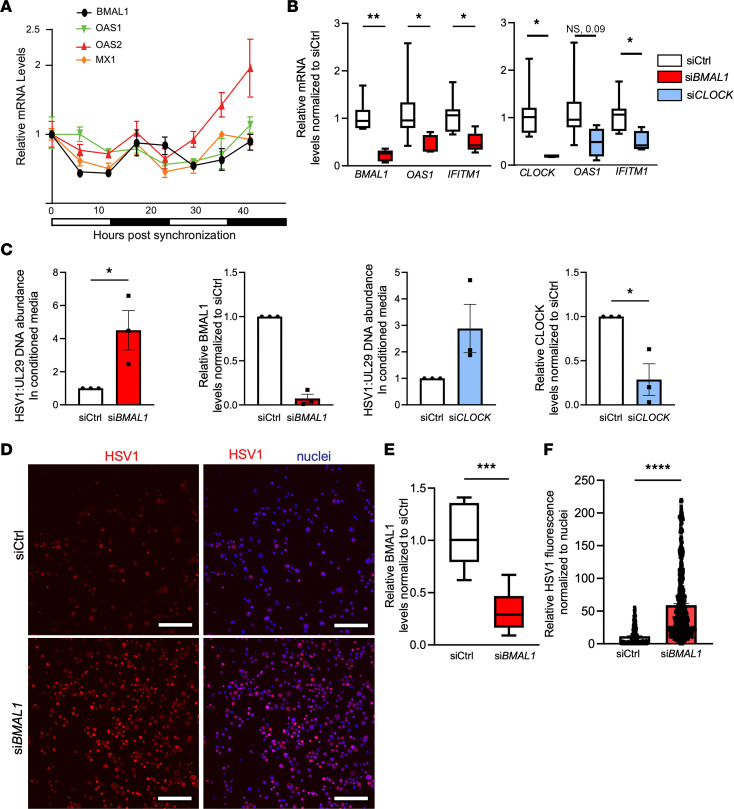
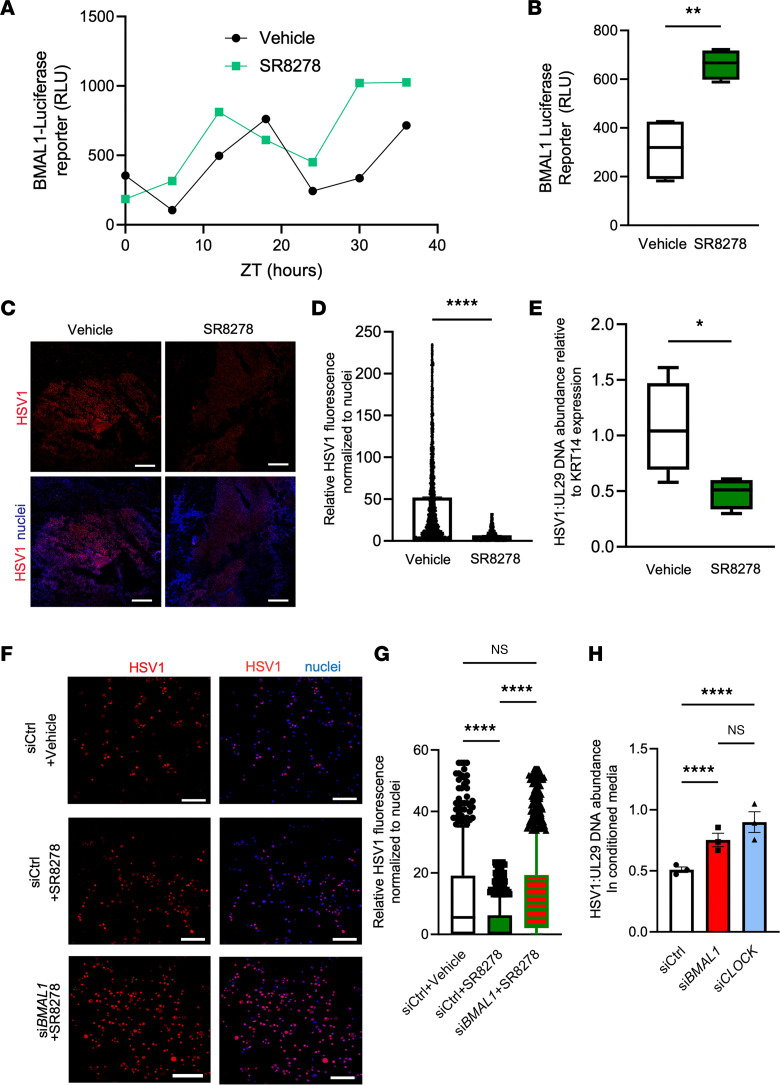
Aged skin is prone to viral infections, but the mechanisms responsible for this immunosenescent immune risk are unclear. We observed that aged murine and human skin expressed reduced levels of antiviral proteins (AVPs) and circadian regulators, including Bmal1 and Clock. Bmal1 and Clock were found to control rhythmic AVP expression in skin, and such circadian control of AVPs was diminished by disruption of immune cell IL-27 signaling and deletion of Bmal1/Clock genes in mouse skin, as well as siRNA-mediated knockdown of CLOCK in human primary keratinocytes. We found that treatment with the circadian-enhancing agents nobiletin and SR8278 reduced infection of herpes simplex virus 1 in epidermal explants and human keratinocytes in a BMAL1/CLOCK-dependent manner. Circadian-enhancing treatment also reversed susceptibility of aging murine skin and human primary keratinocytes to viral infection. These findings reveal an evolutionarily conserved and age-sensitive circadian regulation of cutaneous antiviral immunity, underscoring circadian restoration as an antiviral strategy in aging populations.
衰老的皮肤容易受到病毒感染,但导致这种免疫衰老免疫风险的机制尚不清楚。我们观察到,衰老的鼠类和人类皮肤表达的抗病毒蛋白 (AVP) 和昼夜节律调节剂水平降低,包括 Bmal1 和 Clock。发现 Bmal1 和 Clock 控制皮肤中 AVP 的节律表达,而免疫细胞 IL-27 信号的破坏以及小鼠皮肤中 Bmal1/Clock 基因的缺失,以及人原代角质形成细胞中 CLOCK 的 siRNA 介导敲低,会削弱这种昼夜节律对 AVP 的控制。我们发现,昼夜节律增强剂诺贝汀和 SR8278 的治疗以依赖于 BMAL1/CLOCK 的方式减少了表皮外植体和人角质形成细胞中单纯疱疹病毒 1 的感染。昼夜节律增强治疗还逆转了衰老小鼠皮肤和人原代角质形成细胞对病毒感染的易感性。这些发现揭示了皮肤抗病毒免疫的一种进化上保守且对年龄敏感的昼夜节律调节,强调了在老年人群中恢复昼夜节律作为一种抗病毒策略的重要性。