Dudipala Kavya Reddy, Le Thanh-Hai, Nie Wanyi, Hoye Robert L Z
Inorganic Chemistry Laboratory, University of Oxford, Oxford, OX1 3QR, UK.
Center for Integrated Nanotechnologies, Los Alamos National Laboratory, Los Alamos, NM, 87545, USA.
Adv Mater. 2024 Feb;36(8):e2304523. doi: 10.1002/adma.202304523. Epub 2023 Dec 6.
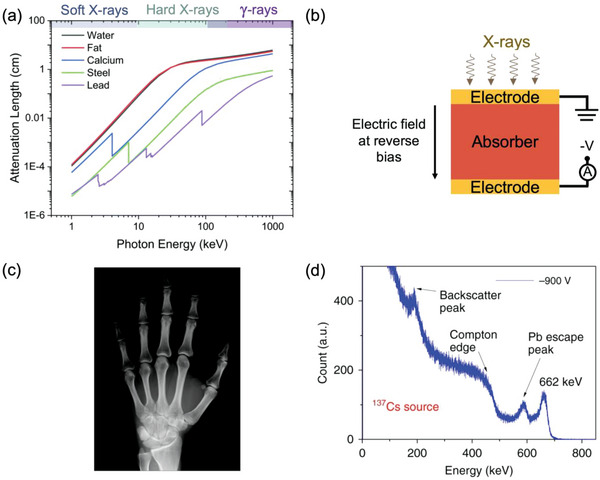
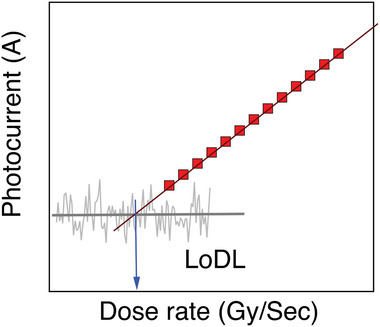
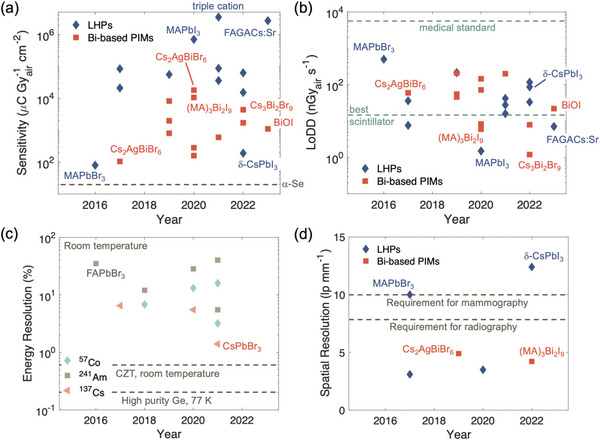
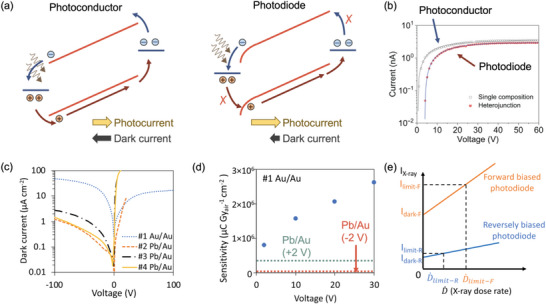
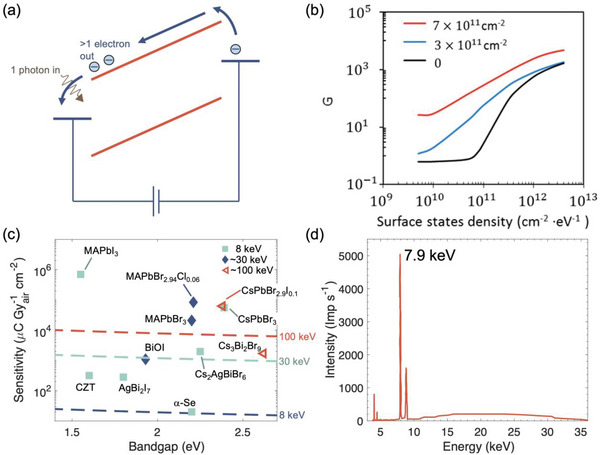
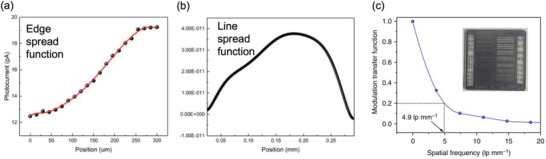
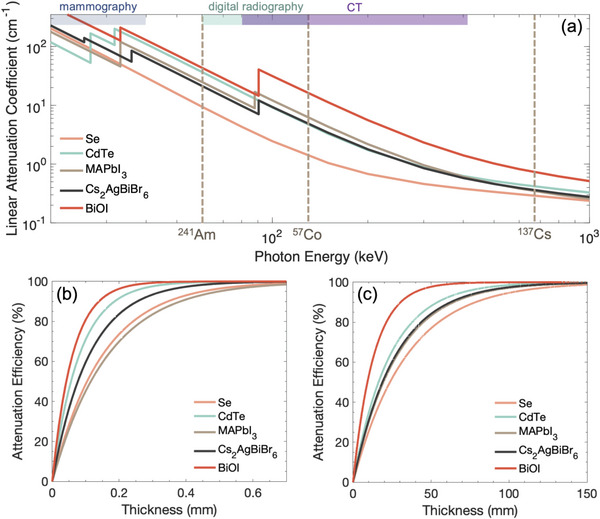
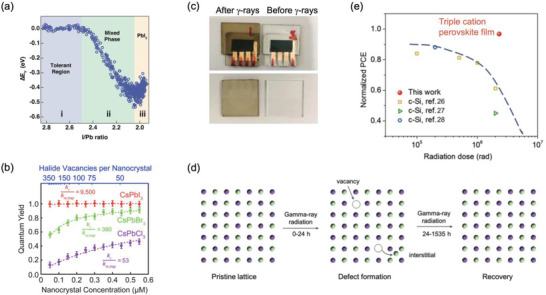
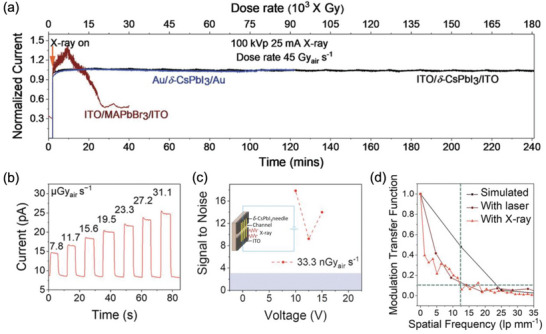
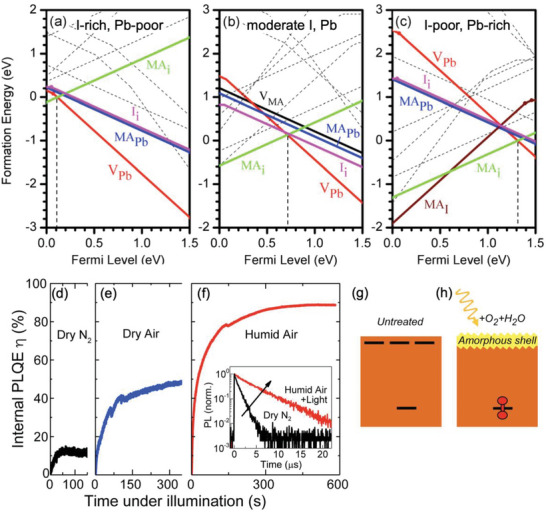
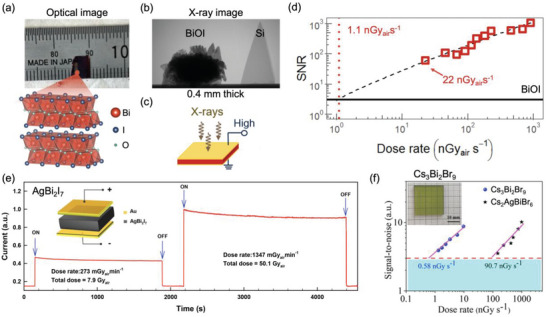
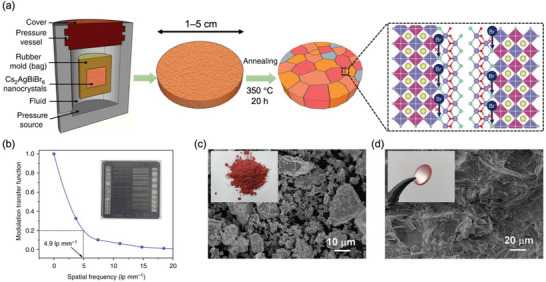
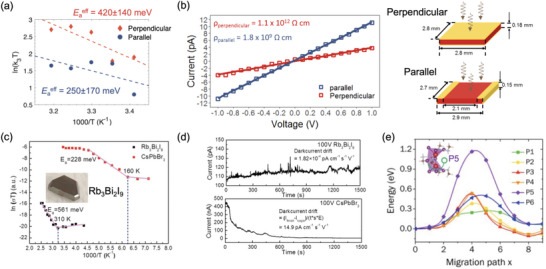
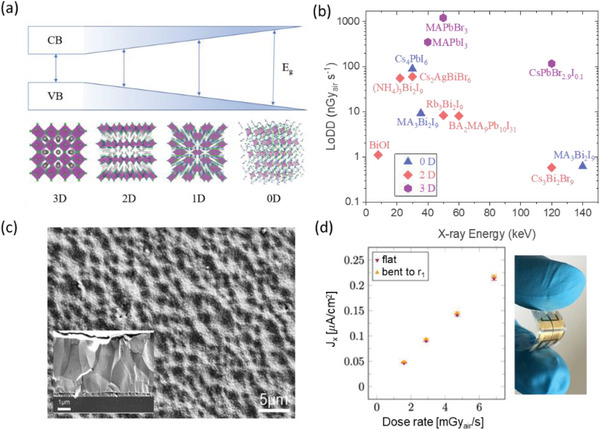
The past decade has witnessed a rapid rise in the performance of optoelectronic devices based on lead-halide perovskites (LHPs). The large mobility-lifetime products and defect tolerance of these materials, essential for optoelectronics, also make them well-suited for radiation detectors, especially given the heavy elements present, which is essential for strong X-ray and γ-ray attenuation. Over the past decade, LHP thick films, wafers, and single crystals have given rise to direct radiation detectors that have outperformed incumbent technologies in terms of sensitivity (reported values up to 3.5 × 10 µC Gy cm ), limit of detection (directly measured values down to 1.5 nGy s ), along with competitive energy and imaging resolution at room temperature. At the same time, lead-free perovskite-inspired materials (e.g., methylammonium bismuth iodide), which have underperformed in solar cells, have recently matched and, in some areas (e.g., in polarization stability), surpassed the performance of LHP detectors. These advances open up opportunities to achieve devices for safer medical imaging, as well as more effective non-invasive analysis for security, nuclear safety, or product inspection applications. Herein, the principles behind the rapid rises in performance of LHP and perovskite-inspired material detectors, and how their properties and performance link with critical applications in non-invasive diagnostics are discussed. The key strategies to engineer the performance of these materials, and the important challenges to overcome to commercialize these new technologies are also discussed.
在过去十年中,基于卤化铅钙钛矿(LHP)的光电器件性能迅速提升。这些材料具有较大的迁移率-寿命乘积以及缺陷容忍度,这对于光电子学至关重要,也使其非常适合用于辐射探测器,特别是考虑到其中存在的重元素,这对于强烈的X射线和γ射线衰减至关重要。在过去十年中,LHP厚膜、晶圆和单晶催生了直接辐射探测器,这些探测器在灵敏度(报告值高达3.5×10 µC Gy cm )、检测限(直接测量值低至1.5 nGy s )方面优于现有技术,同时在室温下具有有竞争力的能量和成像分辨率。与此同时,受钙钛矿启发的无铅材料(如甲基碘化铋),其在太阳能电池中的表现欠佳,但最近已达到并在某些领域(如极化稳定性)超过了LHP探测器的性能。这些进展为实现用于更安全医学成像的设备以及用于安全、核安全或产品检测应用的更有效的非侵入性分析提供了机会。在此,将讨论LHP和受钙钛矿启发的材料探测器性能迅速提升背后的原理,以及它们的特性和性能如何与非侵入性诊断中的关键应用相关联。还将讨论设计这些材料性能的关键策略以及将这些新技术商业化需要克服的重要挑战。