Eye Center of the Second Affiliated Hospital, School of Medicine, Zhejiang University, Hangzhou, Zhejiang Province, China.
Zhejiang Provincial Key Lab of Ophthalmology, Hangzhou, Zhejiang Province, China.
Cell Death Dis. 2023 Sep 19;14(9):615. doi: 10.1038/s41419-023-06140-0.
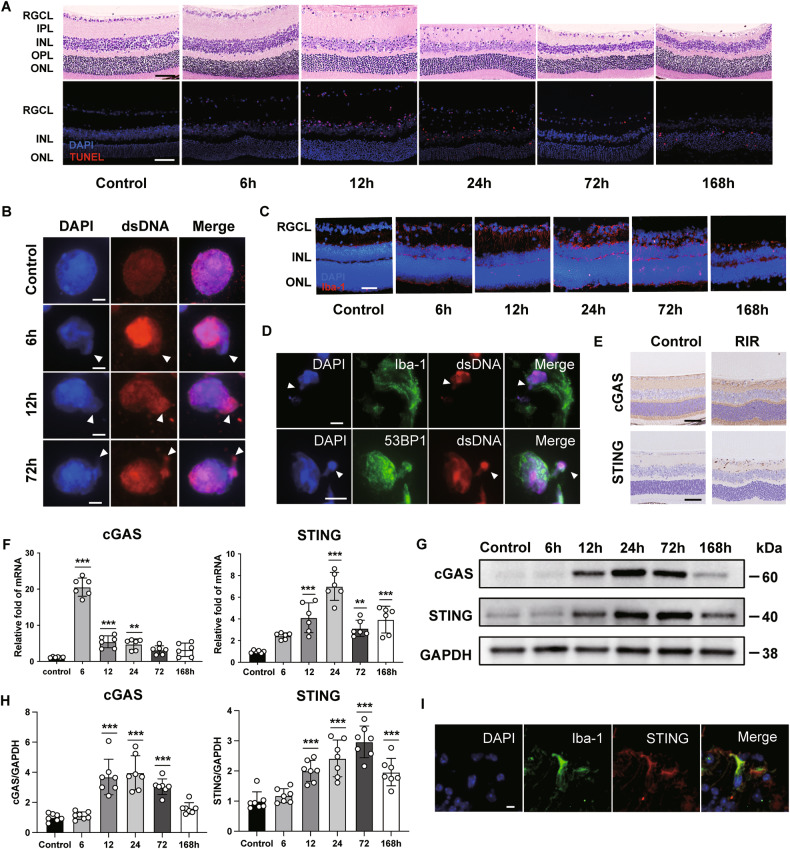
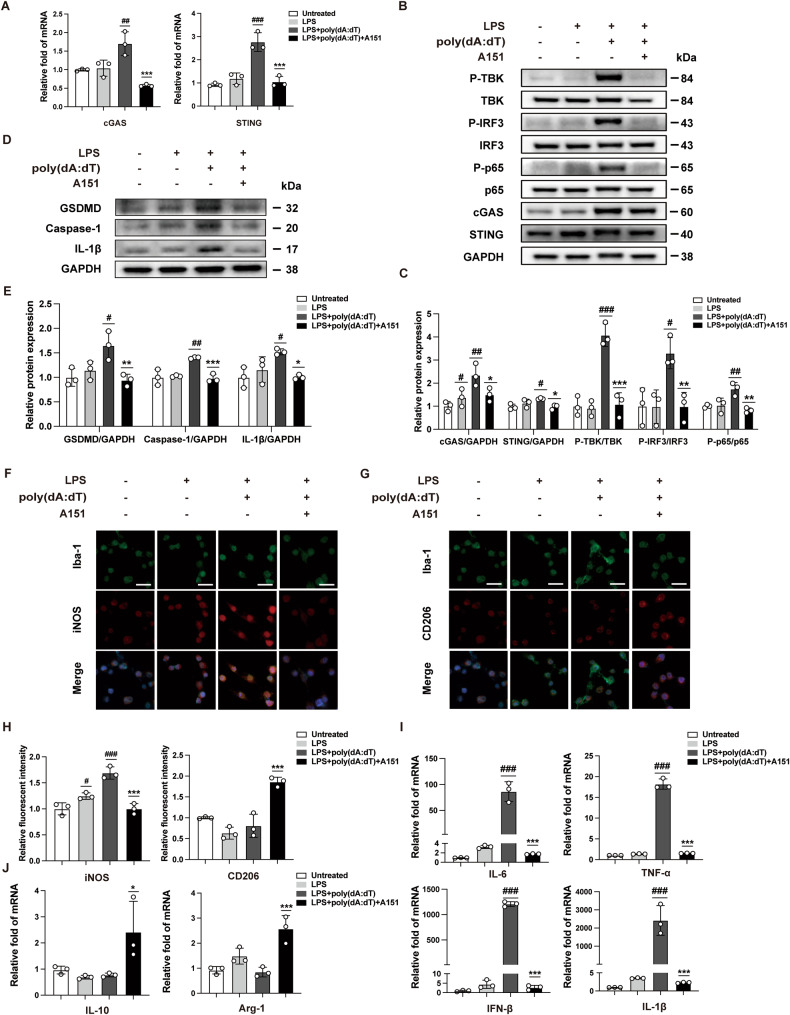
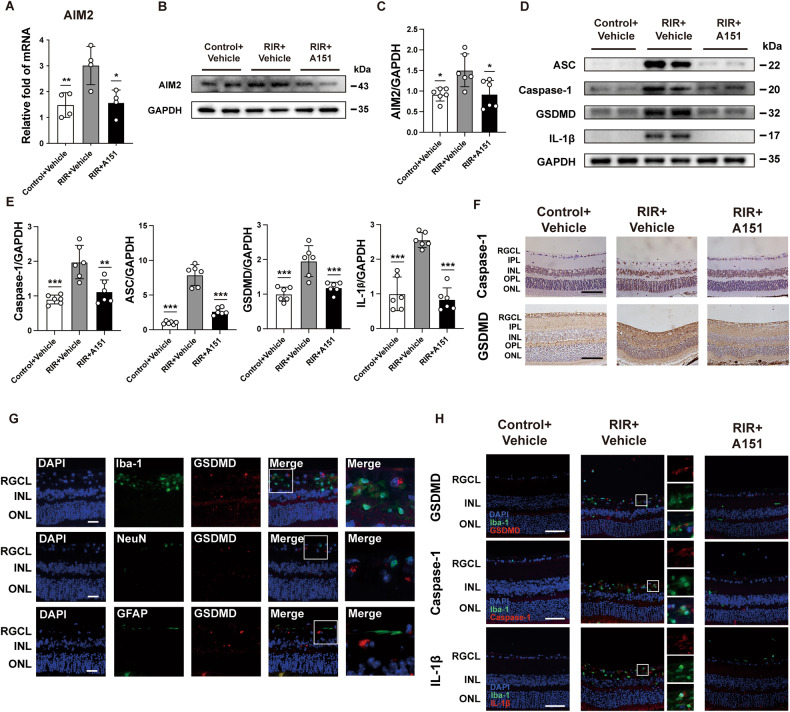
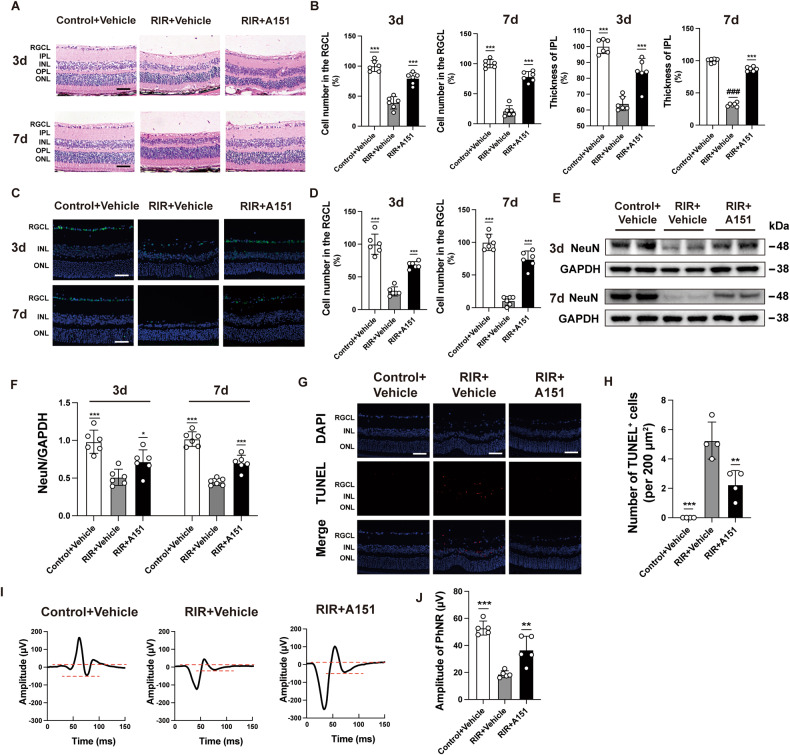
Acute glaucoma is a vision-threatening disease characterized by a sudden elevation in intraocular pressure (IOP), followed by retinal ganglion cell (RGC) death. Cytosolic double-stranded DNA (dsDNA)-a damage-associated molecular pattern (DAMP) that triggers inflammation and immune responses-has been implicated in the pathogenesis of IOP-induced RGC death, but the underlying mechanism is not entirely clear. In this study, we investigated the effect of the inflammatory cascade on dsDNA recognition and examined the neuroprotective effect of the cyclic GMP-AMP (cGAMP) synthase (cGAS) antagonist A151 on a retinal ischemia/reperfusion (RIR) mouse model. Our findings reveal a novel mechanism of microglia-induced neuroinflammation-mediated RGC death associated with glaucomatous vision loss. We found that RIR injury facilitated the release of dsDNA, which initiated inflammatory responses by activating cGAS-stimulator of interferon genes (STING) pathway. Correspondingly, elevated expressions of cGAS and STING were found in retinal samples from human glaucoma donors. Furthermore, we found that deletion or inhibition of cGAS or STING in microglia transfected with poly(dA:dT) specifically decreased microglia activation and inflammation response. We also observed that A151 treatment promoted poly(dA:dT)--stimulated changes in polarization from the M1 to the M2 phenotype in microglia. Subsequently, A151 administered to mice effectively inhibited the cGAS-STING pathway, absent in melanoma 2 (AIM2) inflammasome and pyroptosis-related molecules. Furthermore, A151 administration significantly reduced neuroinflammation, ameliorated RGC death and RGC-related reductions in visual function. These findings provide a unique perspective on glaucomatous neuropathogenesis and suggest cGAS as an underlying target of retinal inflammation to provide a potential therapeutic for acute glaucoma.
急性青光眼是一种威胁视力的疾病,其特征是眼内压(IOP)突然升高,随后视网膜神经节细胞(RGC)死亡。细胞溶质双链 DNA(dsDNA)-一种触发炎症和免疫反应的损伤相关分子模式(DAMP)-已被牵连到 IOP 诱导的 RGC 死亡的发病机制中,但潜在机制尚不完全清楚。在这项研究中,我们研究了炎症级联反应对 dsDNA 识别的影响,并检查了环鸟苷酸-腺苷酸(cGAMP)合酶(cGAS)拮抗剂 A151 对视网膜缺血/再灌注(RIR)小鼠模型的神经保护作用。我们的研究结果揭示了一种与青光眼视力丧失相关的小胶质细胞诱导的神经炎症介导的 RGC 死亡的新机制。我们发现 RIR 损伤促进了 dsDNA 的释放,dsDNA 通过激活 cGAS-干扰素基因刺激物(STING)途径引发炎症反应。相应地,在来自人青光眼供体的视网膜样本中发现了 cGAS 和 STING 的上调表达。此外,我们发现转染 poly(dA:dT)的小胶质细胞中 cGAS 或 STING 的缺失或抑制特异性降低了小胶质细胞的激活和炎症反应。我们还观察到 A151 处理促进了 poly(dA:dT)刺激的小胶质细胞从 M1 到 M2 表型的极化变化。随后,A151 给药有效地抑制了 cGAS-STING 途径,该途径不存在于黑色素瘤 2(AIM2)炎性小体和细胞焦亡相关分子中。此外,A151 给药显著减少了神经炎症,改善了 RGC 死亡和与 RGC 相关的视觉功能下降。这些发现为青光眼神经病变的发病机制提供了独特的视角,并表明 cGAS 是视网膜炎症的潜在靶点,为急性青光眼提供了一种潜在的治疗方法。