Gier Nadine R, Krampe Caspar, Kenning Peter
Faculty of Business Administration and Economics, Heinrich Heine University Düsseldorf, Düsseldorf, Germany.
Marketing and Consumer Behaviour Group, Wageningen University and Research, Wageningen, Netherlands.
Front Hum Neurosci. 2023 Sep 5;17:1085810. doi: 10.3389/fnhum.2023.1085810. eCollection 2023.
One approach to bridging the gap between consumer intentions and behavior is persuasive communication to reinforce their intentions and thereby support their behavior change. Message framing has proven to be a useful, persuasive communication tool. However, message framing is considered more complicated than other types of framing because, in addition to concept-specific elements, it is also strongly influenced by and, in turn, influences emotions. Therefore, it is almost impossible for consumers to verbally express their attitudes, so the challenge is to explain and measure its impact. This research aims to help in this regard by suggesting a theoretical model to understand how message framing is processed from a consumer neuroscience perspective. More precisely, the factors that constitute message framing are systematized and built on a reflective-impulsive model and a neural emotion-cognition framework interpreted to explain the persuasive effects of message framing.
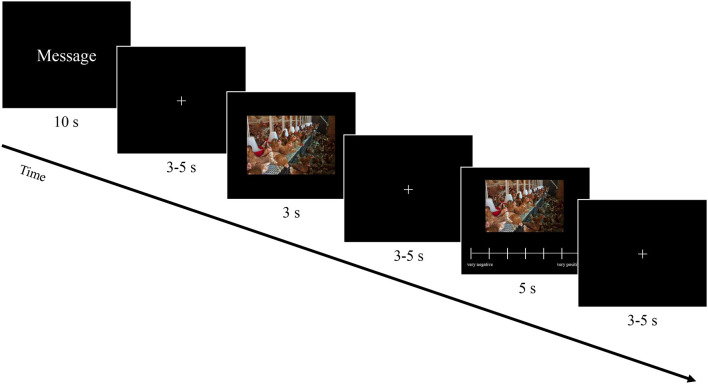
A functional magnetic resonance imaging (fMRI) experiment is used to examine the effects of message framing for four different frame types that are hypothesized to affect consumer information processing differently.
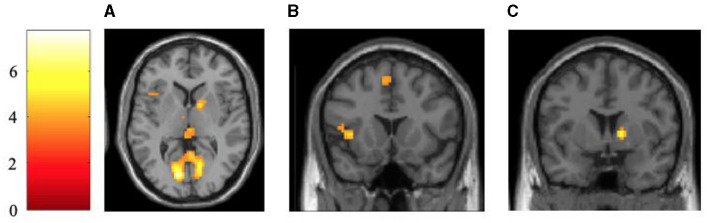
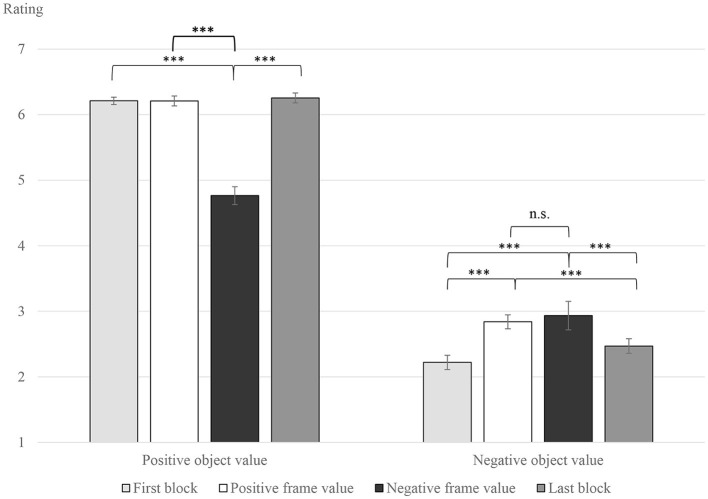
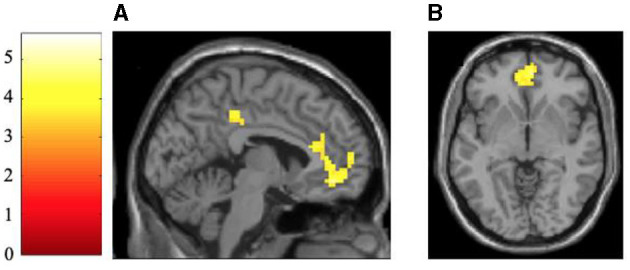
The results suggest that communication strategies should take into account the valence of the objects and the frame used. The behavioral results partially confirm the assumption that two types of information processing could take place, as suggested by the reflective-impulsive model. At the neural level, using the network perspective, the results show that certain brain regions primarily associated with emotional and cognitive interaction processes are active during processing, depending on the framing of the message.
In cases of indirect avoidance value-consistent framing, it may be good to communicate the bad in the appropriate frame to influence information processing.
弥合消费者意图与行为之间差距的一种方法是进行说服性沟通,以强化他们的意图,从而支持他们的行为改变。信息框架已被证明是一种有用的说服性沟通工具。然而,信息框架被认为比其他类型的框架更复杂,因为除了特定概念的元素外,它还受到情绪的强烈影响,反过来也会影响情绪。因此,消费者几乎不可能用言语表达他们的态度,所以挑战在于解释和衡量其影响。本研究旨在通过提出一个理论模型来帮助解决这一问题,该模型从消费者神经科学的角度理解信息框架是如何被处理的。更确切地说,构成信息框架的因素被系统化,并建立在一个反思-冲动模型和一个神经情绪-认知框架之上,该框架被解释以说明信息框架的说服效果。
使用功能磁共振成像(fMRI)实验来检验信息框架对四种不同框架类型的影响,这些框架类型被假设会以不同方式影响消费者信息处理。
结果表明,沟通策略应考虑对象的效价和所使用的框架。行为结果部分证实了反思-冲动模型所提出的两种信息处理可能发生的假设。在神经层面,从网络角度来看,结果表明,根据信息框架的不同,某些主要与情绪和认知交互过程相关的脑区在处理过程中会活跃起来。
在间接避免价值一致框架的情况下,以适当的框架传达负面信息可能有助于影响信息处理。