Department of Cardiology, The Second Affiliated Hospital of Nanchang University, Nanchang, China.
Department of Cardiology, Affiliated Hospital of Guilin Medical University, Guilin, China.
ESC Heart Fail. 2023 Apr;10(2):1144-1157. doi: 10.1002/ehf2.14279. Epub 2023 Jan 11.
Recovery of blood flow is a therapeutic approach for myocardial infarction but paradoxically induces injury to the myocardium. Exosomes (exos) are pivotal mediators for intercellular communication that can be released by different cells and are involved in cardiovascular diseases. This study aimed to explore the possible effects and mechanisms of miR-155-5p loaded by serum-derived exos in myocardial infarction reperfusion injury (MIRI).
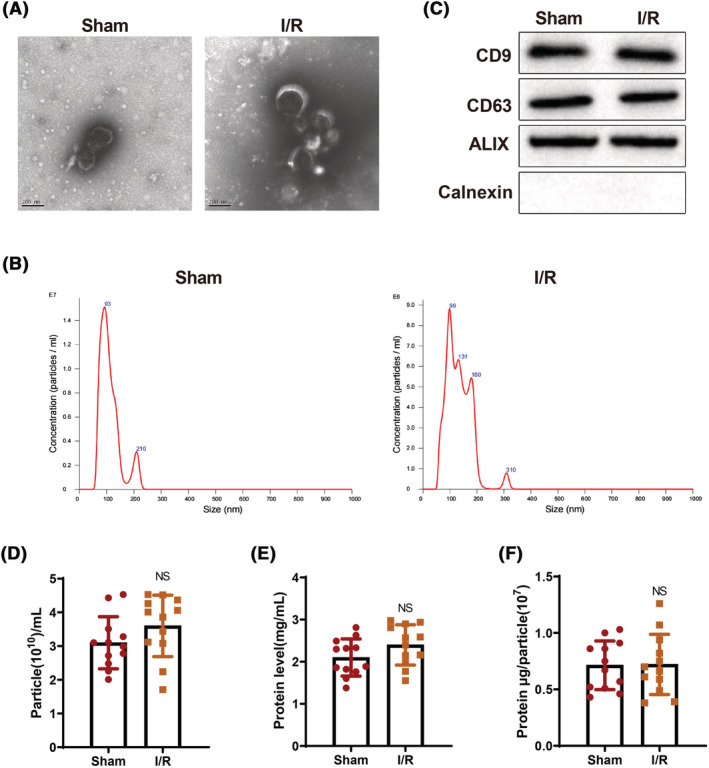
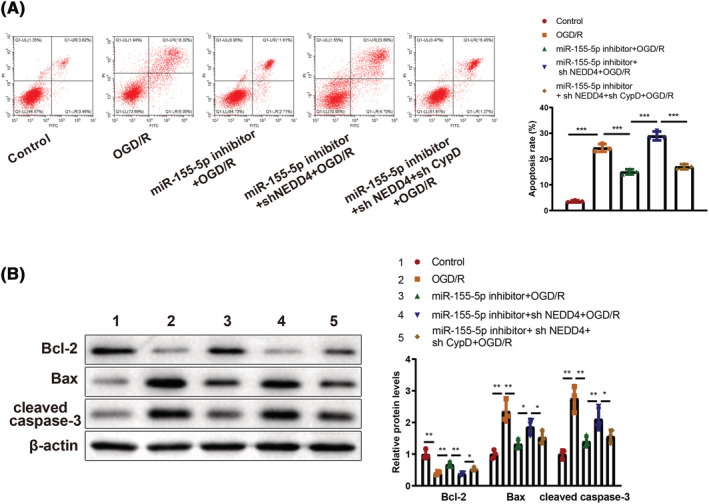
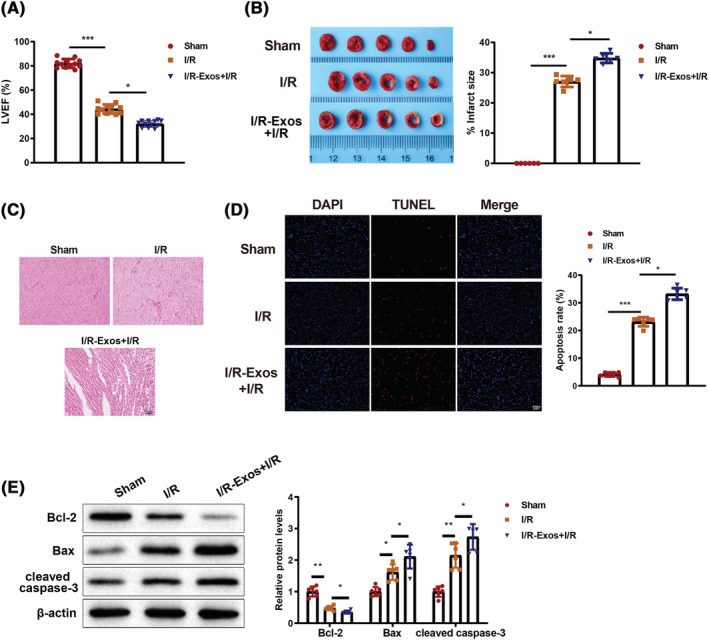
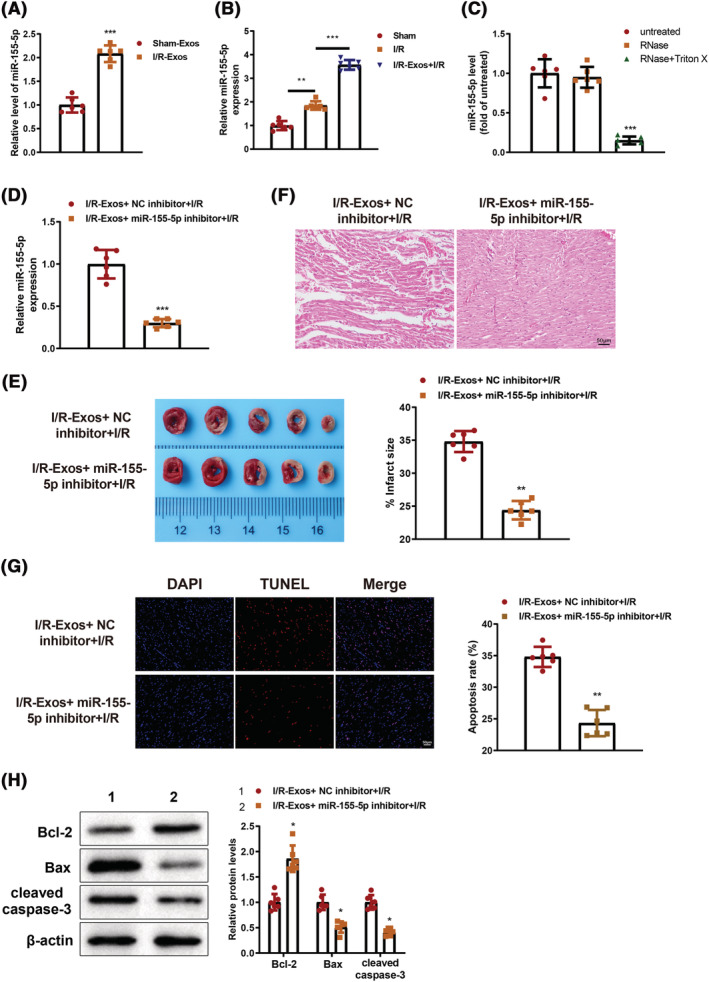
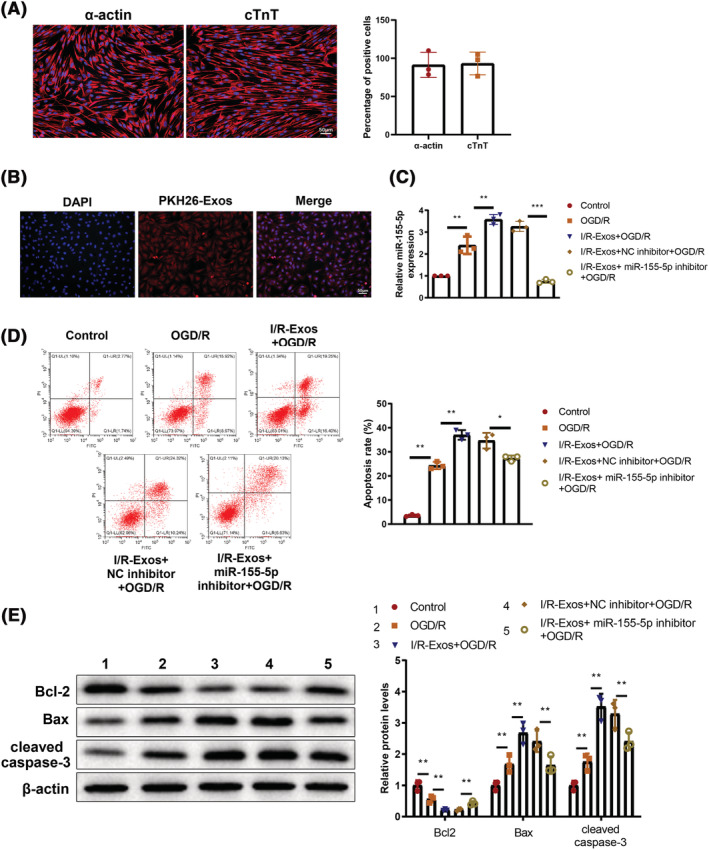
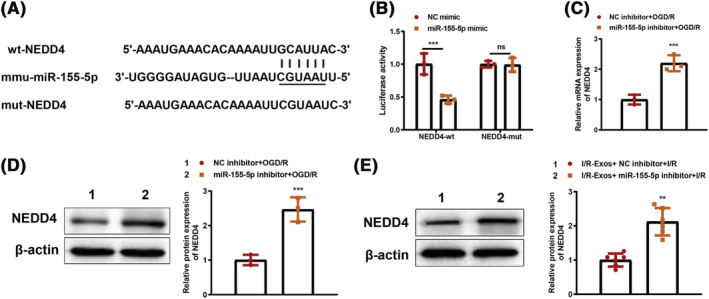
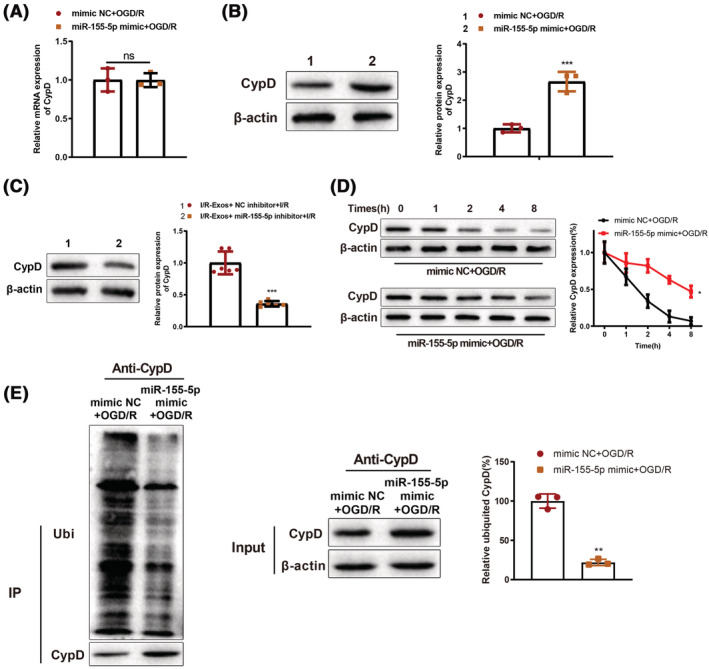
Exos were isolated from mouse serum after induction of ischaemia reperfusion (I/R) and injected into I/R-treated mice to assess cardiac function, infarction size, and cardiomyocyte apoptosis. Primary cardiomyocytes were transfected with miR-155-5p inhibitor before treatment with oxygen-glucose deprivation and re-oxygenation (OGD/R) and exos derived from the serum of I/R-treated mice (I/R-Exos), in which Bcl-2, Bax, and cleaved-caspase-3 levels were detected. The interactions among miR-155-5p, NEDD4, and CypD were evaluated. miR-155-5p level was evidently increased in I/R-Exos than in exos from the serum of sham-operated mice (P < 0.05). In comparison with the I/R group, the I/R-Exos + I/R group had increased infarct size, elevated miR-155-5p expression, and boosted apoptotic rate in mouse myocardium (P < 0.05). In mice treated with I/R-Exos and I/R, miR-155-5p inhibition reduced cardiac infarct size and apoptosis (P < 0.05). NEDD4 was a target gene of miR-155-5p and promoted CypD ubiquitination. Cardiomyocyte apoptosis was markedly increased in the miR-155-5p inhibitor + shNEDD4 + OGD/R group versus the miR-155-5p inhibitor + OGD/R group (P < 0.05), but decreased in the miR-155-5p inhibitor + shNEDD4 + shCypD + OGD/R group than in the miR-155-5p inhibitor + shNEDD4 + OGD/R group (P < 0.05).
miR-155-5p in I/R-Exos may facilitate MIRI by inhibiting CypD ubiquitination via targeting NEDD4.
恢复血流是心肌梗死的一种治疗方法,但却会给心肌带来损伤。外泌体(exos)是细胞间通讯的关键介质,可以由不同的细胞释放,并参与心血管疾病。本研究旨在探讨载有 miR-155-5p 的血清衍生外泌体在心肌梗死再灌注损伤(MIRI)中的可能作用及机制。
在缺血再灌注(I/R)诱导后,从鼠血清中分离出外泌体,并将其注入 I/R 处理的小鼠中,以评估心功能、梗死面积和心肌细胞凋亡。在氧葡萄糖剥夺和复氧(OGD/R)处理前,用 miR-155-5p 抑制剂转染原代心肌细胞,并使用来自 I/R 处理小鼠的血清衍生外泌体(I/R-Exos)处理,检测 Bcl-2、Bax 和 cleaved-caspase-3 水平。评估 miR-155-5p、NEDD4 和 CypD 之间的相互作用。与 sham 手术组小鼠血清来源的外泌体相比,I/R-Exos 中 miR-155-5p 水平明显升高(P<0.05)。与 I/R 组相比,I/R-Exos+I/R 组小鼠心肌梗死面积增大,miR-155-5p 表达升高,凋亡率升高(P<0.05)。在给予 I/R-Exos 和 I/R 的小鼠中,miR-155-5p 抑制减少了心脏梗死面积和凋亡(P<0.05)。NEDD4 是 miR-155-5p 的靶基因,可促进 CypD 泛素化。与 miR-155-5p 抑制剂+shNEDD4+OGD/R 组相比,miR-155-5p 抑制剂+shNEDD4+shCypD+OGD/R 组的心肌细胞凋亡明显减少(P<0.05),但与 miR-155-5p 抑制剂+shNEDD4+OGD/R 组相比,miR-155-5p 抑制剂+shNEDD4+shCypD+OGD/R 组的心肌细胞凋亡明显减少(P<0.05)。
I/R-Exos 中的 miR-155-5p 通过靶向 NEDD4 抑制 CypD 泛素化,可能促进 MIRI。