Mukinda Fidele Kanyimbu, Djellouli Nehla, Akter Kohenour, Sarker Mithun, Tufa Asebe Amenu, Mwandira Kondwani, Seruwagi Gloria, Kyamulabi Agnes, Mwaba Kasonde, Marchant Tanya, Shawar Yusra R, English Mike, Namakula Hilda, Gonfa Geremew, Colbourn Tim, Kinney Mary V
School of Public Health, University of the Western Cape, Cape Town, South Africa.
Institute for Global Health, University College London, London, United Kingdom.
PLOS Glob Public Health. 2023 Sep 21;3(9):e0001769. doi: 10.1371/journal.pgph.0001769. eCollection 2023.
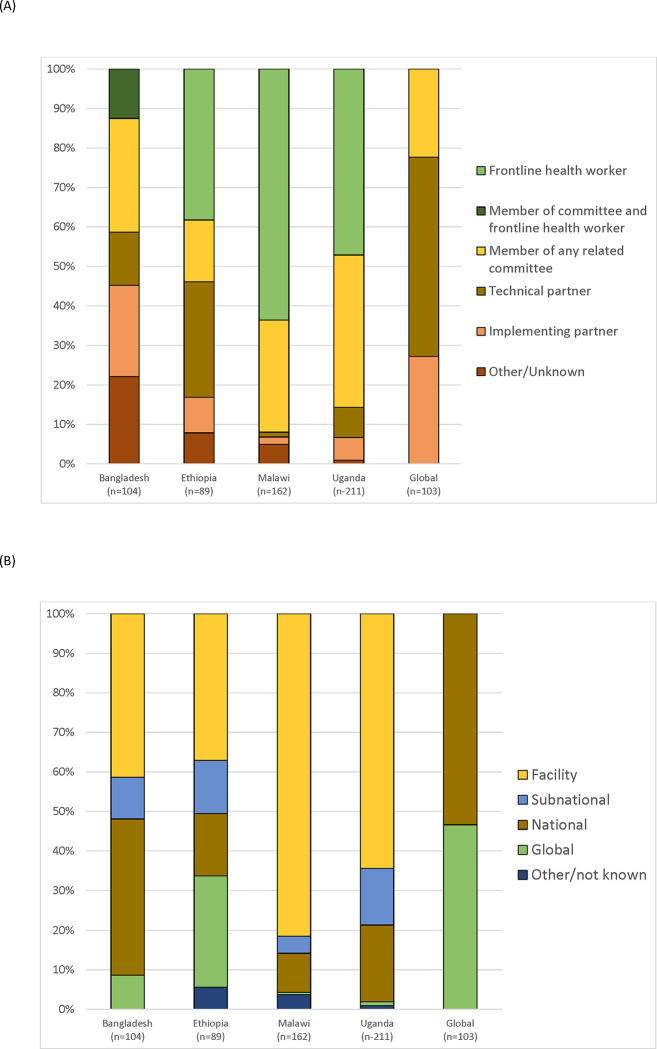
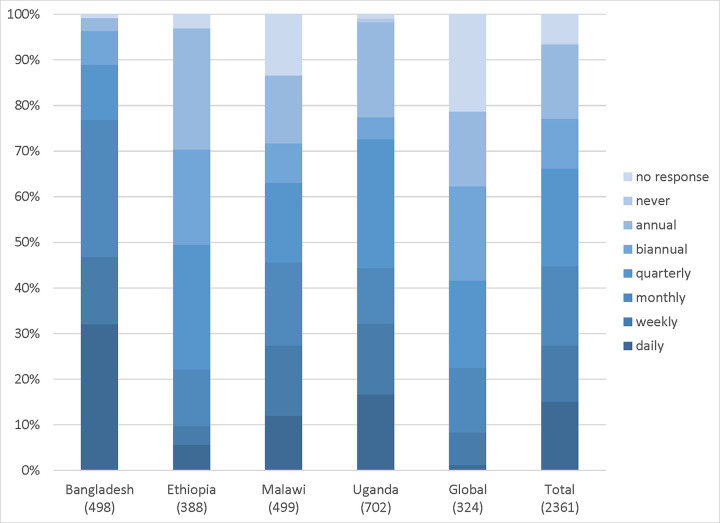
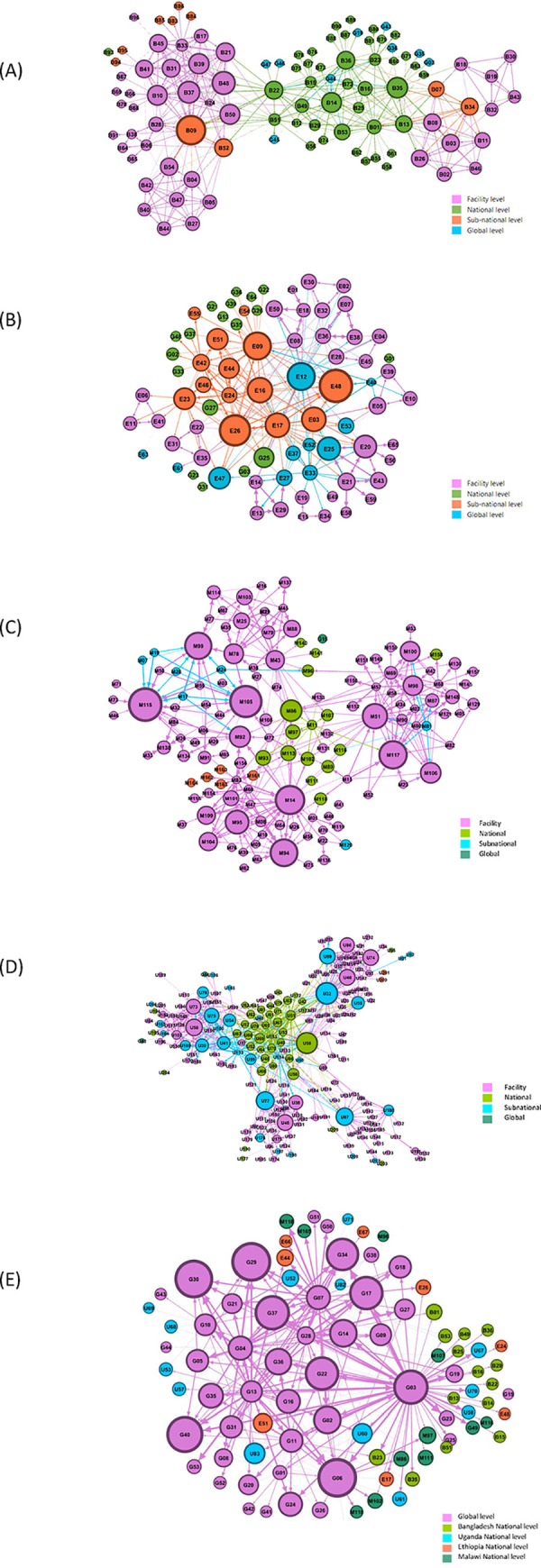
The Network for Improving Quality of Care for Maternal, Newborn and Child Health (QCN) was established to build a cross-country platform for joint-learning around quality improvement implementation approaches to reduce mortality. This paper describes and explores the structure of the QCN in four countries and at global level. Using Social Network Analysis (SNA), this cross-sectional study maps the QCN networks at global level and in four countries (Bangladesh, Ethiopia, Malawi and Uganda) and assesses the interactions among actors involved. A pre-tested closed-ended structured questionnaire was completed by 303 key actors in early 2022 following purposeful and snowballing sampling. Data were entered into an online survey tool, and exported into Microsoft Excel for data management and analysis. This study received ethical approval as part of a broader evaluation. The SNA identified 566 actors across the four countries and at global level. Bangladesh, Malawi and Uganda had multiple-hub networks signifying multiple clusters of actors reflecting facility or district networks, whereas the network in Ethiopia and at global level had more centralized networks. There were some common features across the country networks, such as low overall density of the network, engagement of actors at all levels of the system, membership of related committees identified as the primary role of actors, and interactions spanning all types (learning, action and information sharing). The most connected actors were facility level actors in all countries except Ethiopia, which had mostly national level actors. The results reveal the uniqueness and complexity of each network assessed in the evaluation. They also affirm the broader qualitative evaluation assessing the nature of these networks, including composition and leadership. Gaps in communication between members of the network and limited interactions of actors between countries and with global level actors signal opportunities to strengthen QCN.
改善孕产妇、新生儿和儿童健康护理质量网络(QCN)的设立是为了搭建一个跨国平台,围绕质量改进实施方法开展联合学习,以降低死亡率。本文描述并探讨了QCN在四个国家及全球层面的结构。通过社会网络分析(SNA),这项横断面研究描绘了QCN在全球层面以及四个国家(孟加拉国、埃塞俄比亚、马拉维和乌干达)的网络,并评估了相关行为主体之间的互动。在2022年初,通过立意抽样和滚雪球抽样,303名关键行为主体完成了一份预先测试的封闭式结构化问卷。数据录入在线调查工具,并导出到Microsoft Excel中进行数据管理和分析。作为一项更广泛评估的一部分,本研究获得了伦理批准。社会网络分析确定了四个国家及全球层面的566个行为主体。孟加拉国、马拉维和乌干达拥有多个中心网络,这意味着存在多个行为主体集群,反映了机构或地区网络,而埃塞俄比亚和全球层面的网络则更为集中。各国网络有一些共同特征,比如网络的总体密度较低、系统各级行为主体的参与、被确定为行为主体主要角色的相关委员会成员资格,以及跨越所有类型(学习、行动和信息共享)的互动。除埃塞俄比亚外,所有国家中联系最紧密的行为主体都是机构层面的行为主体,埃塞俄比亚主要是国家层面的行为主体。结果揭示了评估中每个网络的独特性和复杂性。它们还肯定了评估这些网络性质(包括组成和领导力)的更广泛的定性评估。网络成员之间沟通的差距以及国家之间和与全球层面行为主体之间行为主体互动的有限,表明了加强QCN的机会。