Ribeiro Antonio J M, Riziotis Ioannis G, Tyzack Jonathan D, Borkakoti Neera, Thornton Janet M
European Bioinformatics Institute, Wellcome Trust Genome Campus, Hinxton, Cambridge, UK.
Nat Methods. 2023 Oct;20(10):1516-1522. doi: 10.1038/s41592-023-02006-7. Epub 2023 Sep 21.
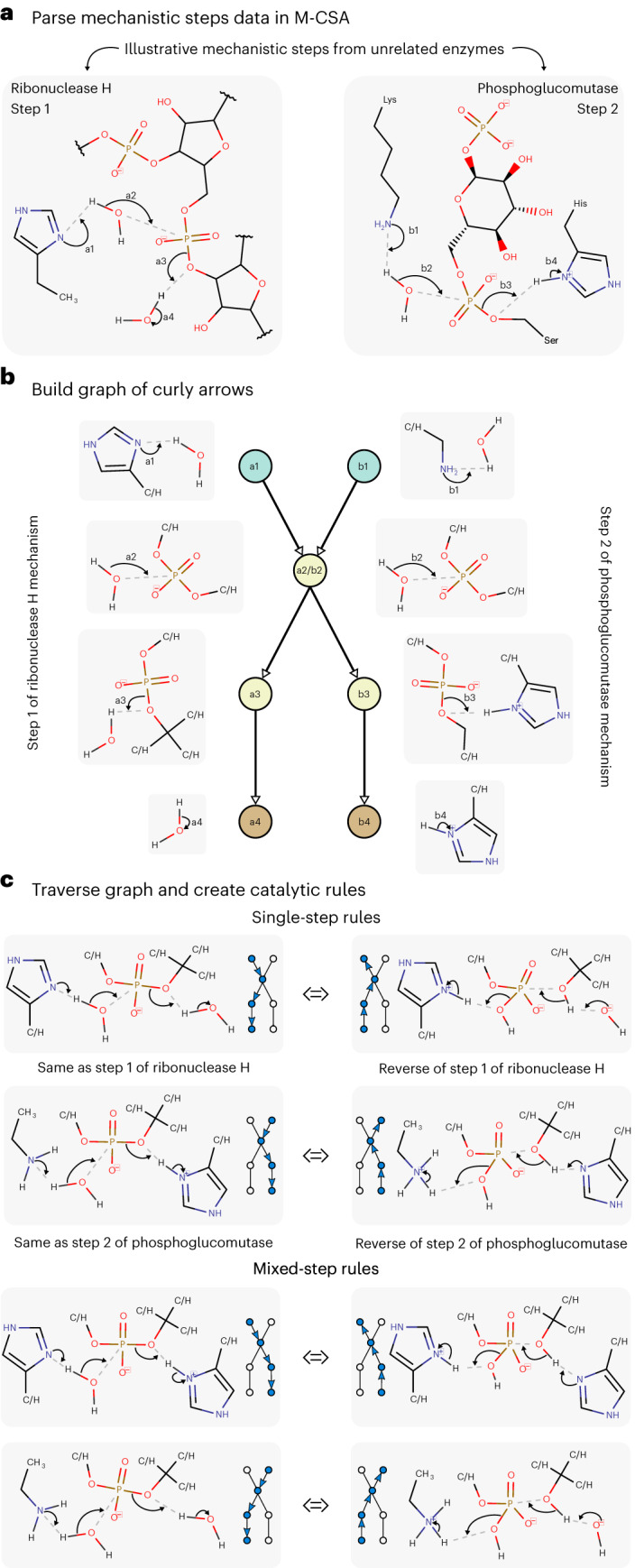
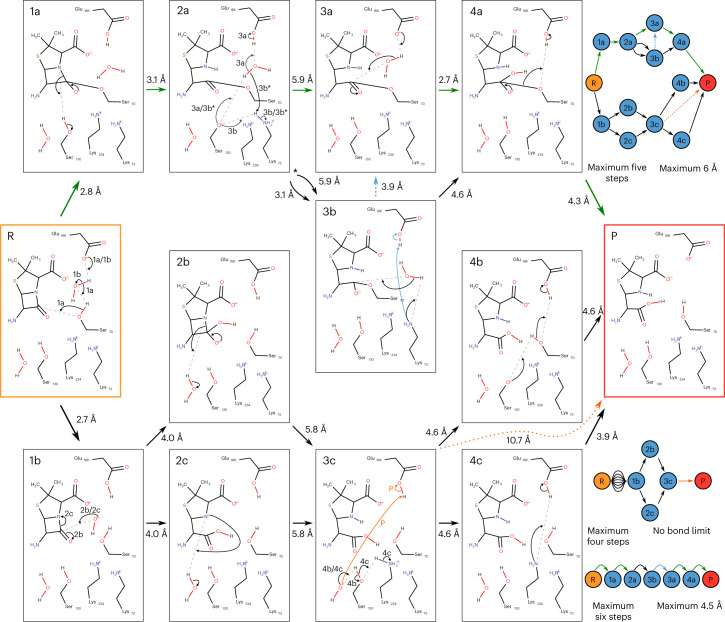
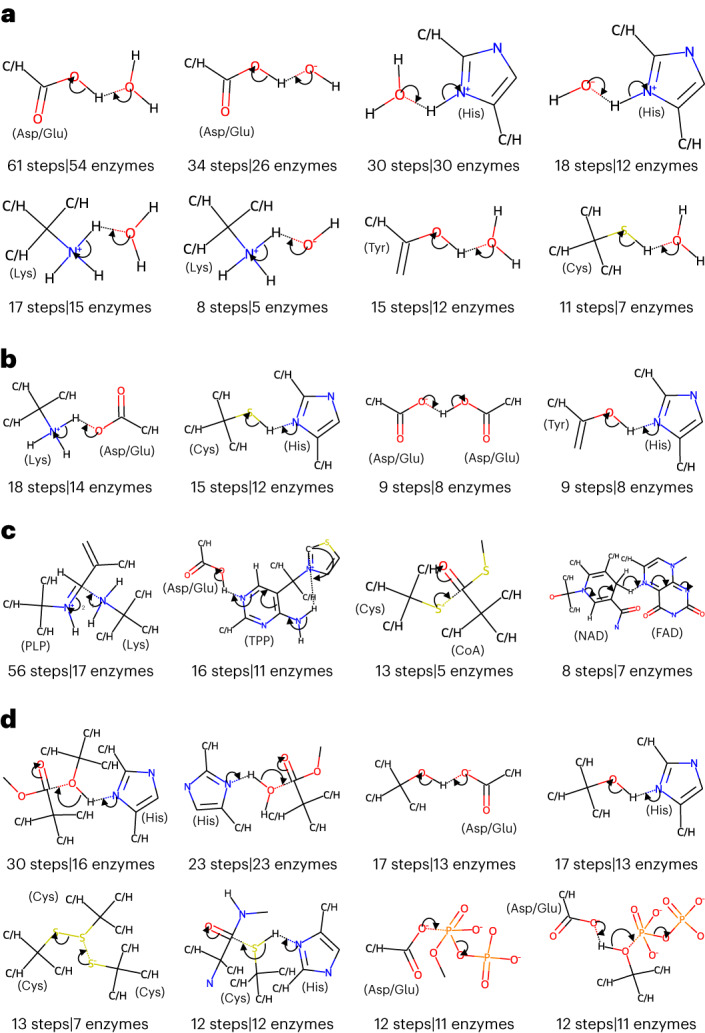
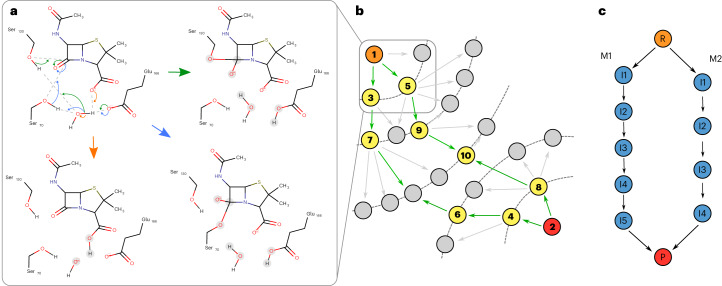
Over the years, hundreds of enzyme reaction mechanisms have been studied using experimental and simulation methods. This rich literature on biological catalysis is now ripe for use as the foundation of new knowledge-based approaches to investigate enzyme mechanisms. Here, we present a tool able to automatically infer mechanistic paths for a given three-dimensional active site and enzyme reaction, based on a set of catalytic rules compiled from the Mechanism and Catalytic Site Atlas, a database of enzyme mechanisms. EzMechanism (pronounced as 'Easy' Mechanism) is available to everyone through a web user interface. When studying a mechanism, EzMechanism facilitates and improves the generation of hypotheses, by making sure that relevant information is considered, as derived from the literature on both related and unrelated enzymes. We validated EzMechanism on a set of 62 enzymes and have identified paths for further improvement, including the need for additional and more generic catalytic rules.
多年来,人们运用实验和模拟方法对数百种酶反应机制进行了研究。如今,关于生物催化的丰富文献已成熟可用,作为基于新知识的方法来研究酶机制的基础。在此,我们展示了一种工具,它能够基于从酶机制数据库《机制与催化位点图谱》汇编的一组催化规则,为给定的三维活性位点和酶反应自动推断机制路径。EzMechanism(发音为“简易”机制)通过网络用户界面供所有人使用。在研究一种机制时,EzMechanism通过确保考虑从相关和不相关酶的文献中得出的相关信息,促进并改进假设的生成。我们在一组62种酶上对EzMechanism进行了验证,并确定了有待进一步改进的路径,包括需要更多及更通用的催化规则。