Department of Nephrology, Blood Purification Research Center, The First Affiliated Hospital, Fujian Medical University, Fuzhou, China.
Fujian Clinical Research Center for Metabolic Chronic Kidney Disease, The First Affiliated Hospital, Fujian Medical University, Fuzhou, China.
J Diabetes Investig. 2024 Jan;15(1):87-105. doi: 10.1111/jdi.14087. Epub 2023 Sep 22.
AIMS/INTRODUCTION: This study investigated the roles of voltage-dependent anion channel 1-related differentially expressed genes (VRDEGs) in diabetic nephropathy (DN).
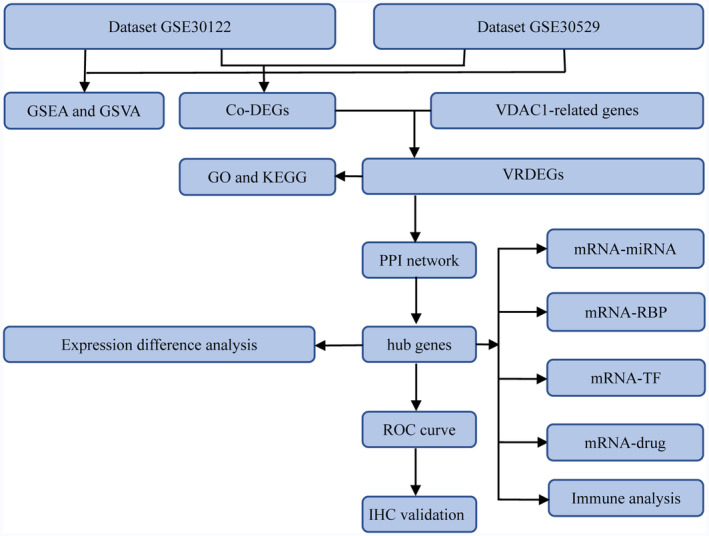
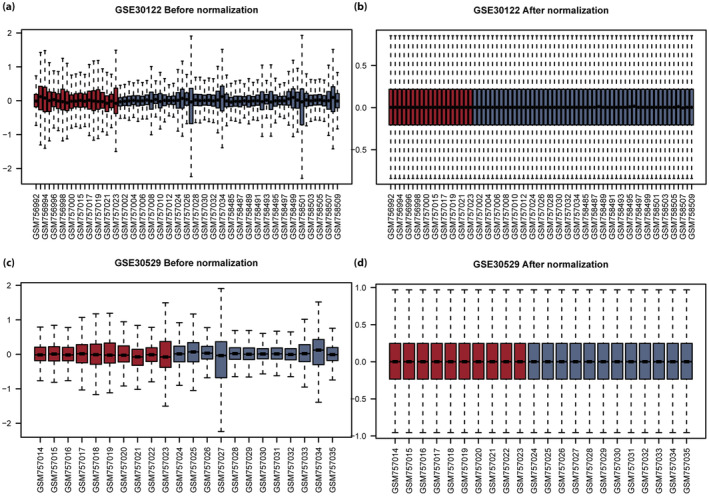
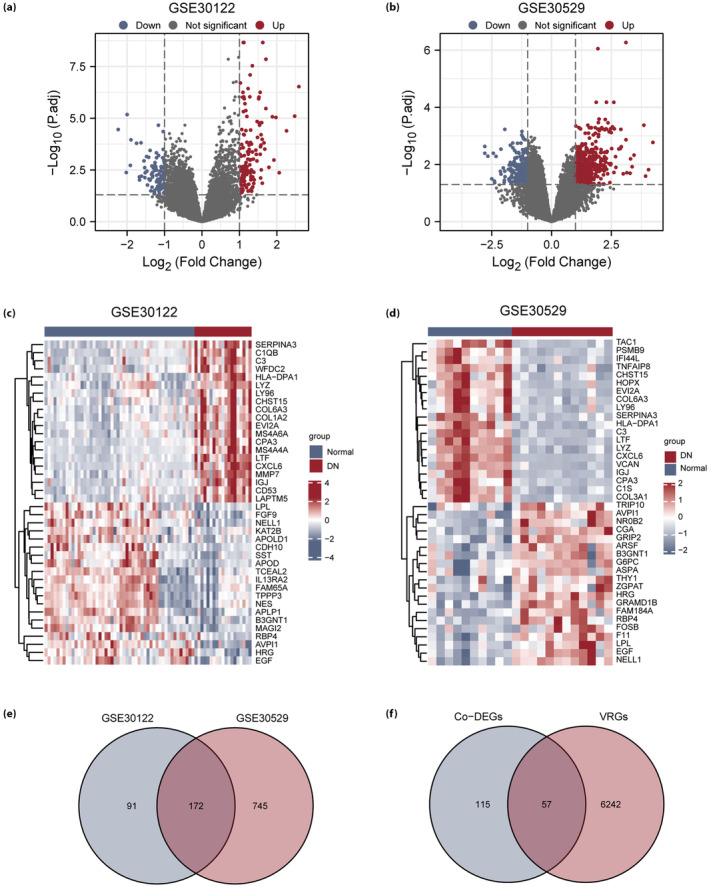
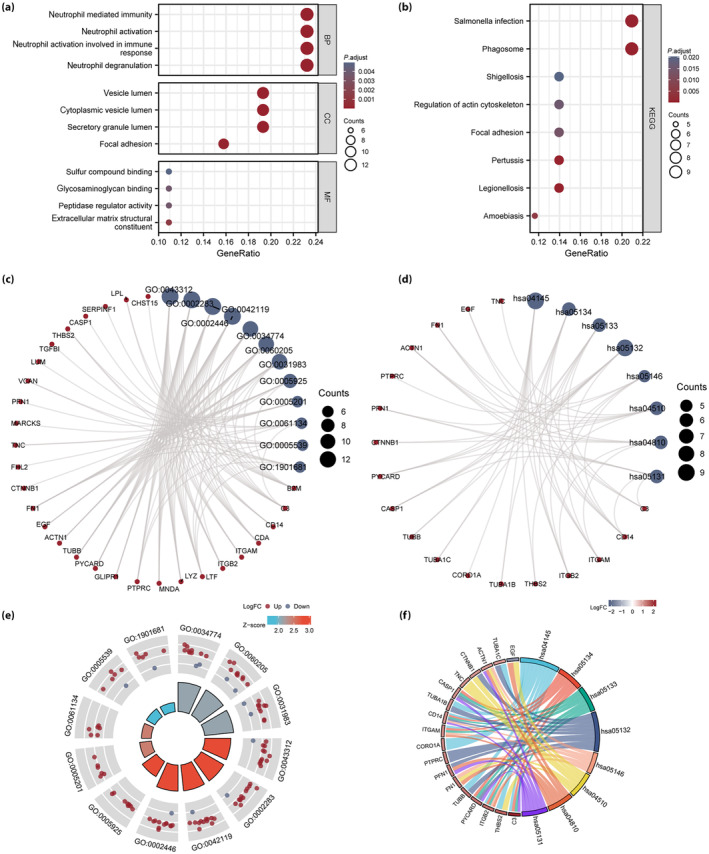
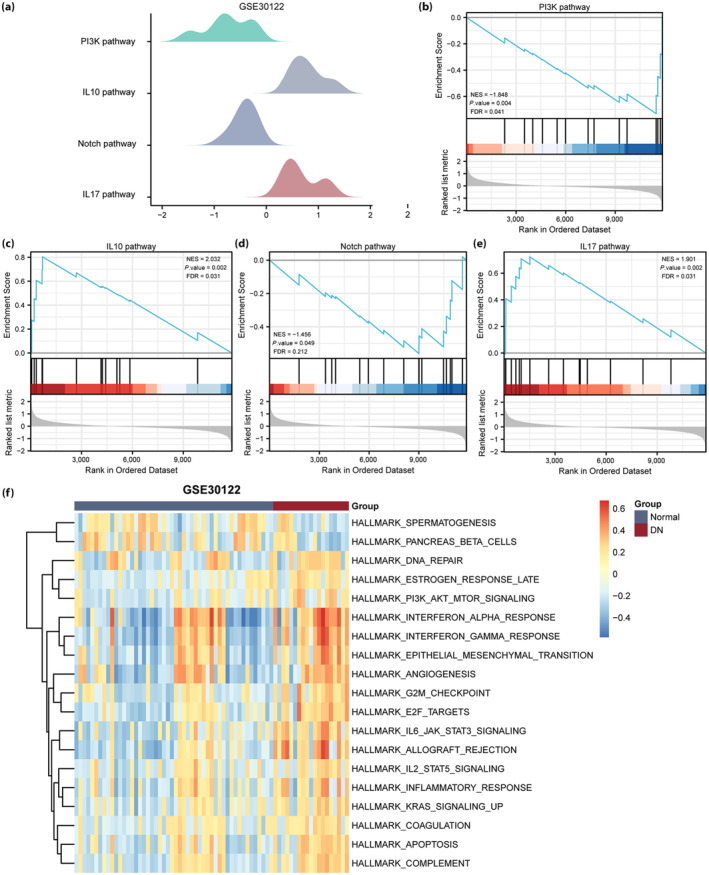
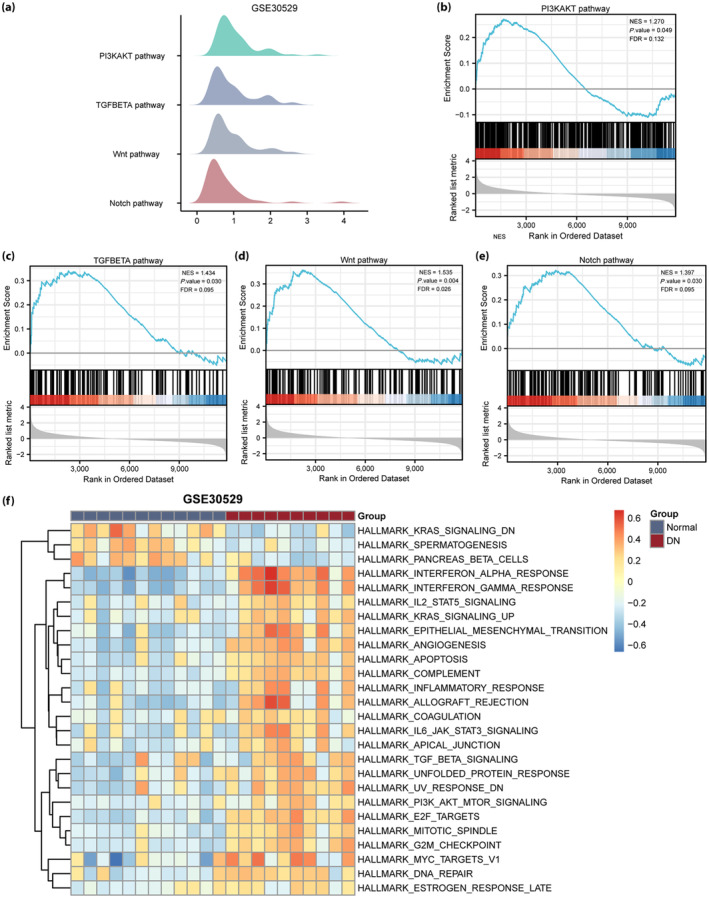
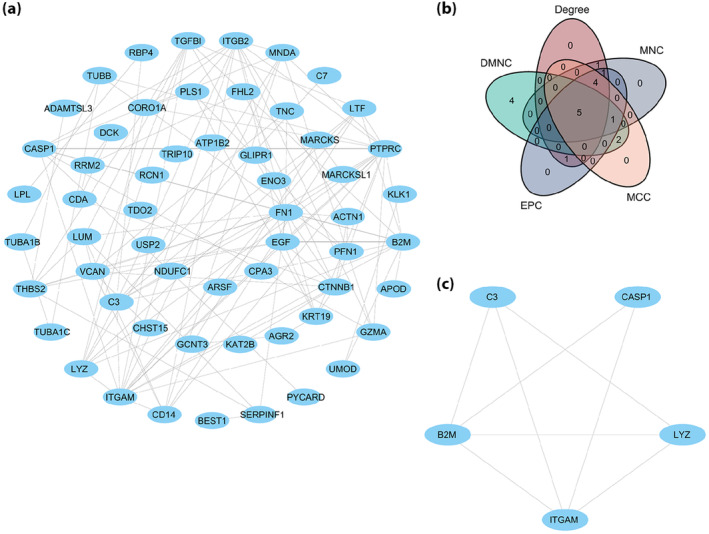
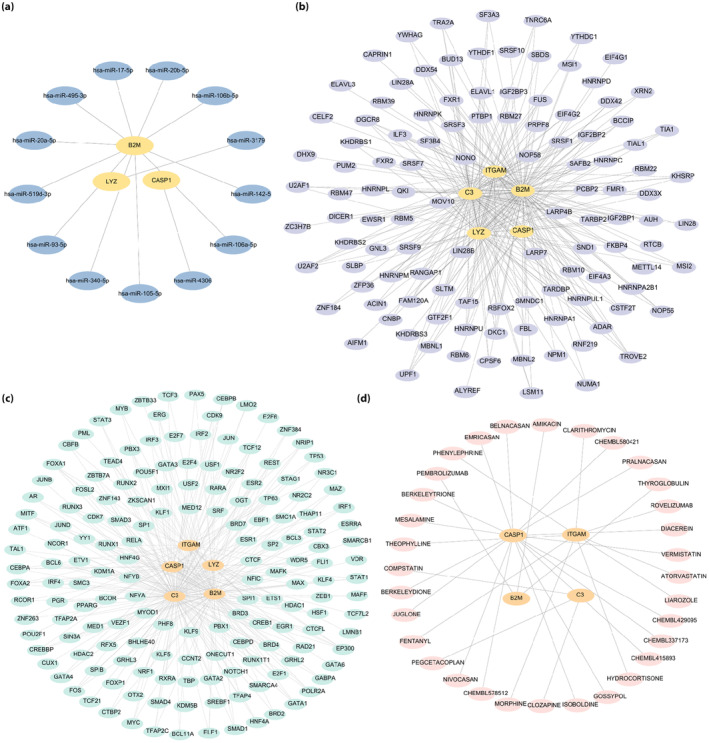
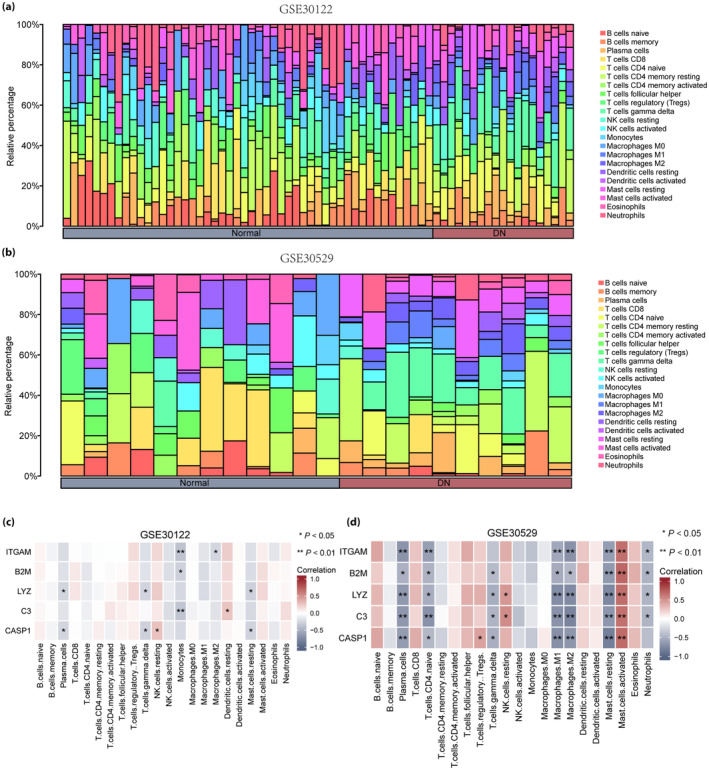
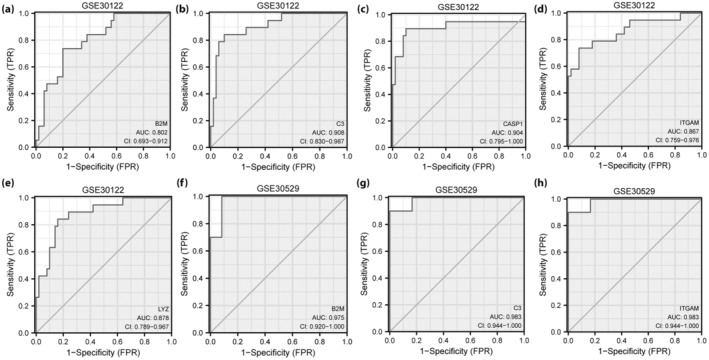
We downloaded two datasets from patients with DN, namely, GSE30122 and GSE30529, from the Gene Expression Omnibus database. VRDEGs associated with DN were obtained from the intersection of voltage-dependent anion channel 1-related genes from the GeneCards database, and differentially expressed genes were screened according to group (DN/healthy) in the two datasets. The enriched pathways of the VRDEGs were analyzed. Hub genes were selected using a protein-protein interaction network, and their predictive value was verified through receiver operating characteristic curve analysis. The CIBERSORTx software examined hub genes and immune cell infiltration associations. The protein expression of hub genes was verified through immunohistochemistry in 16-week-old db/db mice for experimentation as a model of type 2 DN. Finally, potential drugs targeting hub genes that inhibit DN development were identified.
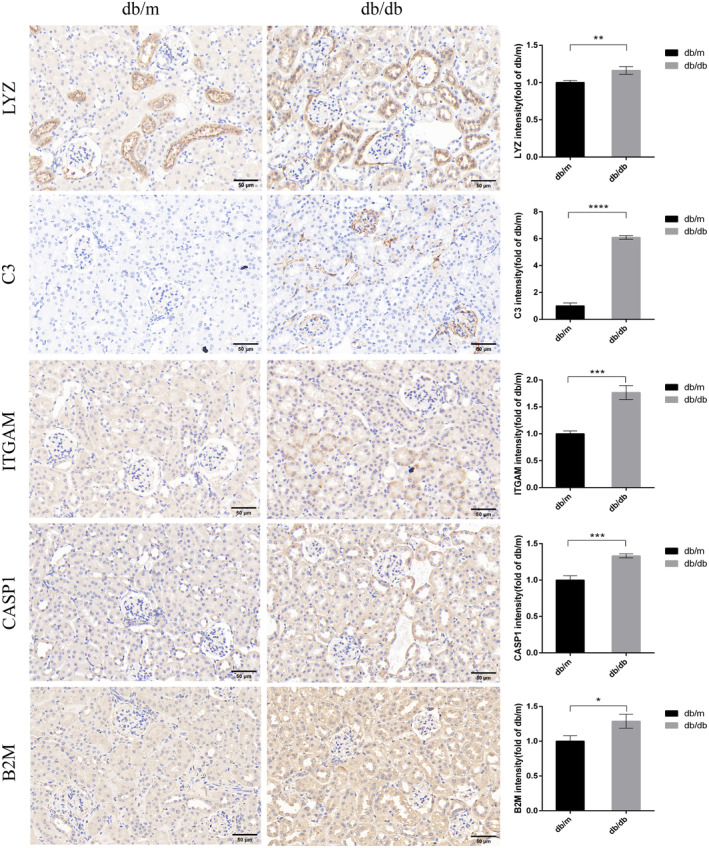
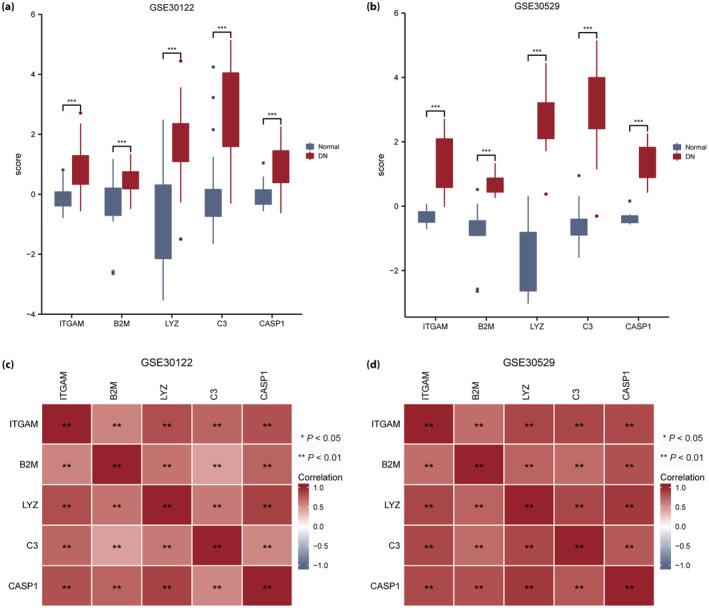
A total of 57 VRDEGs were identified. The two datasets showed high expression of the PI3K, Notch, transforming growth factor-β, interleukin-10 and interleukin-17 pathways in DN. Five hub genes (ITGAM, B2M, LYZ, C3 and CASP1) associated with DN were identified and verified. Immunohistochemistry showed that the five hub genes were highly expressed in db/db mice, compared with db/m mice. The infiltration of immune cells was significantly correlated with the five hub genes.
Five hub genes were significantly correlated with immune cell infiltration and might be crucial to DN development. This study provides insight into the mechanisms involved in the pathogenesis of DN.
目的/引言:本研究探讨了电压门控阴离子通道 1 相关差异表达基因 (VRDEGs) 在糖尿病肾病 (DN) 中的作用。
我们从基因表达综合数据库中下载了两个来自 DN 患者的数据集,即 GSE30122 和 GSE30529。从 GeneCards 数据库中获得与电压门控阴离子通道 1 相关的基因的 VRDEGs,并根据两组(DN/健康)在两个数据集中筛选差异表达基因。分析 VRDEGs 的富集途径。使用蛋白质-蛋白质相互作用网络选择枢纽基因,并通过接收者操作特征曲线分析验证其预测价值。CIBERSORTx 软件检查枢纽基因和免疫细胞浸润的关联。通过免疫组织化学验证枢纽基因在 16 周龄 db/db 小鼠中的表达,作为 2 型糖尿病的实验模型。最后,确定了针对抑制 DN 发展的枢纽基因的潜在药物。
共鉴定出 57 个 VRDEGs。两个数据集均显示 DN 中 PI3K、Notch、转化生长因子-β、白细胞介素-10 和白细胞介素-17 通路呈高表达。确定了与 DN 相关的五个枢纽基因 (ITGAM、B2M、LYZ、C3 和 CASP1),并进行了验证。免疫组织化学显示,与 db/m 小鼠相比,db/db 小鼠中这五个枢纽基因表达水平较高。免疫细胞的浸润与五个枢纽基因显著相关。
五个枢纽基因与免疫细胞浸润显著相关,可能对 DN 的发展至关重要。本研究为探讨 DN 发病机制提供了新的见解。