Department of Psychiatry and Behavioral Sciences, Johns Hopkins University School of Medicine, Baltimore, Maryland.
La Clinica del Pueblo, Hyattsville, Maryland.
J Pain. 2024 Mar;25(3):632-641. doi: 10.1016/j.jpain.2023.09.014. Epub 2023 Sep 22.
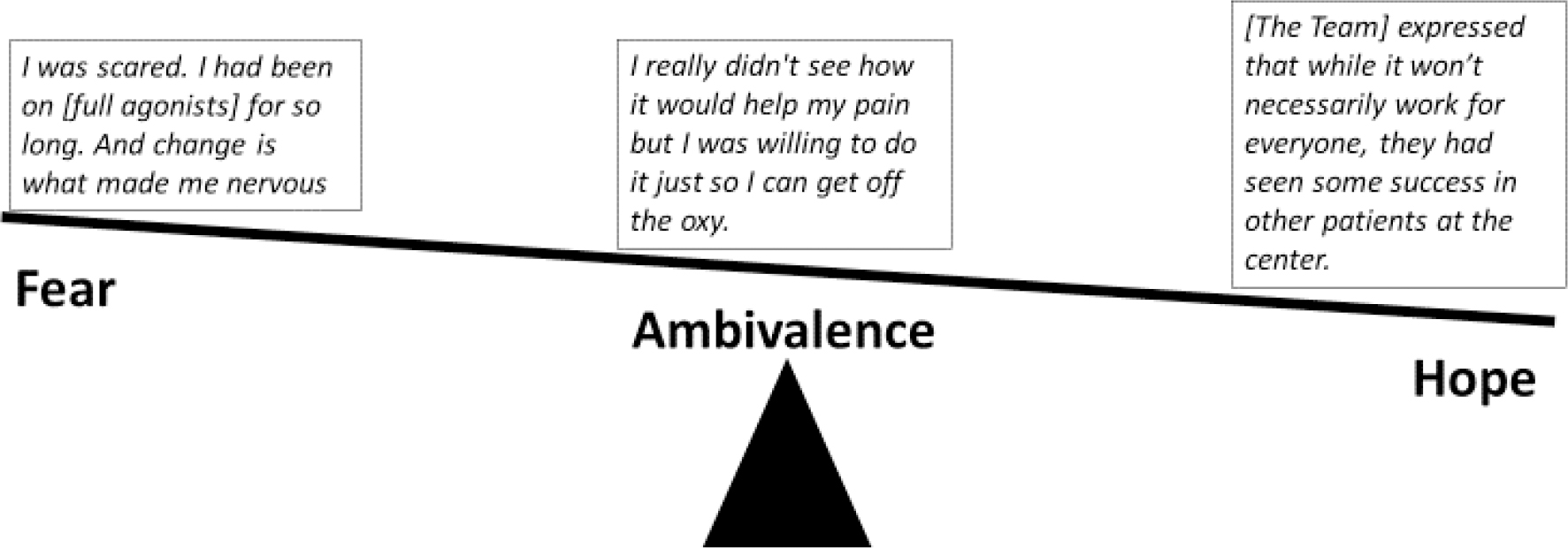
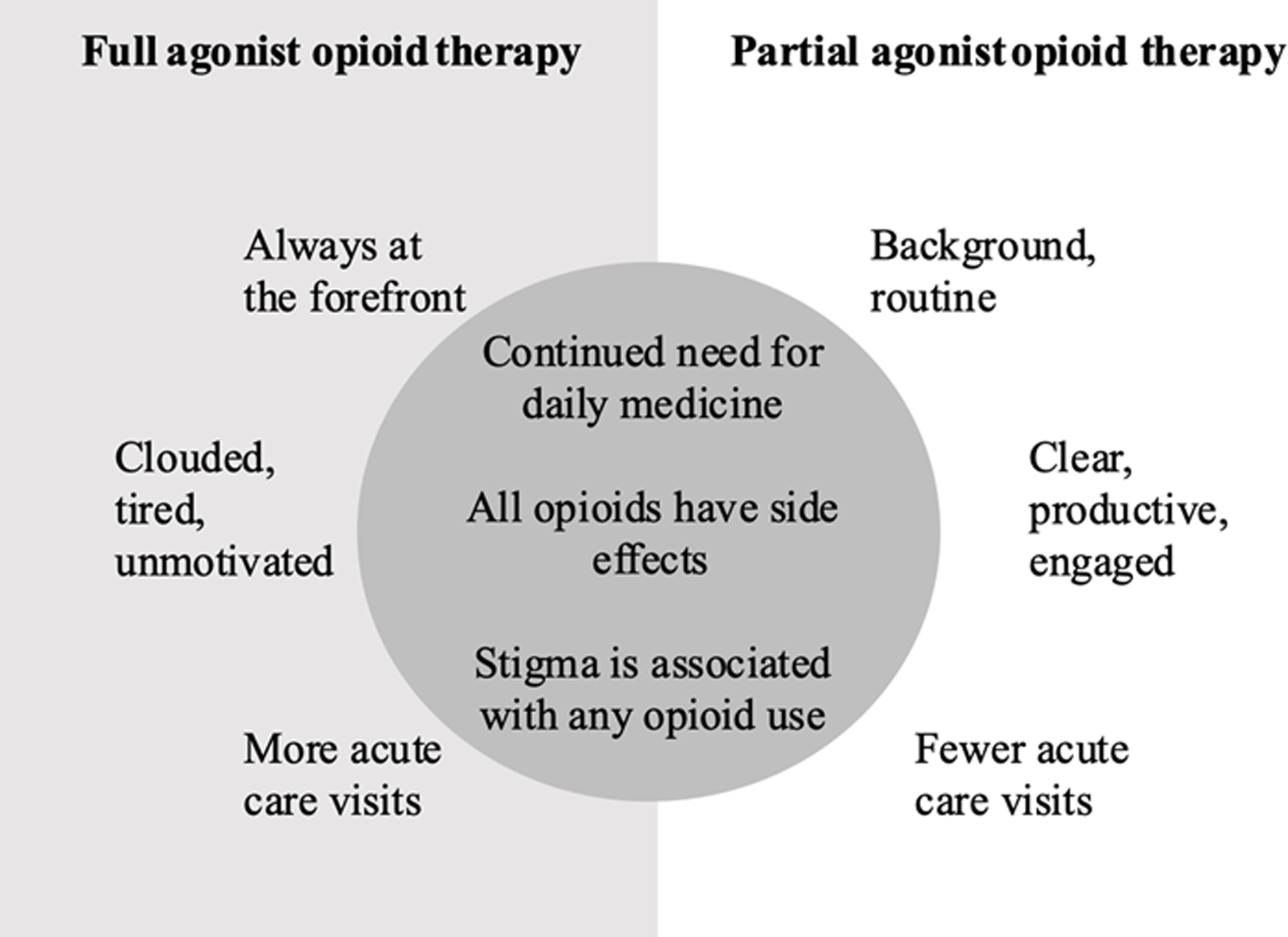
A growing body of literature describes the use of buprenorphine for the treatment of chronic pain in people with sickle cell disease. The experiences of people with sickle cell disease who have tried buprenorphine have not yet reported. This qualitative descriptive study was conducted to explore perspectives on buprenorphine for chronic pain in sickle cell disease. We interviewed 13 participants with sickle cell disease who had been prescribed buprenorphine and had a clinic visit between December 1, 2020, and April 2022 in our Sickle Cell Center for Adults. Interviews were recorded, transcribed, and analyzed using thematic analysis. Eleven out of 13 participants were taking buprenorphine at the time of the interview, with a mean treatment duration of 33 months (SD 18, range 7-78 months). Five major themes were identified: 1) dissatisfaction with full agonist opioids; 2) navigating uncertainty with autonomy in deciding to try buprenorphine; 3) functional and relational changes after starting buprenorphine, 4) enduring systemic barriers to pain treatment, and 5) trusting treatment relationships are necessary when approaching patients about buprenorphine. The experience of adulthood living with sickle cell disease before and after starting buprenorphine is qualitatively different with significant improvements in social functioning. PERSPECTIVE: This study examined the experience of adults with sickle cell disease and chronic pain transitioning from full agonist opioids to buprenorphine. It is the first qualitative study of buprenorphine in people with sickle cell disease, contributing to a small but growing literature about buprenorphine and sickle cell disease.
越来越多的文献描述了丁丙诺啡在治疗镰状细胞病患者慢性疼痛中的应用。尚未报道尝试过丁丙诺啡的镰状细胞病患者的体验。本定性描述性研究旨在探讨镰状细胞病慢性疼痛患者对丁丙诺啡的看法。我们采访了 13 名在我们的成人镰状细胞中心就诊并在 2020 年 12 月 1 日至 2022 年 4 月期间开处丁丙诺啡的镰状细胞病患者。访谈通过主题分析进行记录、转录和分析。在访谈时,13 名参与者中有 11 名正在服用丁丙诺啡,平均治疗持续时间为 33 个月(SD=18,范围 7-78 个月)。确定了五个主要主题:1)对完全激动剂阿片类药物的不满;2)在决定尝试丁丙诺啡时自主面对不确定性;3)开始服用丁丙诺啡后的功能和关系变化;4)持久的系统疼痛治疗障碍;5)在向患者介绍丁丙诺啡时,建立信任的治疗关系是必要的。开始服用丁丙诺啡前后,成年镰状细胞病患者的生活体验在性质上有所不同,社会功能有了显著改善。观点:本研究检查了从完全激动剂阿片类药物过渡到丁丙诺啡的成年镰状细胞病患者的体验。这是第一项关于镰状细胞病患者丁丙诺啡的定性研究,为丁丙诺啡和镰状细胞病的少量但不断增长的文献做出了贡献。