Central Laboratory, Panyu Central Hospital of Guangzhou, Guangzhou, China.
Department of General Surgery, Panyu Central Hospital of Guangzhou, Guangzhou, China.
Oncol Res. 2023 Sep 15;31(6):877-885. doi: 10.32604/or.2023.029494. eCollection 2023.
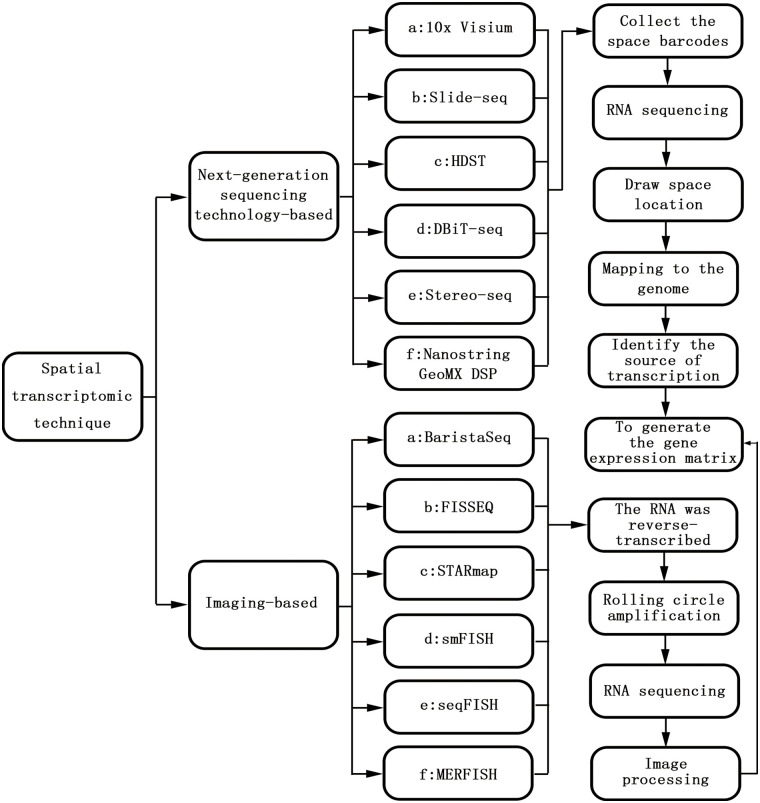
Spatial omics technology integrates the concept of space into omics research and retains the spatial information of tissues or organs while obtaining molecular information. It is characterized by the ability to visualize changes in molecular information and yields intuitive and vivid visual results. Spatial omics technologies include spatial transcriptomics, spatial proteomics, spatial metabolomics, and other technologies, the most widely used of which are spatial transcriptomics and spatial proteomics. The tumor microenvironment refers to the surrounding microenvironment in which tumor cells exist, including the surrounding blood vessels, immune cells, fibroblasts, bone marrow-derived inflammatory cells, various signaling molecules, and extracellular matrix. A key issue in modern tumor biology is the application of spatial omics to the study of the tumor microenvironment, which can reveal problems that conventional research techniques cannot, potentially leading to the development of novel therapeutic agents for cancer. This paper summarizes the progress of research on spatial transcriptomics and spatial proteomics technologies for characterizing the tumor immune microenvironment.
空间组学技术将空间概念融入组学研究中,在获取组织或器官分子信息的同时保留其空间信息。其特点是能够可视化分子信息的变化,产生直观、生动的视觉效果。空间组学技术包括空间转录组学、空间蛋白质组学、空间代谢组学等技术,其中应用最广泛的是空间转录组学和空间蛋白质组学。肿瘤微环境是指肿瘤细胞存在的周围微环境,包括周围的血管、免疫细胞、成纤维细胞、骨髓来源的炎性细胞、各种信号分子和细胞外基质。现代肿瘤生物学的一个关键问题是将空间组学应用于肿瘤微环境的研究,这可以揭示传统研究技术无法揭示的问题,有可能为癌症的治疗药物开发带来新的契机。本文总结了用于描述肿瘤免疫微环境的空间转录组学和空间蛋白质组学技术的研究进展。