Department of Computational Biology and Medical Sciences, Graduate School of Frontier Sciences, The University of Tokyo, Chiba, Japan.
Cancer Sci. 2024 Oct;115(10):3208-3217. doi: 10.1111/cas.16283. Epub 2024 Jul 23.
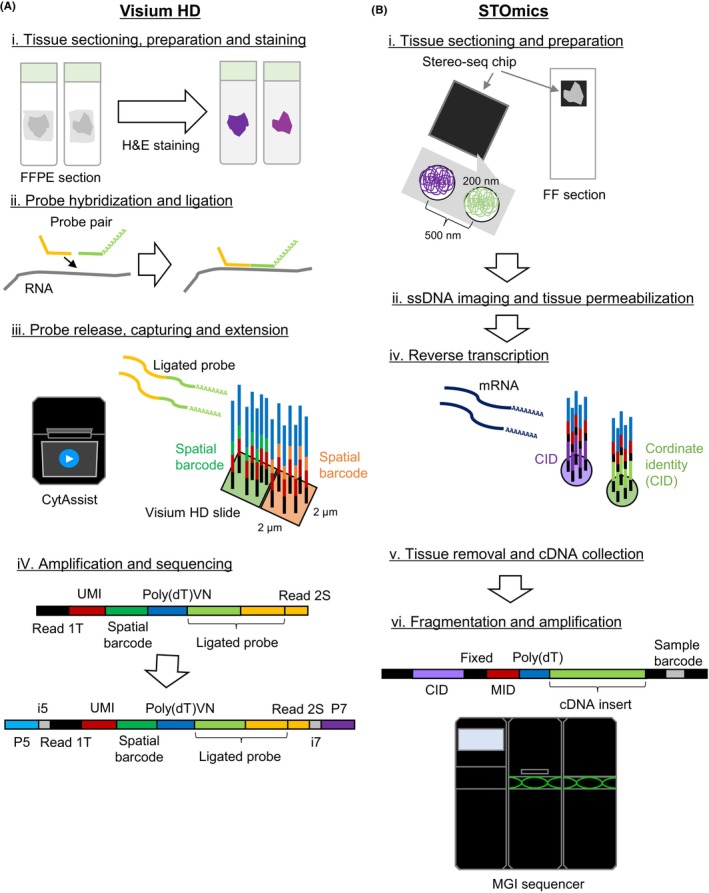
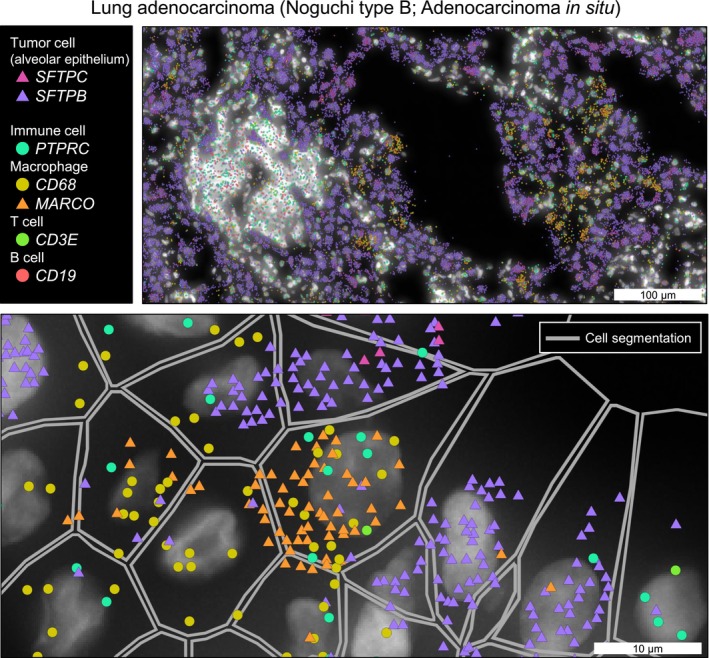
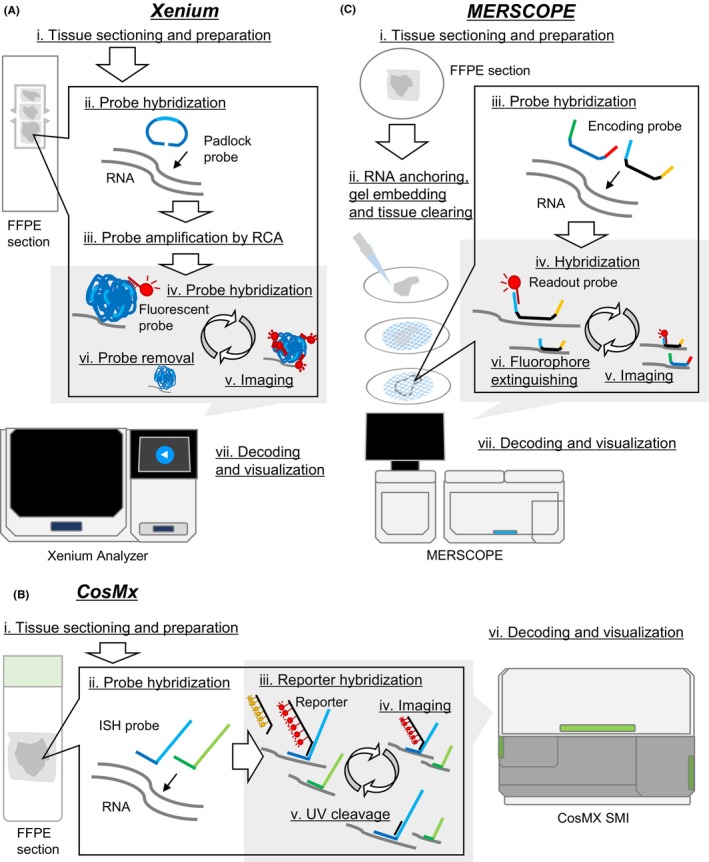
Cancer cells are generally exposed to numerous extrinsic stimulations in the tumor microenvironment. In this environment, cancer cells change their expression profiles to fight against circumstantial stresses, allowing their progression in the challenging tissue space. Technological advancements of spatial omics have had substantial influence on cancer genomics. This technical progress, especially that occurring in the spatial transcriptome, has been drastic and rapid. Here, we describe the latest spatial analytical technologies that have allowed omics feature characterization to retain their spatial and histopathological information in cancer tissues. Several spatial omics platforms have been launched, and the latest platforms finally attained single-cell level or even higher subcellular level resolution. We discuss several key papers elucidating the initial utility of the spatial analysis. In fact, spatial transcriptome analyses reveal comprehensive omics characteristics not only in cancer cells but also their surrounding cells, such as tumor infiltrating immune cells and cancer-associated fibroblasts. We also introduce several spatial omics platforms. We describe our own attempts to investigate molecular events associated with cancer progression. Furthermore, we discuss the next challenges in analyzing the multiomics status of cells, including their morphology and location. These novel technologies, in conjunction with spatial transcriptome analysis and, more importantly, with histopathology, will elucidate even novel key aspects of the intratumor heterogeneity of cancers. Such enhanced knowledge is expected to open a new path for overcoming therapeutic resistance and eventually to precisely stratify patients.
癌细胞通常会在肿瘤微环境中受到许多外在刺激。在这种环境中,癌细胞会改变其表达谱,以对抗环境压力,从而在具有挑战性的组织环境中继续发展。空间组学技术的进步对癌症基因组学产生了重大影响。这种技术进步,尤其是在空间转录组学方面,是巨大而迅速的。在这里,我们描述了最新的空间分析技术,这些技术允许组学特征的表征在癌症组织中保留其空间和组织病理学信息。已经推出了几个空间组学平台,而最新的平台最终达到了单细胞水平甚至更高的亚细胞水平分辨率。我们讨论了几篇阐明空间分析初始效用的关键论文。事实上,空间转录组分析不仅揭示了癌细胞的全面组学特征,还揭示了其周围细胞的特征,如肿瘤浸润免疫细胞和癌症相关成纤维细胞。我们还介绍了几个空间组学平台。我们描述了自己尝试研究与癌症进展相关的分子事件的情况。此外,我们还讨论了分析细胞多组学状态的下一个挑战,包括它们的形态和位置。这些新技术,结合空间转录组分析,更重要的是结合组织病理学,将阐明癌症肿瘤内异质性的甚至是新的关键方面。这种增强的知识有望为克服治疗抵抗开辟新的途径,并最终实现对患者的精确分层。