Yewale Rohan V, Ramakrishna Balakrishnan S, Doraisamy Babu Vinish, Basumani Pandurangan, Venkataraman Jayanthi, Jayaraman Kayalvizhi, Murali Ananthavadivelu, Premkumar Karunakaran, Kumar Akkim Sathish
Institute of Gastroenterology, SRM Institutes for Medical Science Chennai Tamil Nadu India.
Department of Gastroenterology Apollo Hospitals Greams Road Chennai Tamil Nadu India.
JGH Open. 2023 Aug 10;7(9):599-609. doi: 10.1002/jgh3.12955. eCollection 2023 Sep.
Azathioprine (AZA) forms the cornerstone for maintenance of sustained remission in inflammatory bowel disease (IBD). There is apprehension regarding the long-term effectiveness and safety of AZA in IBD. We present our experience with AZA use and outcomes in a cohort of IBD patients followed up over a long period of time.
Records of 507 IBD patients under treatment at a single, tertiary care center in south India between 2013 and 2022 were evaluated retrospectively. Long-term compliance, tolerance, clinical outcome at the point of last follow-up, type and duration to the onset of adverse events, and subsequent amendment to treatment with regard to AZA were analyzed.
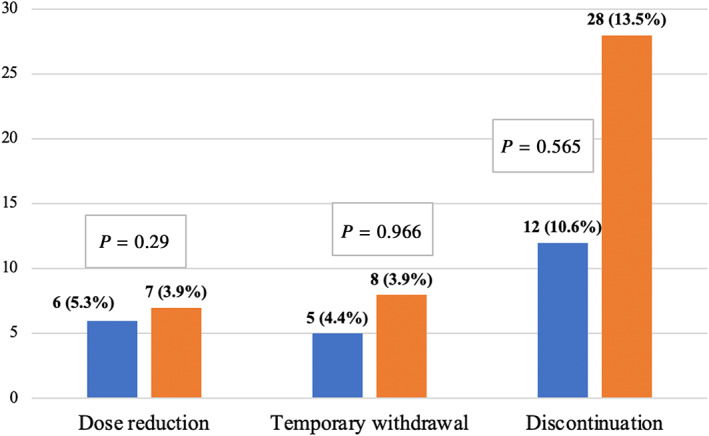
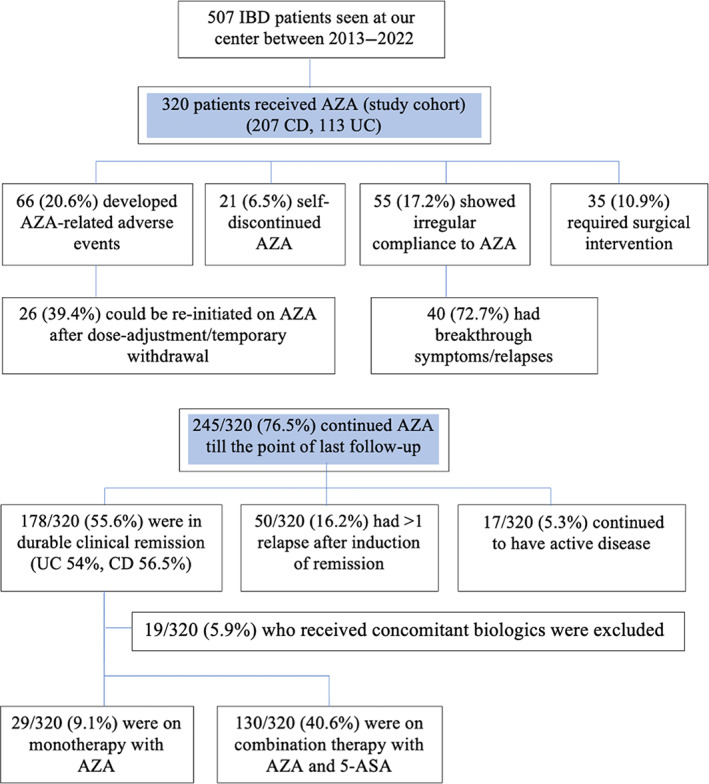
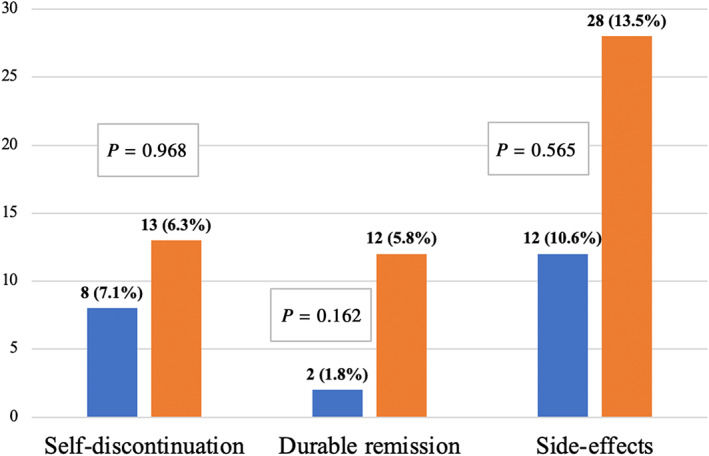
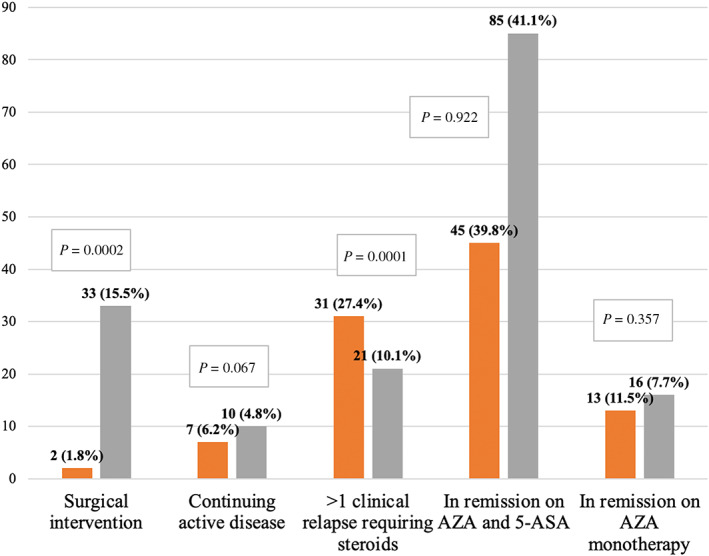
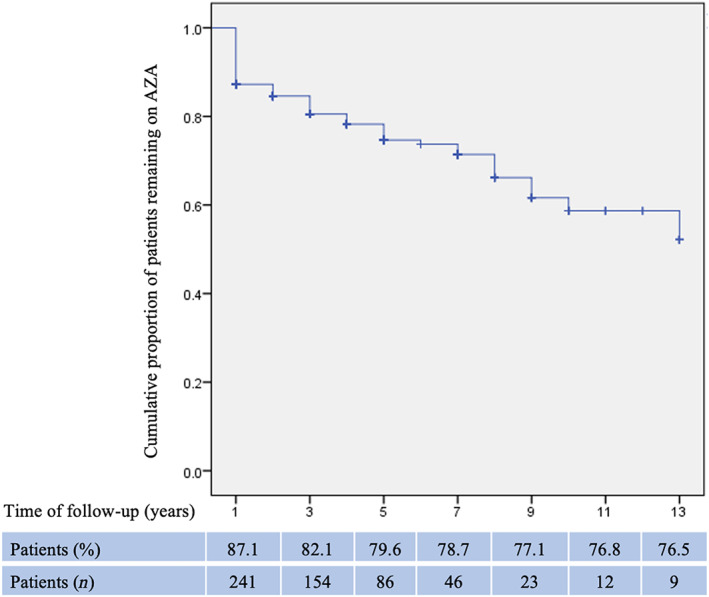
Of 507 patients with IBD, 320 patients (207 Crohn's disease [CD], 113 ulcerative colitis [UC]) who received AZA were included. The median follow-up was 41 months (interquartile range 15.5-77.5). Total duration of exposure was 1359 patient-years with median usage of 33 months. Of the patients, 26.9% received AZA for >5 years. Mean initiation and maximum doses of AZA were 0.97 and 1.72 mg/kg/day. Among the participants, 20.6% experienced side effects, including myelotoxicity (7.2%) and gastrointestinal intolerance (5.6%). Six patients developed malignancy. Among the side effects, 39.4% of side effects were dose-dependent. Among the patients, 38.1% had relapses requiring pulse corticosteroid therapy, and 16.2% had more than one relapse after commencement of AZA. AZA was continued till the last follow-up in 76.5%. Among the patients, 49.7% (UC 51.3, CD 48.8) attained durable remission without biologics, and 5.3% continued to have active disease.
AZA is safe and effective in the long-term in IBD. Effectiveness, tolerance, and compliance with AZA are well sustained beyond 5 years of usage and comparable between UC and CD.
硫唑嘌呤(AZA)是维持炎症性肠病(IBD)持续缓解的基石。人们对AZA在IBD中的长期有效性和安全性存在担忧。我们介绍了一组IBD患者长期使用AZA的经验及结果。
回顾性评估了2013年至2022年间在印度南部一家三级医疗中心接受治疗的507例IBD患者的记录。分析了长期依从性、耐受性、最后一次随访时的临床结局、不良事件发生的类型和持续时间,以及随后关于AZA治疗的调整情况。
在507例IBD患者中,320例(207例克罗恩病[CD],113例溃疡性结肠炎[UC])接受了AZA治疗并被纳入研究。中位随访时间为41个月(四分位间距15.5 - 77.5)。总暴露时长为1359患者 - 年,中位使用时间为33个月。其中,26.9%的患者使用AZA超过5年。AZA的平均起始剂量和最大剂量分别为0.97和1.72mg/kg/天。参与者中,20.6%出现了副作用,包括骨髓毒性(7.2%)和胃肠道不耐受(5.6%)。6例患者发生了恶性肿瘤。在副作用中,39.4%的副作用与剂量相关。患者中,38.1%出现复发,需要脉冲式皮质类固醇治疗,16.2%在开始使用AZA后复发不止一次。76.5%的患者持续使用AZA直至最后一次随访。患者中,49.7%(UC为51.3%,CD为48.8%)在未使用生物制剂的情况下实现了持久缓解,5.3%的患者疾病仍处于活动期。
AZA在IBD的长期治疗中是安全有效的。使用超过5年时,AZA的有效性、耐受性和依从性良好,且在UC和CD之间具有可比性。