Marine Integrated Biomedical Technology Center, The National Key Research Institutes in Universities, Pukyong National University, Busan, 48513, Republic of Korea.
Research Center for Marine Integrated Bionics Technology, Pukyong National University, Busan, 48513, Republic of Korea.
Cell Commun Signal. 2023 Sep 25;21(1):259. doi: 10.1186/s12964-023-01263-5.
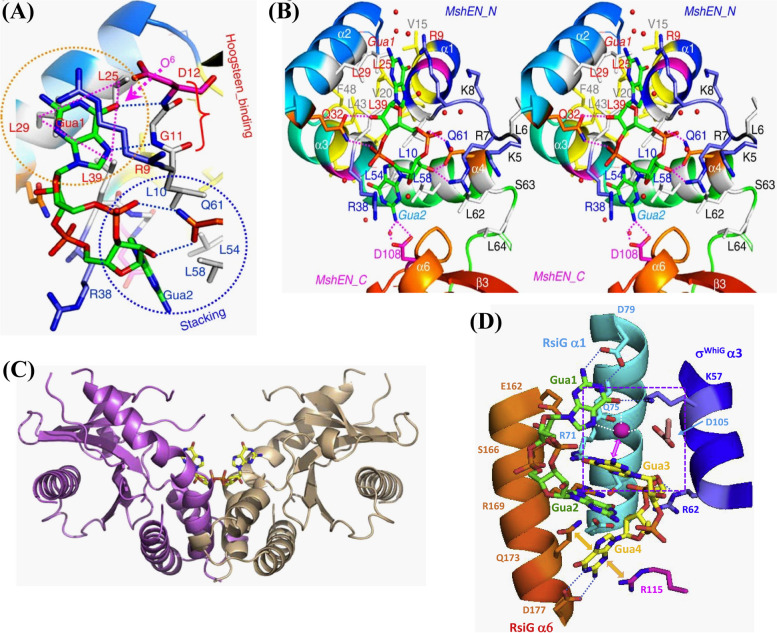
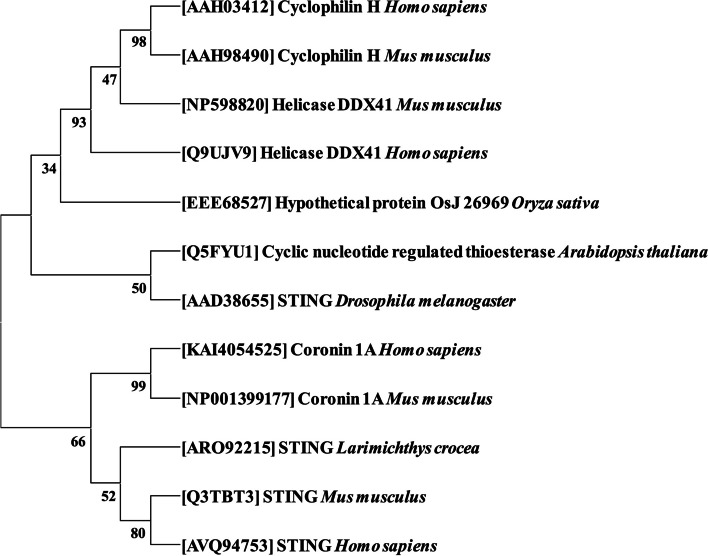
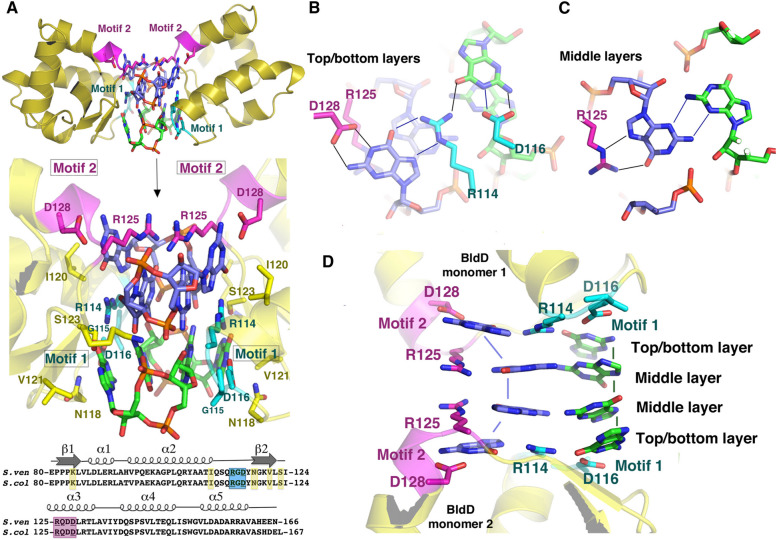
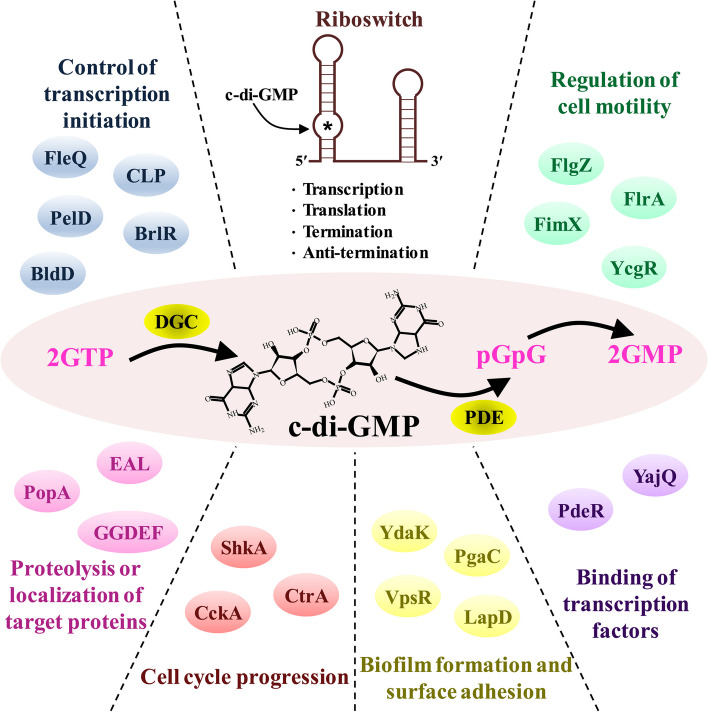
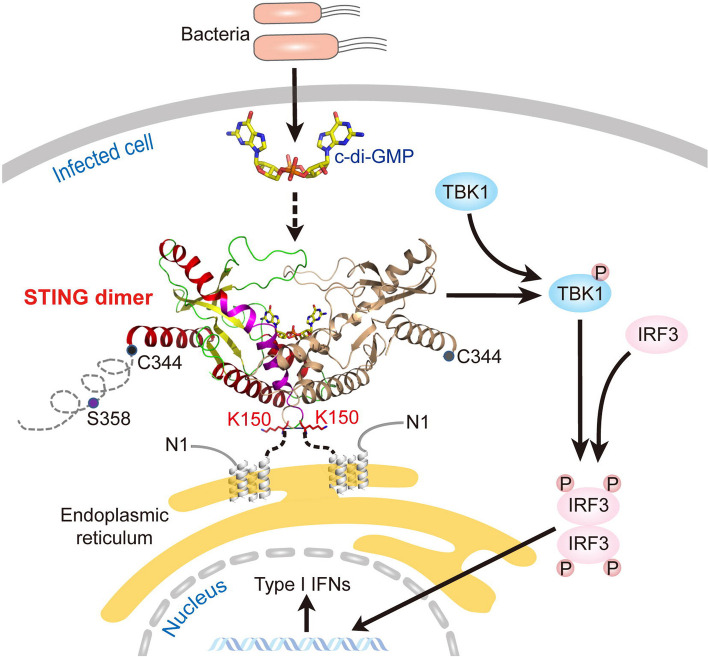
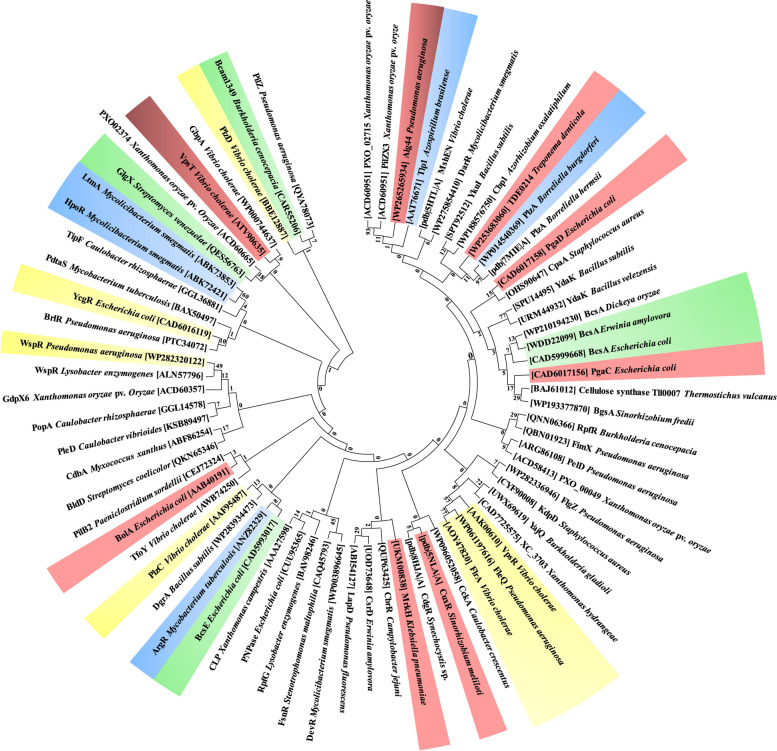
Cyclic bis-(3', 5')-dimeric guanosine monophosphate (c-di-GMP) is ubiquitous in many bacterial species, where it functions as a nucleotide-based secondary messenger and is a vital regulator of numerous biological processes. Due to its ubiquity, most bacterial species possess a wide range of downstream receptors that has a binding affinity to c-di-GMP and elicit output responses. In eukaryotes, several enzymes and riboswitches operate as receptors that interact with c-di-GMP and transduce cellular or environmental signals. This review examines the functional variety of receptors in prokaryotic and eukaryotic systems that exhibit distinct biological responses after interacting with c-di-GMP. Evolutionary relationships and similarities in distance among the c-di-GMP receptors in various bacterial species were evaluated to understand their specificities. Furthermore, residues of receptors involved in c-di-GMP binding are summarized. This review facilitates the understanding of how distinct receptors from different origins bind c-di-GMP equally well, yet fulfill diverse biological roles at the interspecies, intraspecies, and interkingdom levels. Furthermore, it also highlights c-di-GMP receptors as potential therapeutic targets, particularly those found in pathogenic microorganisms. Video Abstract.
环状双-(3',5')-二鸟苷酸 (c-di-GMP) 在许多细菌物种中普遍存在,作为一种基于核苷酸的第二信使,它是许多生物过程的重要调节剂。由于其普遍性,大多数细菌物种都拥有广泛的下游受体,这些受体与 c-di-GMP 具有结合亲和力,并引发输出反应。在真核生物中,几种酶和核糖开关作为受体,与 c-di-GMP 相互作用并转导细胞或环境信号。本文综述了原核和真核系统中具有不同生物学反应的受体的功能多样性,这些受体在与 c-di-GMP 相互作用后表现出不同的生物学反应。评估了不同细菌物种中 c-di-GMP 受体之间的进化关系和距离相似性,以了解它们的特异性。此外,还总结了参与 c-di-GMP 结合的受体残基。本文综述有助于理解来自不同来源的不同受体如何同样很好地结合 c-di-GMP,但在种间、种内和种间水平上发挥不同的生物学作用。此外,它还强调了 c-di-GMP 受体作为潜在的治疗靶点,特别是那些在致病微生物中发现的受体。视频摘要。