Division of Molecular Microbiology, College of Life Sciences, University of Dundee, Dundee, UK.
Microbiology (Reading). 2013 Jul;159(Pt 7):1286-1297. doi: 10.1099/mic.0.068189-0. Epub 2013 May 23.
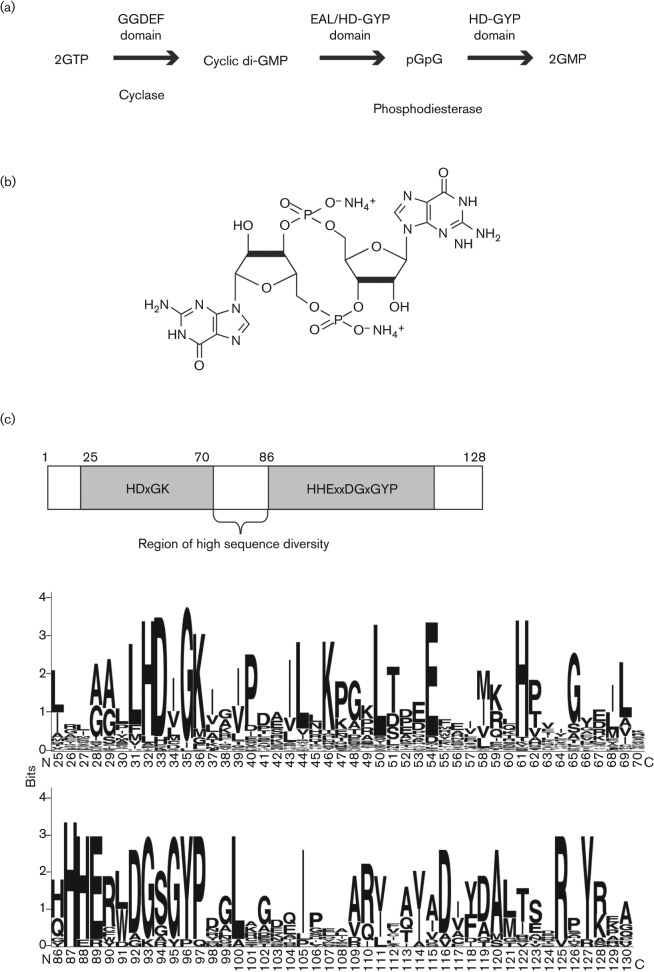
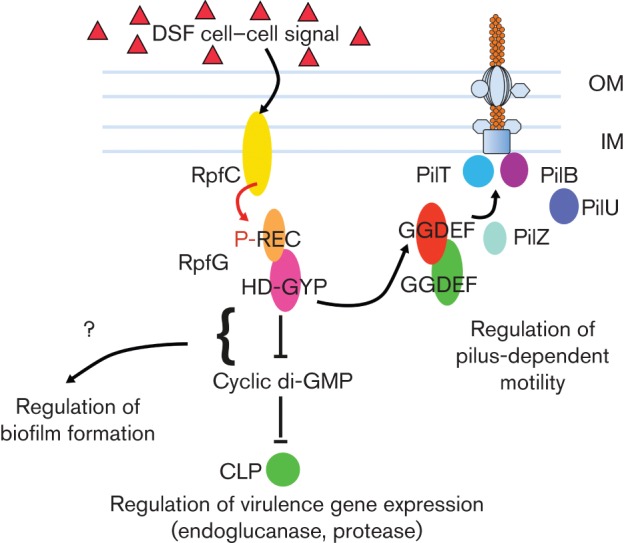
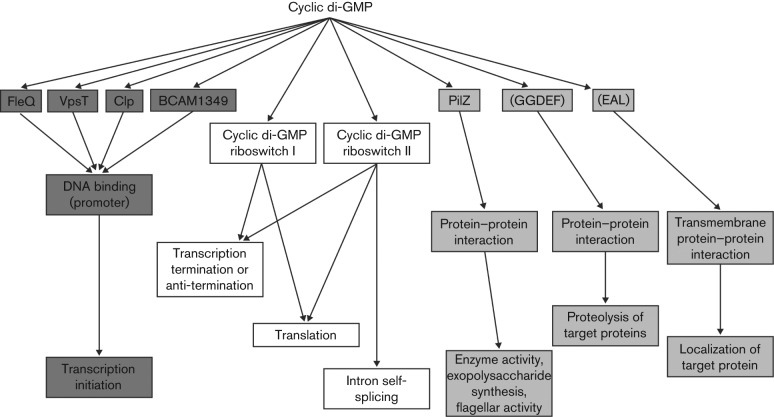
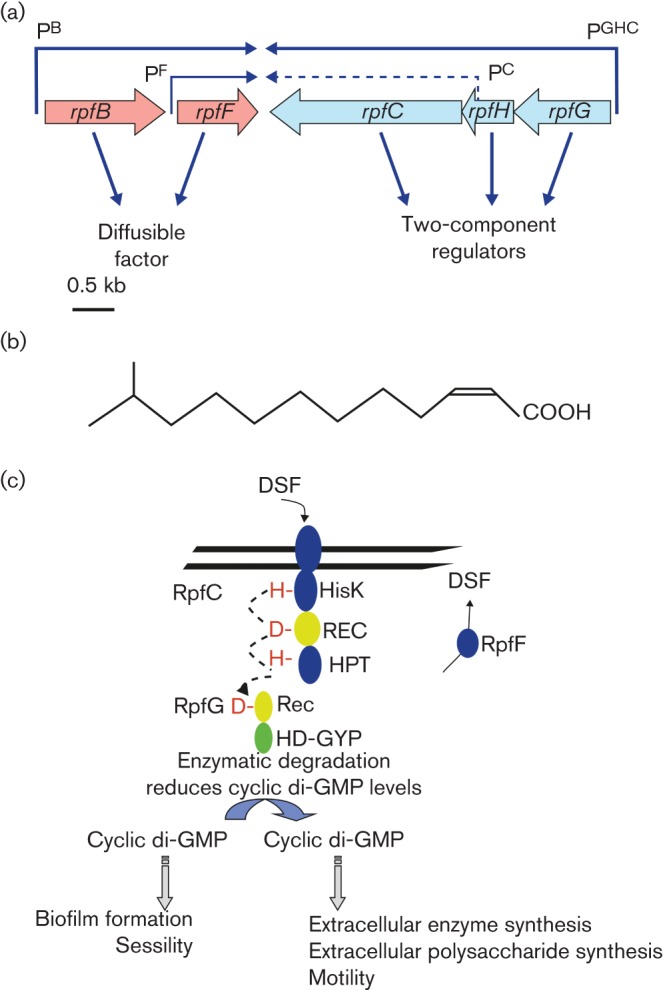
Signal transduction pathways involving the second messenger cyclic di-GMP [bis-(3'-5')-cyclic di-guanosine monophosphate] occur widely in bacteria where they act to link perception of environmental or intracellular cues and signals to specific alterations in cellular function. Such alterations can contribute to bacterial lifestyle transitions including biofilm formation and virulence. The cellular levels of the nucleotide are controlled through the opposing activities of diguanylate cyclases (DGCs) and phosphodiesterases (PDEs). The GGDEF domain of DGCs catalyses the synthesis of cyclic di-GMP from GTP, whereas EAL or HD-GYP domains in different classes of PDE catalyse cyclic di-GMP degradation to pGpG and GMP. We are now beginning to understand how alterations in cyclic di-GMP exert a regulatory action through binding to diverse receptors or effectors that include a small 'adaptor' protein domain called PilZ, transcription factors and riboswitches. The regulatory action of enzymically active cyclic di-GMP signalling proteins is, however, not restricted to an influence on the level of nucleotide. Here, I will discuss our recent findings that highlight the role that protein-protein interactions involving these signalling proteins have in regulating functions that contribute to bacterial virulence.
涉及第二信使环二鸟苷酸 [双(3'-5')-环二鸟苷单磷酸]的信号转导途径在细菌中广泛存在,它们将环境或细胞内信号的感知与特定的细胞功能改变联系起来。这种改变有助于细菌生活方式的转变,包括生物膜的形成和毒力。核苷酸的细胞水平通过环二鸟苷酸环化酶 (DGCs) 和磷酸二酯酶 (PDEs) 的拮抗活性来控制。DGCs 的 GGDEF 结构域催化 GTP 合成环二鸟苷酸,而不同类别的 PDE 中的 EAL 或 HD-GYP 结构域催化环二鸟苷酸降解为 pGpG 和 GMP。我们现在开始了解环二鸟苷酸如何通过与包括称为 PilZ 的小“适配器”蛋白结构域、转录因子和核糖开关的各种受体或效应物结合来发挥调节作用。然而,具有酶活性的环二鸟苷酸信号蛋白的调节作用不仅限于对核苷酸水平的影响。在这里,我将讨论我们最近的发现,这些发现强调了涉及这些信号蛋白的蛋白质-蛋白质相互作用在调节有助于细菌毒力的功能方面的作用。