Fernández-Aguilar Luis M, Vico-Barranco Inmaculada, Arbulo-Echevarria Mikel M, Aguado Enrique
Institute for Biomedical Research of Cadiz (INIBICA), 11009 Cadiz, Spain.
Department of Biomedicine, Biotechnology and Public Health (Immunology), University of Cadiz, 11002 Cadiz, Spain.
Biology (Basel). 2023 Aug 24;12(9):1163. doi: 10.3390/biology12091163.
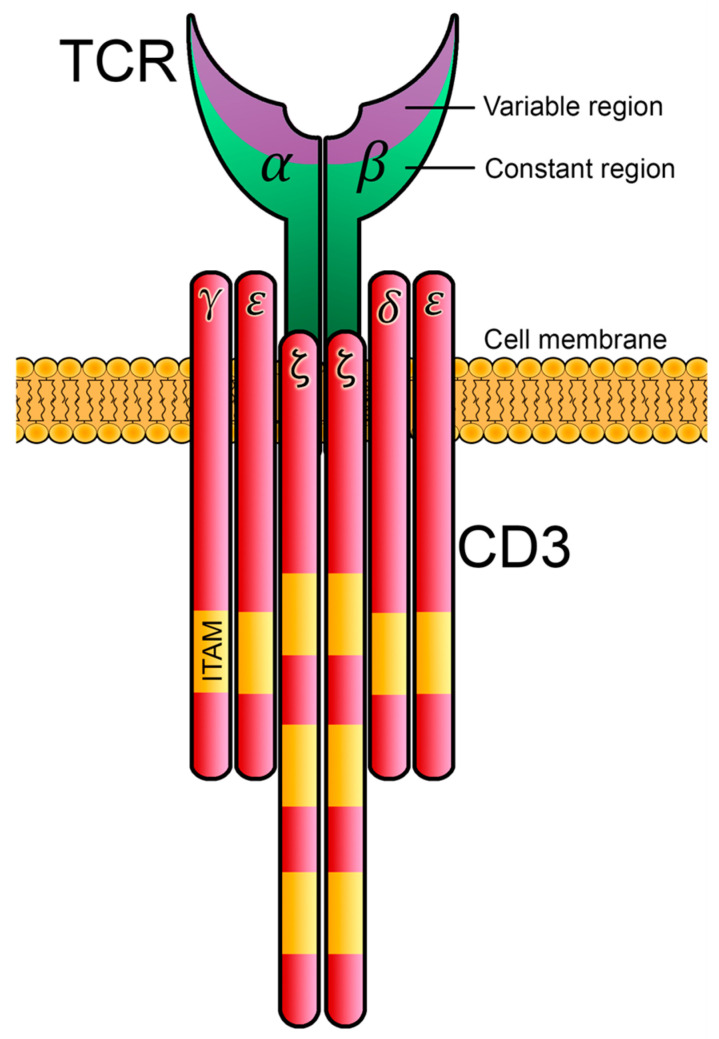
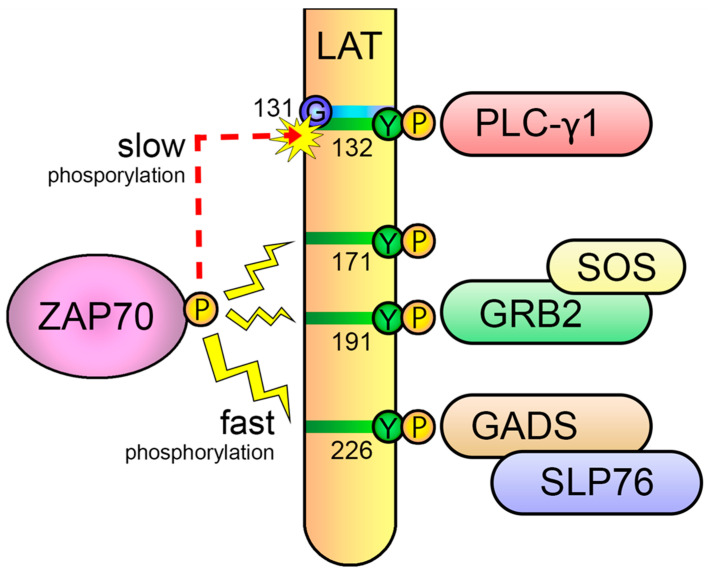
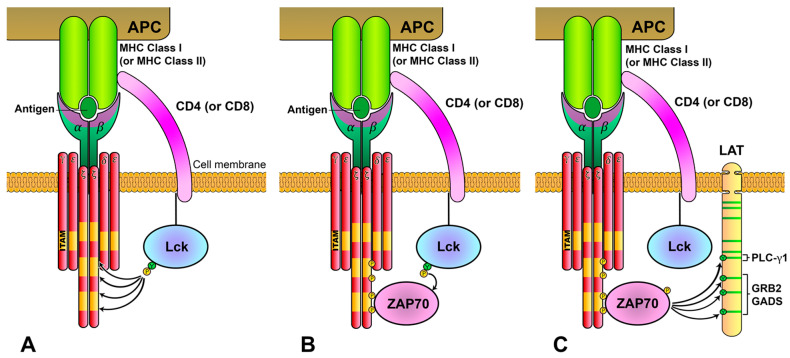
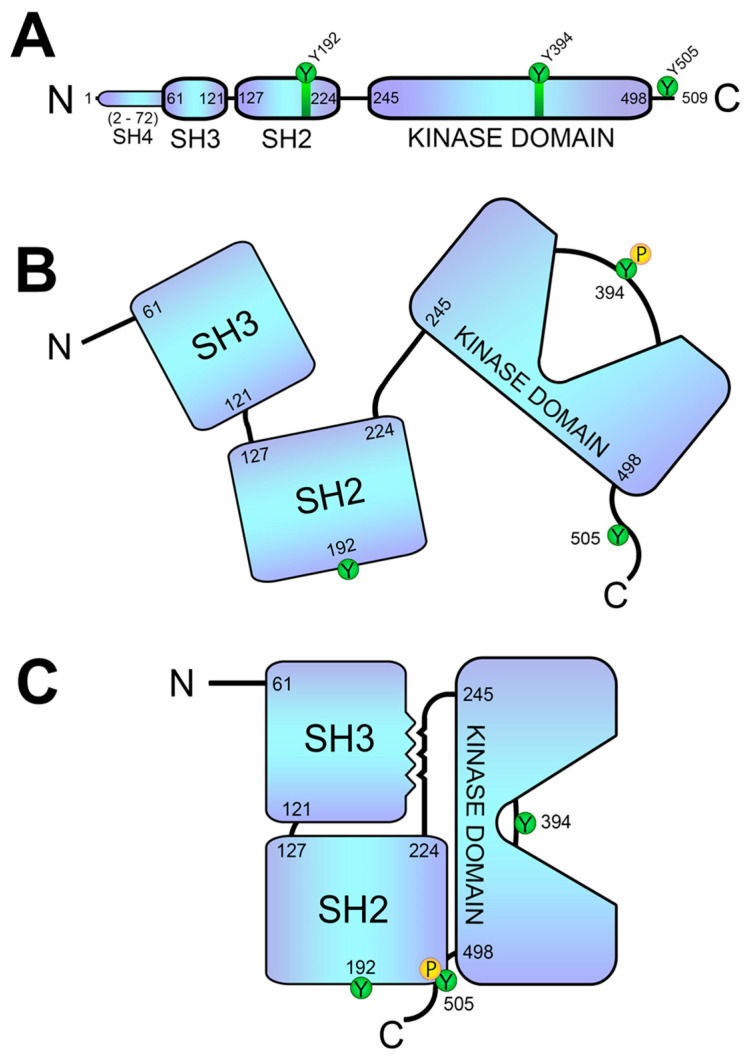
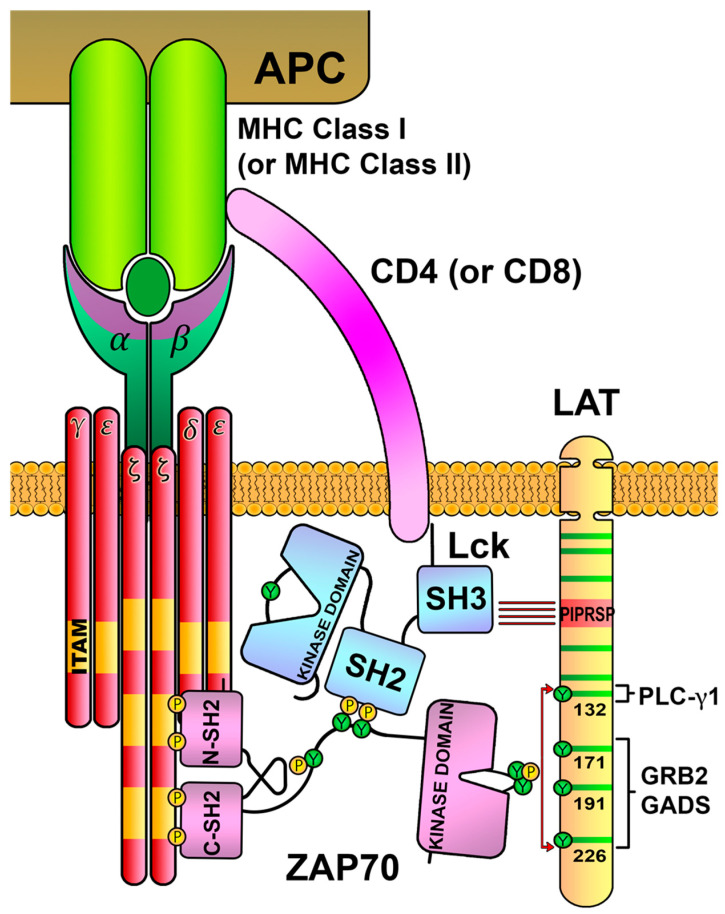
Specific antigen recognition is one of the immune system's features that allows it to mount intense yet controlled responses to an infinity of potential threats. T cells play a relevant role in the host defense and the clearance of pathogens by means of the specific recognition of peptide antigens presented by antigen-presenting cells (APCs), and, to do so, they are equipped with a clonally distributed antigen receptor called the T-cell receptor (TCR). Upon the specific engagement of the TCR, multiple intracellular signals are triggered, which lead to the activation, proliferation and differentiation of T lymphocytes into effector cells. In addition, this signaling cascade also operates during T-cell development, allowing for the generation of cells that can be helpful in the defense against threats, as well as preventing the generation of autoreactive cells. Early TCR signals include phosphorylation events in which the tyrosine kinases Lck and ZAP70 are involved. The sequential activation of these kinases leads to the phosphorylation of the transmembrane adaptor LAT, which constitutes a signaling hub for the generation of a signalosome, finally resulting in T-cell activation. These early signals play a relevant role in triggering the development, activation, proliferation and apoptosis of T cells, and the negative regulation of these signals is key to avoid aberrant processes that could generate inappropriate cellular responses and disease. In this review, we will examine and discuss the roles of the tyrosine kinases Lck and ZAP70 and the membrane adaptor LAT in these cellular processes.
特异性抗原识别是免疫系统的特征之一,使其能够对无数潜在威胁发起强烈而可控的反应。T细胞通过特异性识别抗原呈递细胞(APC)呈递的肽抗原,在宿主防御和病原体清除中发挥相关作用,为此,它们配备了一种克隆分布的抗原受体,称为T细胞受体(TCR)。TCR特异性结合后,会触发多个细胞内信号,导致T淋巴细胞激活、增殖并分化为效应细胞。此外,这种信号级联反应在T细胞发育过程中也起作用,有助于产生有助于抵御威胁的细胞,并防止自身反应性细胞的产生。早期TCR信号包括酪氨酸激酶Lck和ZAP70参与的磷酸化事件。这些激酶的顺序激活导致跨膜接头蛋白LAT磷酸化,LAT构成信号小体生成的信号枢纽,最终导致T细胞激活。这些早期信号在触发T细胞的发育、激活、增殖和凋亡中起相关作用,对这些信号的负调控是避免可能产生不适当细胞反应和疾病的异常过程的关键。在这篇综述中,我们将研究和讨论酪氨酸激酶Lck和ZAP70以及膜接头蛋白LAT在这些细胞过程中的作用。