Laboratory of Molecular Genetics of Aging & Tumor, Medicine School, Kunming University of Science and Technology, Kunming 650500, China.
Int J Mol Sci. 2024 Oct 18;25(20):11232. doi: 10.3390/ijms252011232.
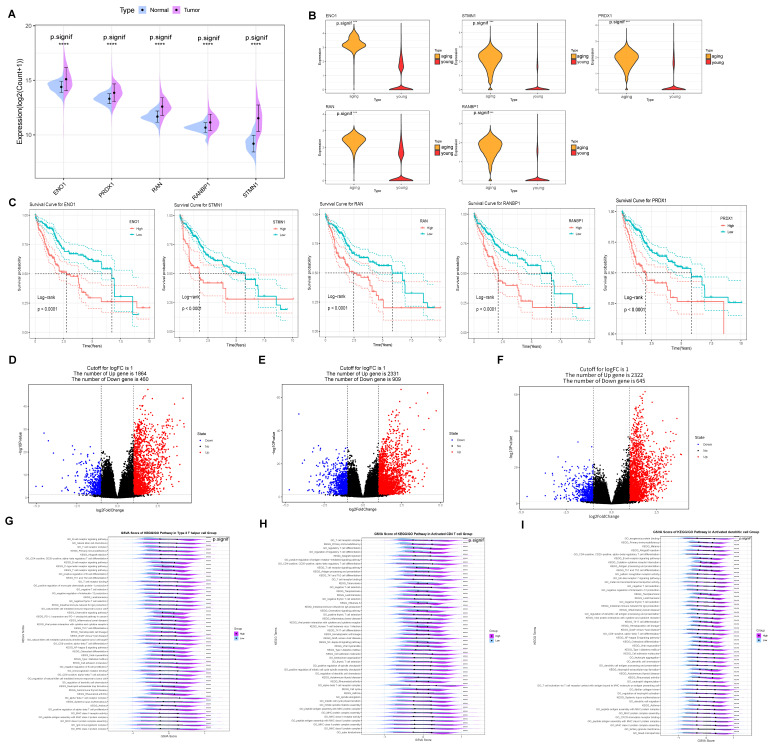
Hepatocellular carcinoma (HCC) is the sixth most prevalent cancer and a leading cause of cancer-related mortality globally, with most patients diagnosed at advanced stages and facing limited early treatment options. This study aimed to identify characteristic genes associated with T-cell exhaustion due to senescence in hepatocellular carcinoma patients, elucidating the interplay between senescence and T-cell exhaustion. We constructed prognostic models based on five signature genes (ENO1, STMN1, PRDX1, RAN, and RANBP1) linked to T-cell exhaustion, utilizing elastic net regression. The findings indicate that increased expression of ENO1 in T cells may contribute to T-cell exhaustion and Treg infiltration in hepatocellular carcinoma. Furthermore, molecular docking was employed to screen small molecule compounds that target the anti-tumor effects of these exhaustion-related genes. This study provides crucial insights into the diagnosis and treatment of hepatocellular carcinoma, establishing a strong foundation for the development of predictive biomarkers and therapeutic targets for affected patients.
肝细胞癌 (HCC) 是全球第六大常见癌症和癌症相关死亡的主要原因,大多数患者在晚期诊断,面临有限的早期治疗选择。本研究旨在鉴定与肝细胞癌患者因衰老导致的 T 细胞耗竭相关的特征基因,阐明衰老与 T 细胞耗竭之间的相互作用。我们基于与 T 细胞耗竭相关的五个特征基因(ENO1、STMN1、PRDX1、RAN 和 RANBP1)构建了预后模型,利用弹性网络回归。研究结果表明,T 细胞中 ENO1 的高表达可能导致 T 细胞耗竭和 Treg 浸润。此外,还采用分子对接筛选了针对这些与衰竭相关基因的抗肿瘤作用的小分子化合物。本研究为肝细胞癌的诊断和治疗提供了重要的见解,为开发相关患者的预测生物标志物和治疗靶点奠定了坚实的基础。