Stoppiello Gerardo A, Coleine Claudia, Moeller Ralf, Ripa Caterina, Billi Daniela, Selbmann Laura
Department of Ecological and Biological Sciences, University of Tuscia, 01100 Viterbo, Italy.
Aerospace Microbiology Research Group, Radiation Biology Department, Institute of Aerospace Medicine, German Aerospace Center (DLR e.V.), D-51103 Cologne, Germany.
Biology (Basel). 2023 Aug 31;12(9):1193. doi: 10.3390/biology12091193.
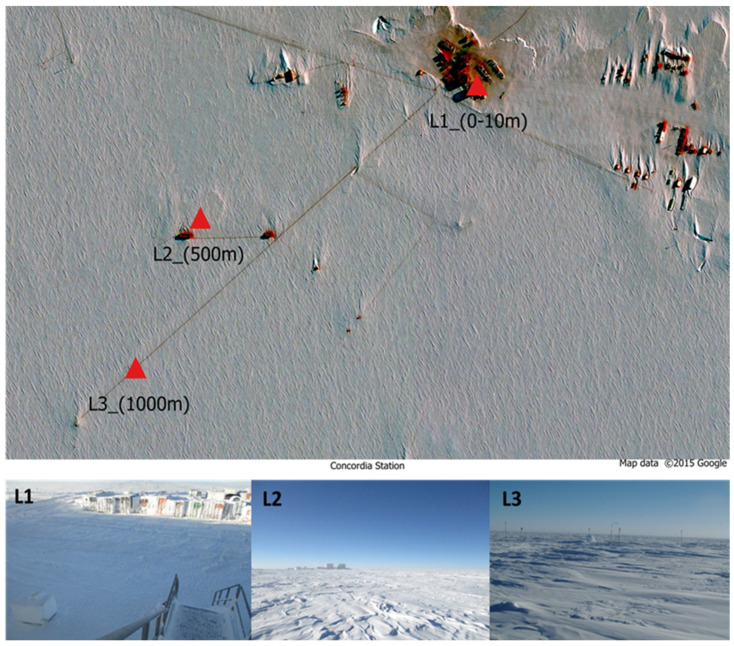
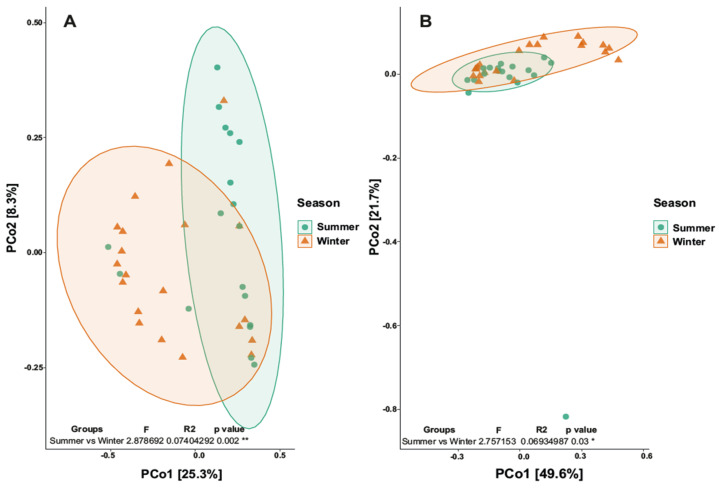
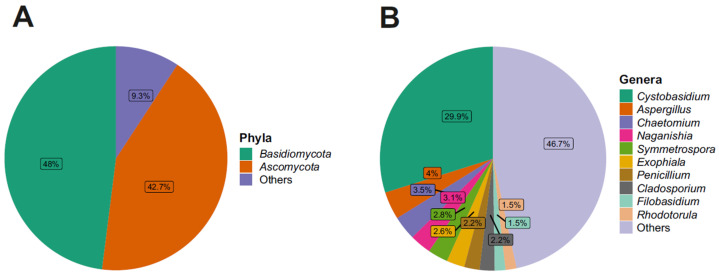
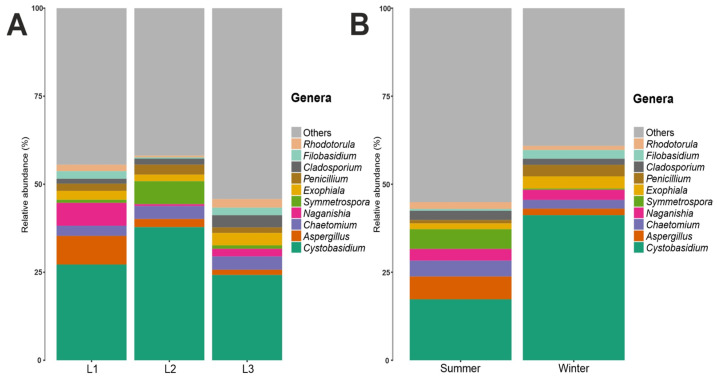
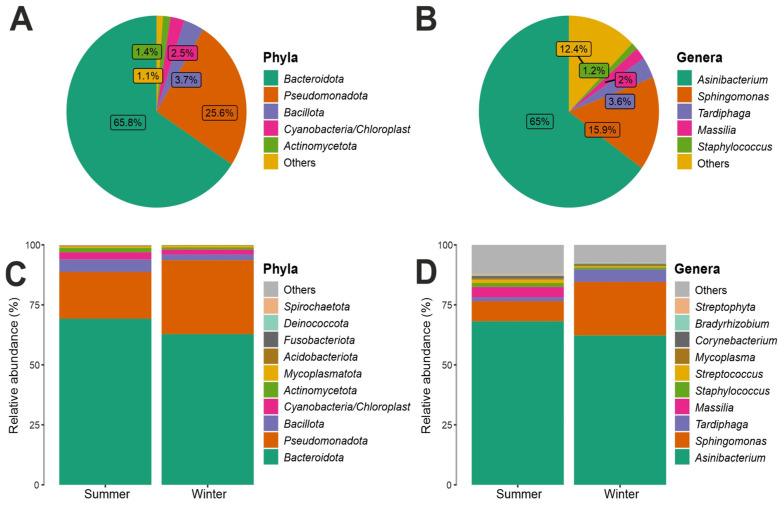
The French-Italian Concordia Research Station, situated on the Antarctic Polar Plateau at an elevation of 3233 m above sea level, offers a unique opportunity to study the presence and variation of microbes introduced by abiotic or biotic vectors and, consequently, appraise the amplitude of human impact in such a pristine environment. This research built upon a previous work, which explored microbial diversity in the surface snow surrounding the Concordia Research Station. While that study successfully characterized the bacterial assemblage, detecting fungal diversity was hampered by the low DNA content. To address this knowledge gap, in the present study, we optimized the sampling by increasing ice/snow collected to leverage the final DNA yield. The V4 variable region of the 16S rDNA and Internal Transcribed Spacer (ITS1) rDNA was used to evaluate bacterial and fungal diversity. From the sequencing, we obtained 3,352,661 and 4,433,595 reads clustered in 930 and 3182 amplicon sequence variants (ASVs) for fungi and bacteria, respectively. Amplicon sequencing revealed a predominance of (49%) and (42%) in the fungal component; (65.8%) is the main representative among the bacterial phyla. are almost exclusively represented by yeast-like fungi. Our findings provide the first comprehensive overview of both fungal and bacterial diversity in the Antarctic Polar Plateau's surface snow/ice near Concordia Station and to identify seasonality as the main driver of microbial diversity; we also detected the most sensitive microorganisms to these factors, which could serve as indicators of human impact in this pristine environment and aid in planetary protection for future exploration missions.
法意康科迪亚研究站位于南极极地高原,海拔3233米,为研究非生物或生物载体引入的微生物的存在和变化提供了独特的机会,从而评估在如此原始的环境中人类影响的程度。这项研究建立在先前的工作基础上,该工作探索了康科迪亚研究站周围表层雪中的微生物多样性。虽然该研究成功地对细菌群落进行了特征描述,但由于DNA含量低,检测真菌多样性受到了阻碍。为了填补这一知识空白,在本研究中,我们通过增加冰雪采集量来优化采样,以提高最终的DNA产量。使用16S rDNA的V4可变区和内转录间隔区(ITS1)rDNA来评估细菌和真菌的多样性。通过测序,我们分别获得了3352661条和4433595条读数,这些读数分别聚类为930个和3182个真菌和细菌的扩增子序列变体(ASV)。扩增子测序显示,真菌成分中以(49%)和(42%)为主;(65.8%)是细菌门中的主要代表。几乎完全由酵母样真菌代表。我们的研究结果首次全面概述了康科迪亚站附近南极极地高原表层雪/冰中的真菌和细菌多样性,并确定季节性是微生物多样性的主要驱动因素;我们还检测到了对这些因素最敏感的微生物,它们可以作为人类在这一原始环境中影响的指标,并有助于为未来的探索任务提供行星保护。