Singh Dilbag, Monga Anmol, de Moura Hector L, Zhang Xiaoxia, Zibetti Marcelo V W, Regatte Ravinder R
Center of Biomedical Imaging, Department of Radiology, New York University Grossman School of Medicine, New York, NY 10016, USA.
Bioengineering (Basel). 2023 Aug 26;10(9):1012. doi: 10.3390/bioengineering10091012.
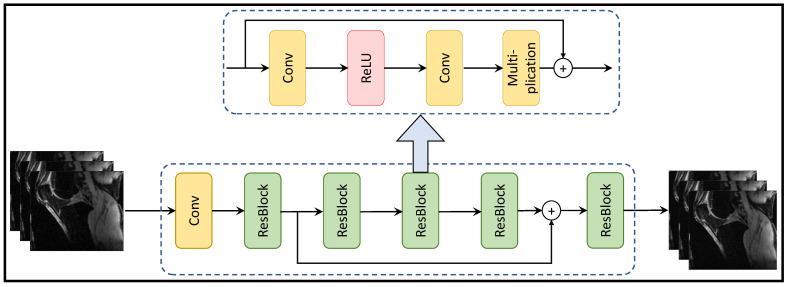
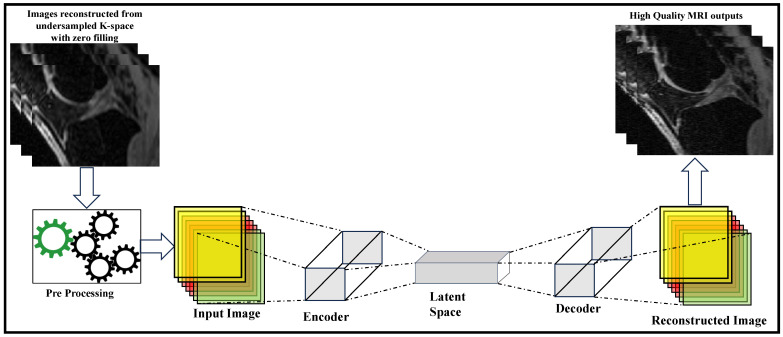
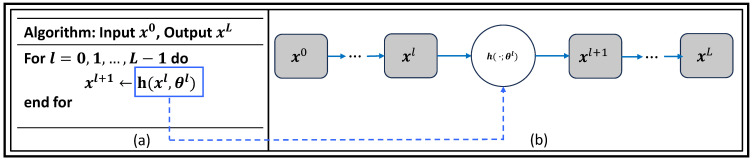
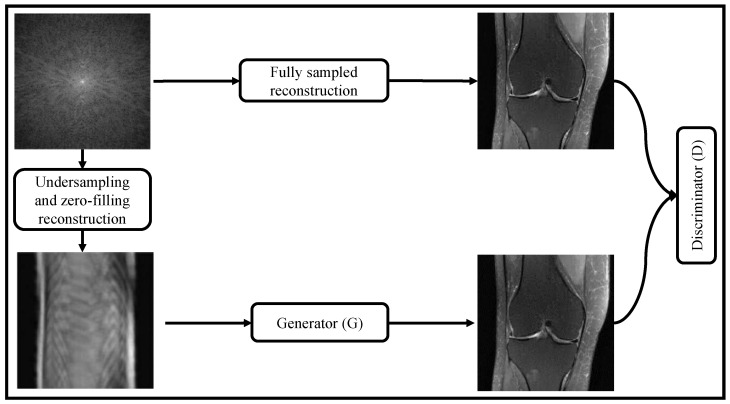
Magnetic Resonance Imaging (MRI) is an essential medical imaging modality that provides excellent soft-tissue contrast and high-resolution images of the human body, allowing us to understand detailed information on morphology, structural integrity, and physiologic processes. However, MRI exams usually require lengthy acquisition times. Methods such as parallel MRI and Compressive Sensing (CS) have significantly reduced the MRI acquisition time by acquiring less data through undersampling k-space. The state-of-the-art of fast MRI has recently been redefined by integrating Deep Learning (DL) models with these undersampled approaches. This Systematic Literature Review (SLR) comprehensively analyzes deep MRI reconstruction models, emphasizing the key elements of recently proposed methods and highlighting their strengths and weaknesses. This SLR involves searching and selecting relevant studies from various databases, including Web of Science and Scopus, followed by a rigorous screening and data extraction process using the Preferred Reporting Items for Systematic Reviews and Meta-Analyses (PRISMA) guidelines. It focuses on various techniques, such as residual learning, image representation using encoders and decoders, data-consistency layers, unrolled networks, learned activations, attention modules, plug-and-play priors, diffusion models, and Bayesian methods. This SLR also discusses the use of loss functions and training with adversarial networks to enhance deep MRI reconstruction methods. Moreover, we explore various MRI reconstruction applications, including non-Cartesian reconstruction, super-resolution, dynamic MRI, joint learning of reconstruction with coil sensitivity and sampling, quantitative mapping, and MR fingerprinting. This paper also addresses research questions, provides insights for future directions, and emphasizes robust generalization and artifact handling. Therefore, this SLR serves as a valuable resource for advancing fast MRI, guiding research and development efforts of MRI reconstruction for better image quality and faster data acquisition.
磁共振成像(MRI)是一种重要的医学成像方式,它能提供出色的软组织对比度和人体的高分辨率图像,使我们能够了解有关形态、结构完整性和生理过程的详细信息。然而,MRI检查通常需要较长的采集时间。诸如并行MRI和压缩感知(CS)等方法通过对k空间进行欠采样获取更少的数据,从而显著减少了MRI采集时间。通过将深度学习(DL)模型与这些欠采样方法相结合,快速MRI的技术水平最近得到了重新定义。本系统文献综述(SLR)全面分析了深度MRI重建模型,强调了最近提出的方法的关键要素,并突出了它们的优缺点。该SLR包括从各种数据库(如科学网和Scopus)中搜索和选择相关研究,然后使用系统评价和Meta分析的首选报告项目(PRISMA)指南进行严格的筛选和数据提取过程。它关注各种技术,如残差学习、使用编码器和解码器的图像表示、数据一致性层、展开网络、学习激活、注意力模块、即插即用先验、扩散模型和贝叶斯方法。该SLR还讨论了损失函数的使用以及与对抗网络的训练,以增强深度MRI重建方法。此外,我们探索了各种MRI重建应用,包括非笛卡尔重建、超分辨率、动态MRI、联合学习重建线圈灵敏度和采样、定量映射以及MR指纹识别。本文还解决了研究问题,为未来方向提供了见解,并强调了稳健的泛化和伪影处理。因此,该SLR是推进快速MRI的宝贵资源,指导MRI重建的研发工作以获得更好的图像质量和更快的数据采集。