Kato Toshiko, Yamada Kosaku, Hongyo Tadashi
Independent Researcher, Nara 630-8242, Japan.
Independent Researcher, Kyoto 611-0001, Japan.
Cancers (Basel). 2023 Sep 15;15(18):4583. doi: 10.3390/cancers15184583.
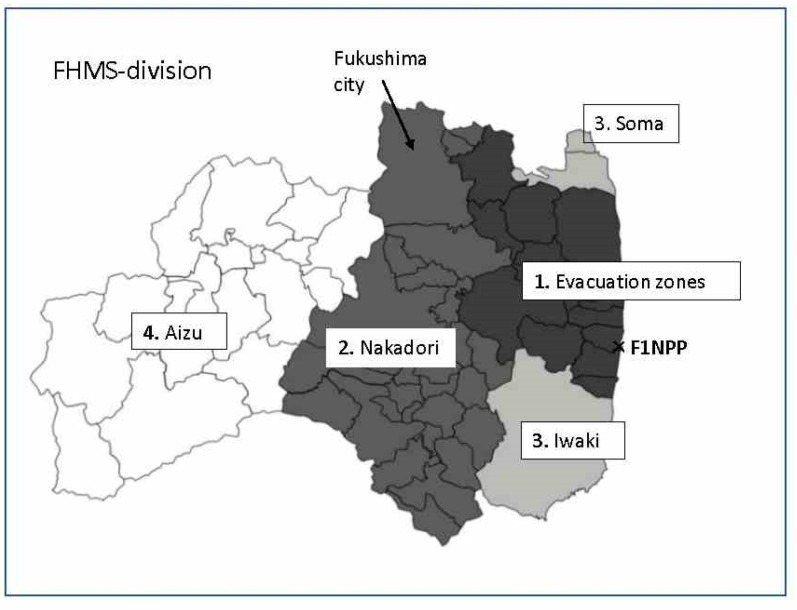
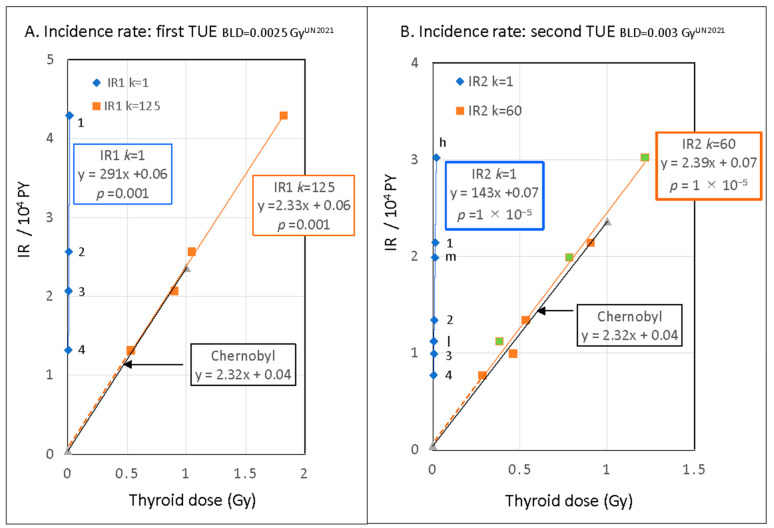
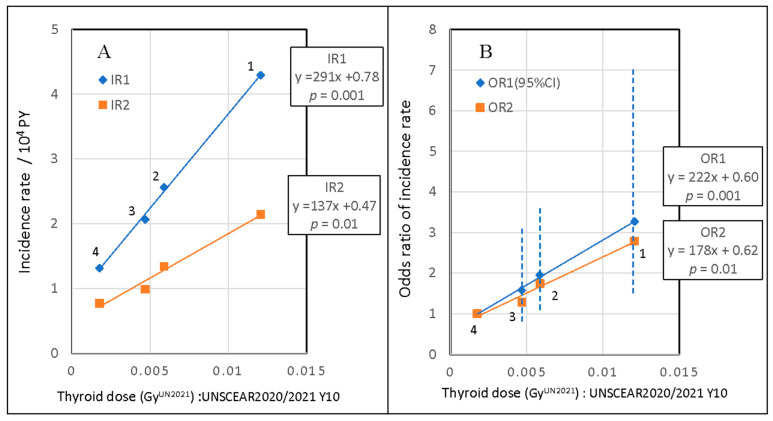
The FMU and the United Nations Scientific Committee on the Effects of Atomic Radiation (UNSCEAR) concluded that the high incidence of thyroid cancer after the Fukushima nuclear accident was not the result of radiation exposure, but rather might have been overdiagnosis based on the low thyroid dose estimated in the UNSCEAR 2020/2021 report. In this study, the origin of increased PTC in Fukushima was examined based on the thyroid dose estimated by UNSCEAR. The dose-response relationship of the incidence rate per person-years (PY) was analyzed for four areas in Fukushima prefecture via regression analysis. The linear response of the annual incidence rates to thyroid dose in the first six years showed that the dominant origin of childhood thyroid cancer was radiation exposure. Excess absolute risk (EAR) proportionally increased with thyroid dose, with an EAR/10 PY Gy of 143 (95%CI: 122, 165) in the second TUE ( < 0.001), which is approximately 50-100 times higher than the EAR/10 PY Gy ≒ 2.3 observed after the Chernobyl accident. This suggests an underestimation of the thyroid dose by UNSCEAR of approximately 1/50~1/100 compared with the thyroid dose for Chernobyl. The increased childhood thyroid cancer in Fukushima was found to arise from radioactive iodine exposure, which was comparable to that in Chernobyl.
福岛医学大学(FMU)和联合国原子辐射影响科学委员会(UNSCEAR)得出结论,福岛核事故后甲状腺癌的高发病率并非辐射暴露所致,而是根据UNSCEAR 2020/2021报告中估计的低甲状腺剂量可能存在过度诊断。在本研究中,基于UNSCEAR估计的甲状腺剂量,对福岛地区甲状腺癌增加的原因进行了研究。通过回归分析,分析了福岛县四个地区每人年发病率(PY)的剂量反应关系。前六年每年发病率对甲状腺剂量的线性反应表明,儿童甲状腺癌的主要原因是辐射暴露。超额绝对风险(EAR)与甲状腺剂量成比例增加,在第二个时间单位(<0.001)中EAR/10 PY Gy为143(95%CI:122,165),这比切尔诺贝利事故后观察到的EAR/10 PY Gy≈2.3高出约50-100倍。这表明与切尔诺贝利的甲状腺剂量相比,UNSCEAR对甲状腺剂量的估计低估了约1/50~1/100。福岛儿童甲状腺癌增加被发现是由放射性碘暴露引起的,这与切尔诺贝利的情况相当。