Rebik Anastasiya, Broshevitskaya Nadezda, Kuzhuget Syldys, Aleksandrov Pavel, Abbasova Kenul, Zaichenko Maria, Midzyanovskaya Inna
Institute of Higher Nervous Activity and Neurophysiology, Russian Academy of Sciences, 117485 Moscow, Russia.
Faculty of Biology, Lomonosov Moscow State University, 119234 Moscow, Russia.
Biomedicines. 2023 Sep 18;11(9):2566. doi: 10.3390/biomedicines11092566.
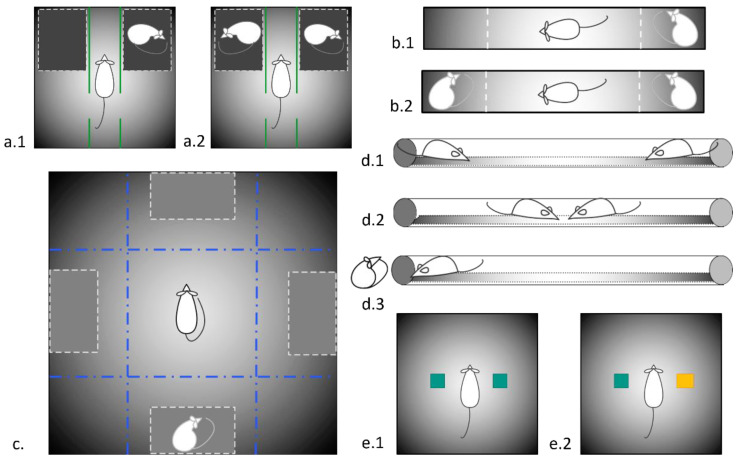
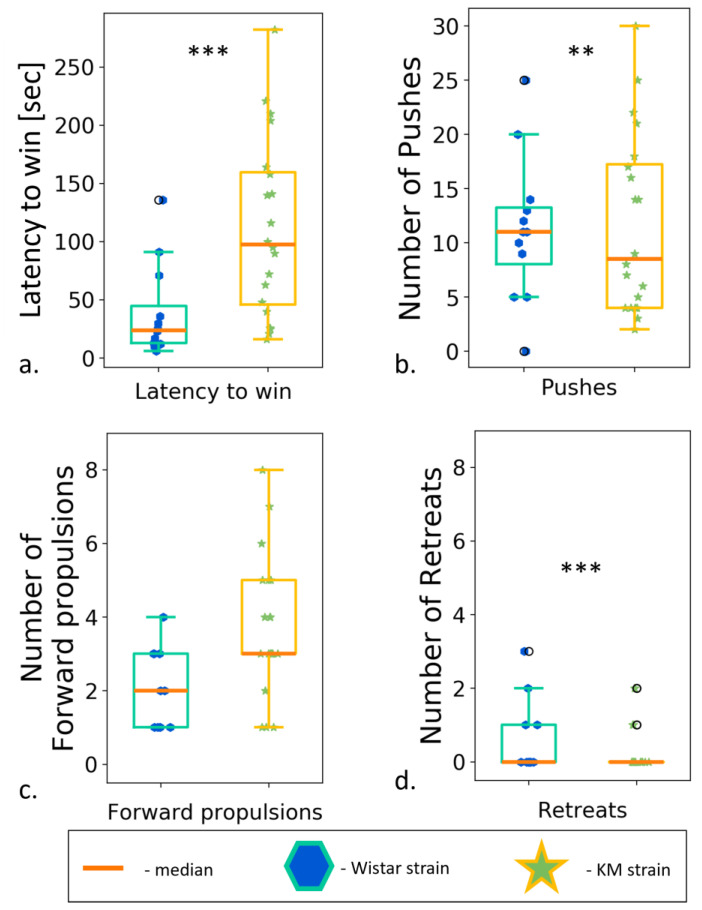
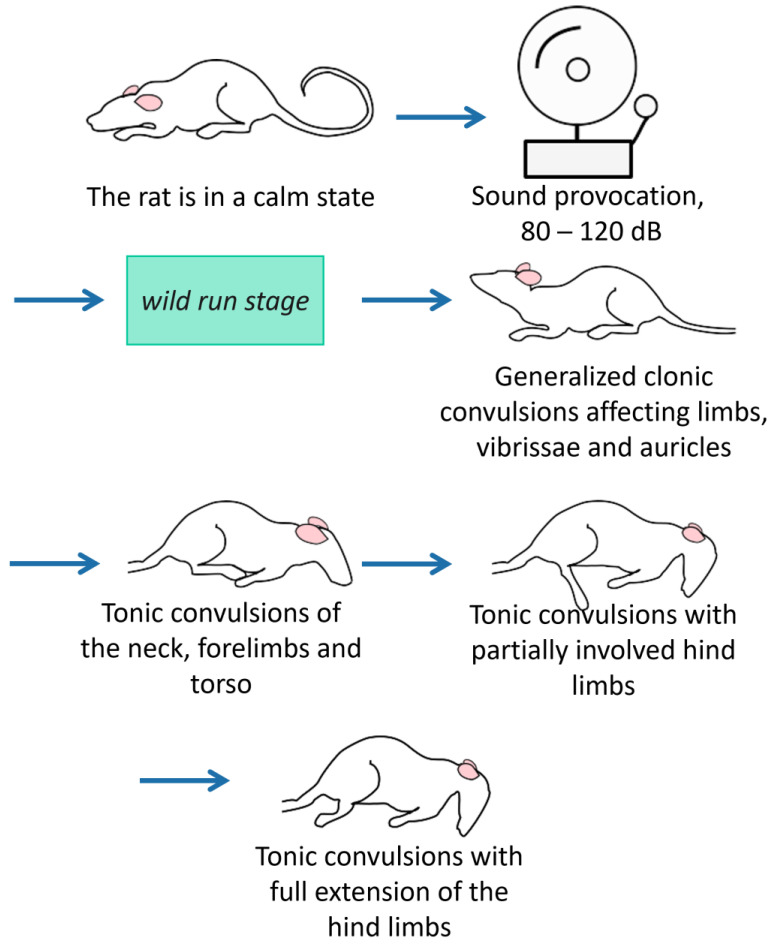
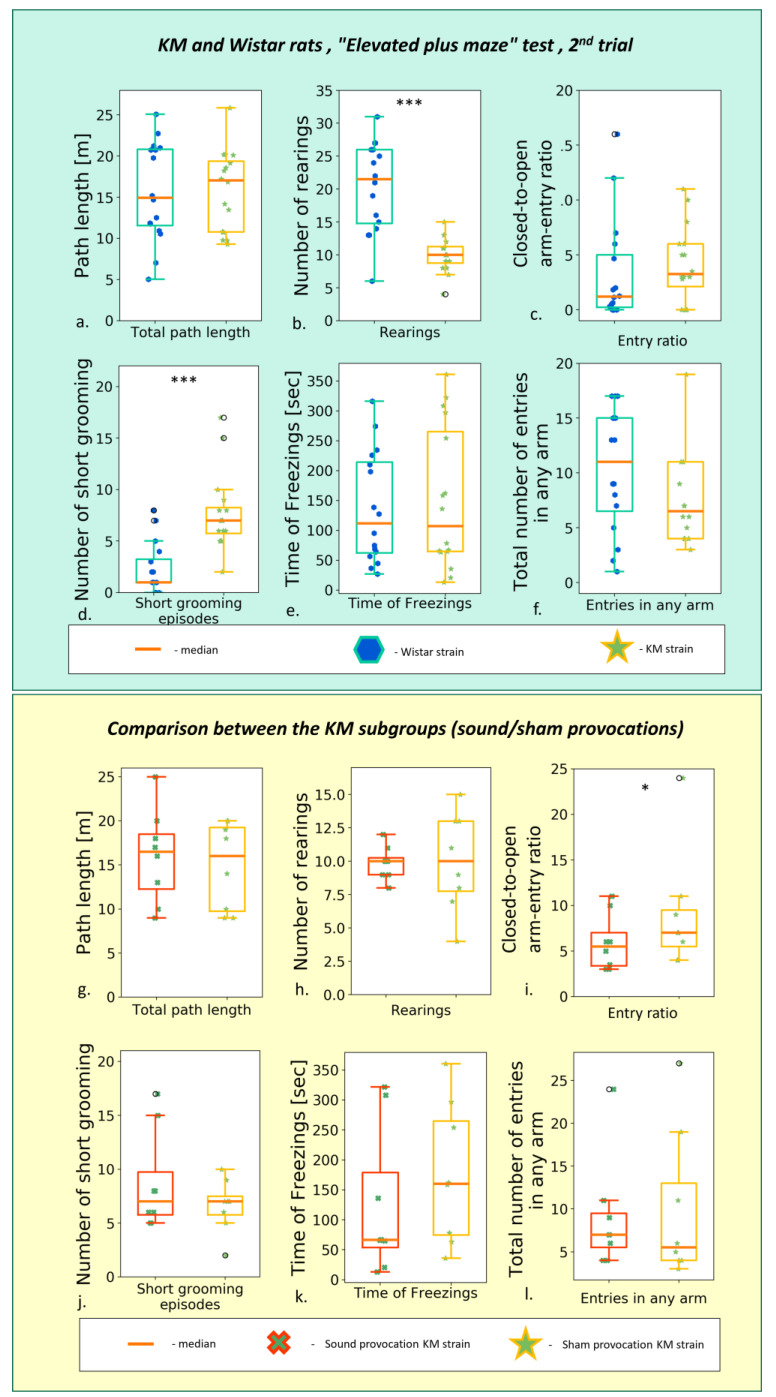
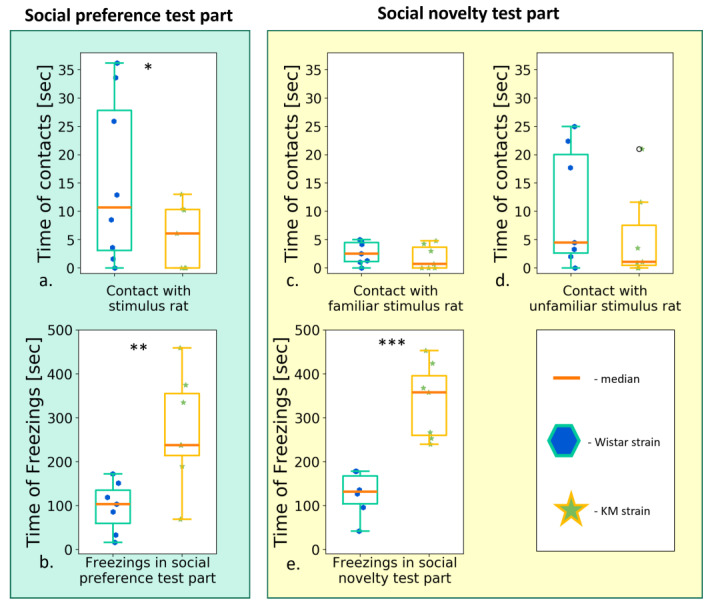
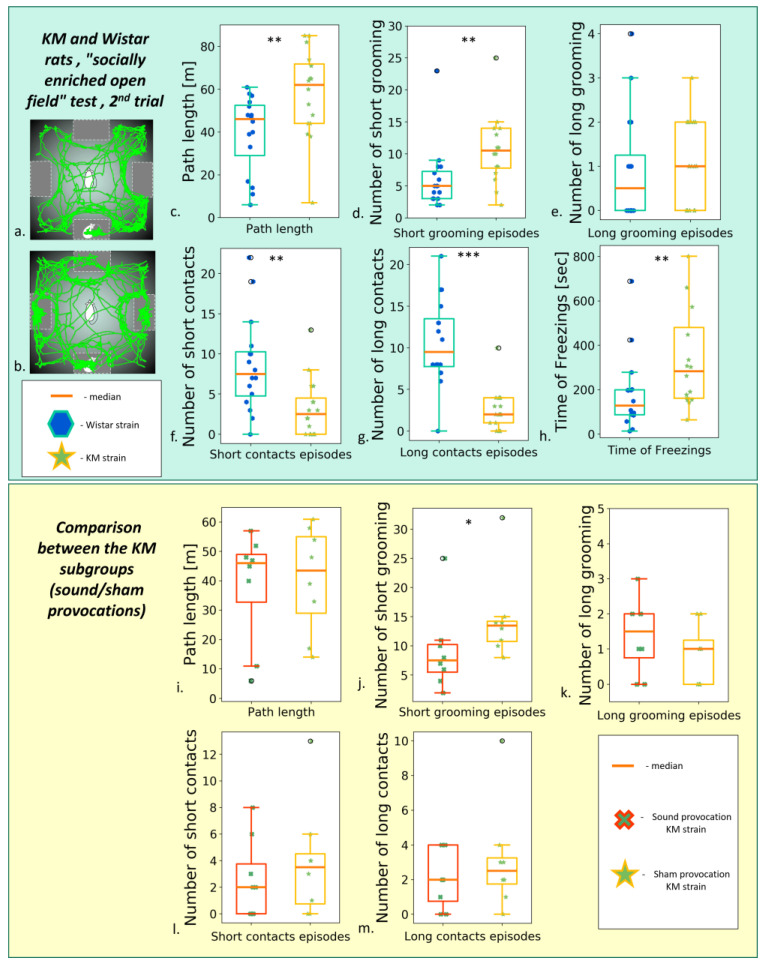
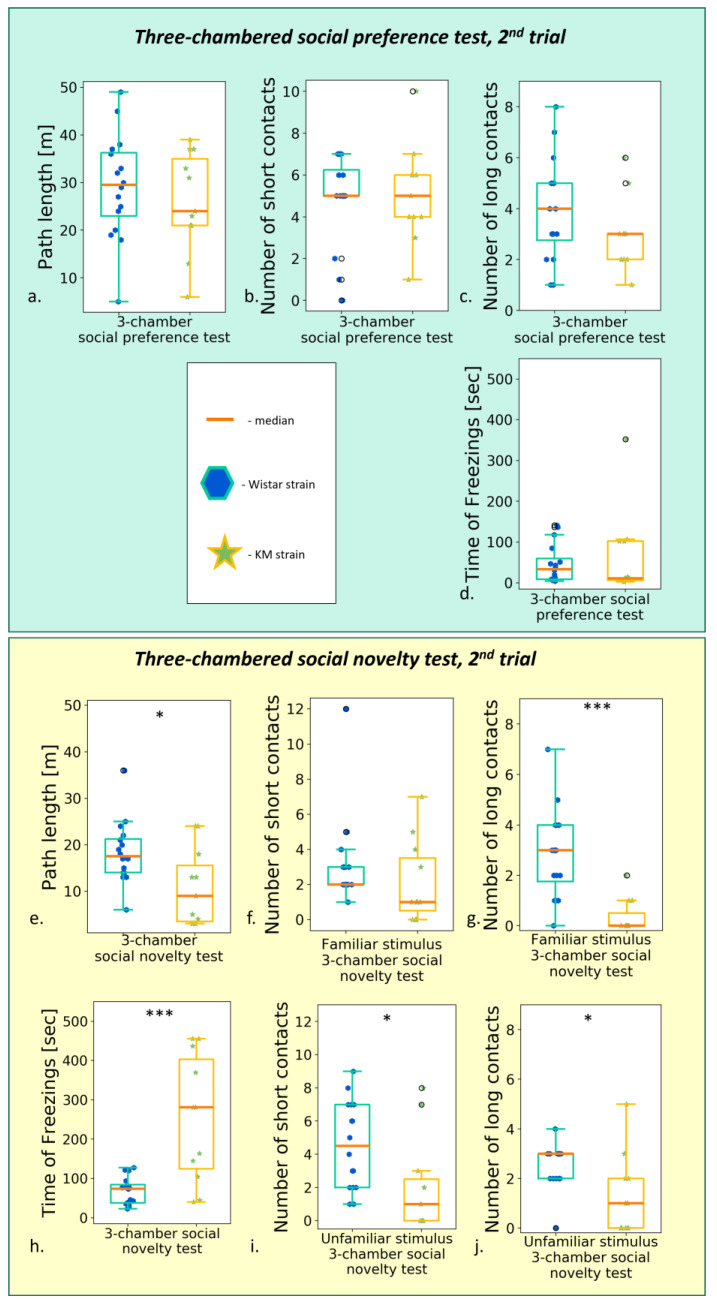
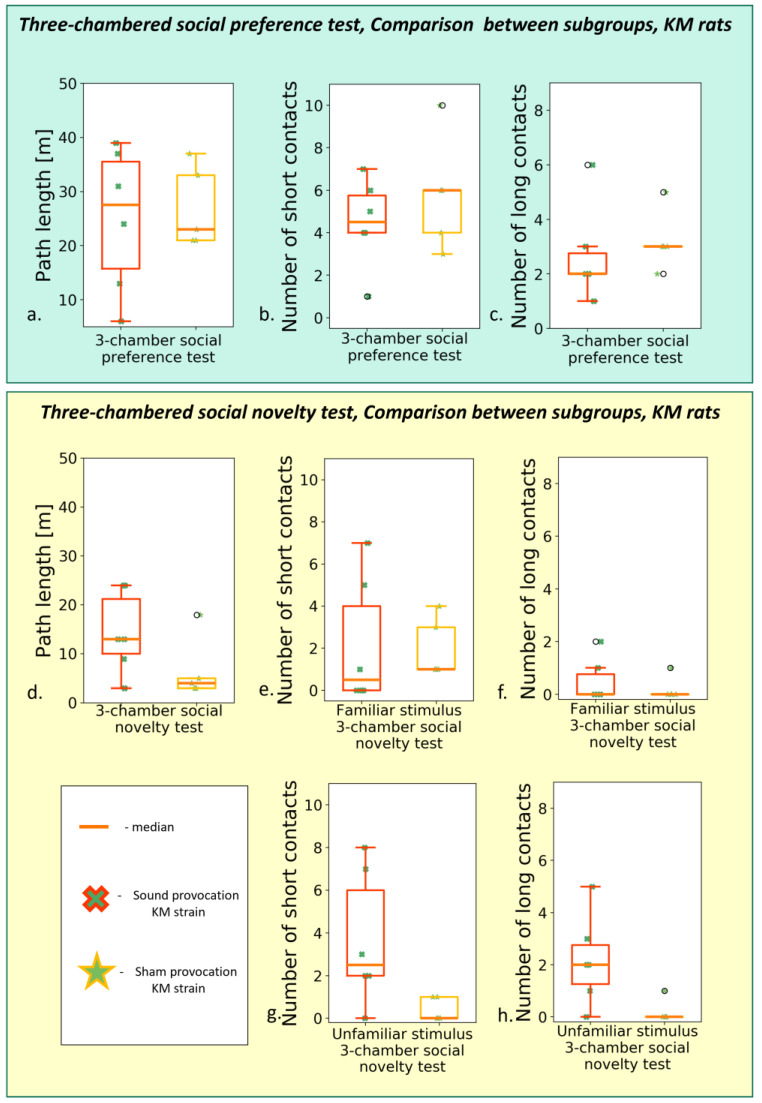
Epilepsy or epileptic syndromes affect more than 70 million people, often comorbid with autism spectrum disorders (ASD). Seizures are concerned as a factor for social regression in ASD. A stepwise experimental approach to this problem requires an animal model to provoke seizures and monitor subsequent behavior. We used rats of the Krushinsky-Molodkina (KM) strain as a validated inbred genetic model for human temporal lobe epilepsy, with recently described social deficiency and hypolocomotion. Generalized tonic-clonic seizures in KM rats are sound-triggered, thus being controlled events in drug-naïve animals. We studied whether seizure experience would aggravate contact deficits in these animals. Locomotor and contact parameters were registered in "the elevated plus maze", "socially enriched open field", and "social novelty/social preference tests" before and after sound-provoked seizures. The triple seizure provocations minimally affected the contact behavior. The lack of social drive in KM rats was not accompanied by a submissive phenotype, as tested in "the tube dominance test", but featured with a poor contact repertoire. Here, we confirmed our previous findings on social deficits in KM rats. The contact deficiency was dissociated from hypolocomotion and anxiety and did not correlate with seizure experience. It was established that experience of rare, generalized tonic-clonic convulsions did not lead to an impending regress in contact motivation, as seen in an animal model of genetic epilepsy and comorbid social deficiency. One of the oldest animal models for epilepsy has a translational potential to study mechanisms of social behavioral deficits in future neurophysiological and pharmacological research.
癫痫或癫痫综合征影响着超过7000万人,常与自闭症谱系障碍(ASD)共病。癫痫发作被认为是ASD社交功能退化的一个因素。针对这个问题的逐步实验方法需要一个动物模型来引发癫痫发作并监测随后的行为。我们使用克鲁申斯基-莫洛迪纳(KM)品系的大鼠作为人类颞叶癫痫的经过验证的近交遗传模型,该模型最近被描述存在社交缺陷和运动减少。KM大鼠的全身性强直阵挛发作由声音触发,因此在未用药的动物中是可控制的事件。我们研究了癫痫发作经历是否会加重这些动物的接触缺陷。在声音诱发癫痫发作前后,在“高架十字迷宫”“社交丰富的旷场”和“社交新奇/社交偏好测试”中记录运动和接触参数。三次癫痫发作诱发对接触行为的影响最小。在“管子优势测试”中,KM大鼠缺乏社交驱动力并非伴有顺从表型,而是表现为接触行为模式较差。在此,我们证实了我们之前关于KM大鼠社交缺陷的发现。接触缺陷与运动减少和焦虑无关,也与癫痫发作经历无关。已确定,罕见的全身性强直阵挛性惊厥经历并不会导致接触动机的即刻退化,这在遗传性癫痫和共病社交缺陷的动物模型中可见。最古老的癫痫动物模型之一在未来神经生理学和药理学研究中具有研究社交行为缺陷机制的转化潜力。