
奥地利儿科医生中的“二次受害者”(SeViD-A1研究)。
Second Victims among Austrian Pediatricians (SeViD-A1 Study).
作者信息
Potura Eva, Klemm Victoria, Roesner Hannah, Sitter Barbara, Huscsava Herbert, Trifunovic-Koenig Milena, Voitl Peter, Strametz Reinhard
机构信息
The Second Victim Association Austria, 11900 Vienna, Austria.
Wiesbaden Institute for Healthcare Economics and Patient Safety (WiHelP), Wiesbaden Business School, RheinMain University of Applied Sciences, 65183 Wiesbaden, Germany.
出版信息
Healthcare (Basel). 2023 Sep 8;11(18):2501. doi: 10.3390/healthcare11182501.
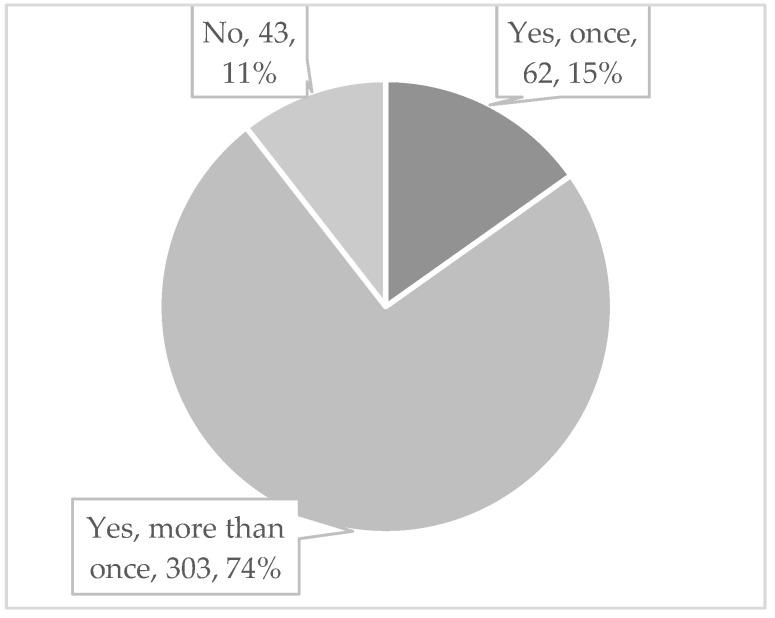
(1) Background: The second victim phenomenon (SVP) plays a critical role in workplace and patient safety. So far, there are limited epidemiological data on the SVP in German-speaking countries. Some studies have been carried out in Germany, but so far, no quantitative studies have been carried out in Austria examining the prevalence, symptom load and preferred support measures for second victims (SVs). This study therefore examines the SVP among Austrian pediatricians. (2) Methods: A nationwide, cross-sectional and anonymous online study was conducted using the SeViD questionnaire (Second Victims in Deutschland) including the Big Five Inventory-10 (BFI-10). Statistical analysis included binary-logistic and multiple linear regression with the bootstrapping, bias-corrected and accelerated (BCa) method based on 1000 bootstrap samples. (3) Results: Of 414 Austrian pediatricians, 89% self-identified as SVs. The main cause of becoming an SV was the unexpected death or suicide of a patient. High neuroticism and extraversion values as well as working in outpatient care positively correlated with having experienced the SVP. A preferred support strategy was access to legal counseling. (4) Conclusions: Austrian pediatricians have the highest SVP prevalence measured with the SeViD questionnaire. Further research should focus on prevention strategies and intervention programs.
(1) 背景:二次受害者现象(SVP)在工作场所和患者安全中起着关键作用。到目前为止,在德语国家,关于SVP的流行病学数据有限。德国已经开展了一些研究,但到目前为止,奥地利尚未进行定量研究来调查二次受害者(SVs)的患病率、症状负担和首选支持措施。因此,本研究调查了奥地利儿科医生中的SVP。(2) 方法:使用包括大五人格量表-10(BFI-10)的SeViD问卷(德国的二次受害者)进行了一项全国性、横断面和匿名的在线研究。统计分析包括基于1000个自助样本的二元逻辑回归和多重线性回归,采用自助法、偏差校正和加速(BCa)方法。(3) 结果:在414名奥地利儿科医生中,89%的人自我认定为SVs。成为SV的主要原因是患者意外死亡或自杀。高神经质和外向性得分以及在门诊工作与经历SVP呈正相关。首选的支持策略是获得法律咨询。(4) 结论:用SeViD问卷测量,奥地利儿科医生的SVP患病率最高。进一步的研究应侧重于预防策略和干预项目。

 Zotero 插件