Gashi Donjeta, Gallopeni Florim, Imeri Greta, Shahini Mimoza, Bahtiri Shegë
Heimerer College, Prishtina, Kosovo.
Clinical and University Center Kosovo, Pristina, Kosovo.
Curr Psychol. 2022 Nov 14:1-10. doi: 10.1007/s12144-022-03944-9.
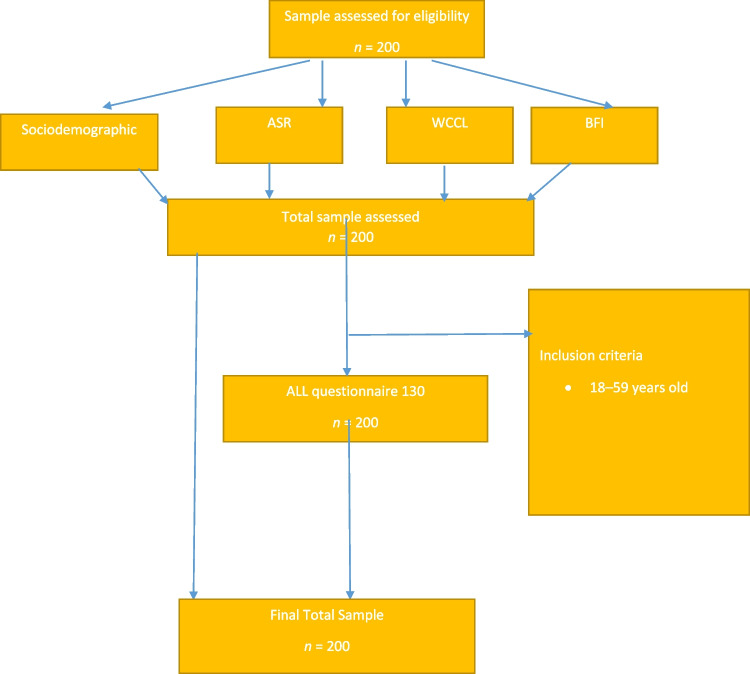
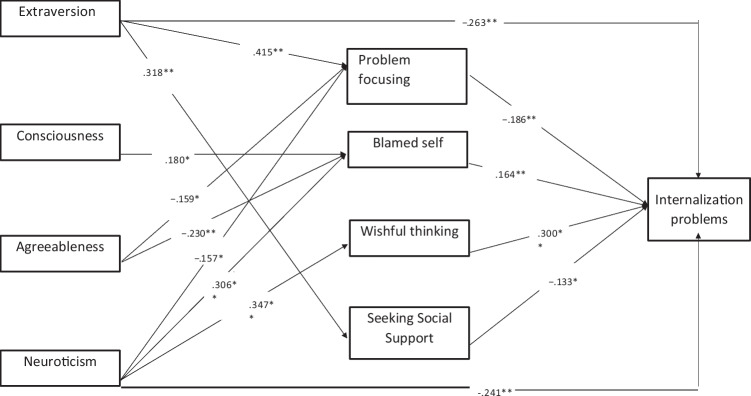
Considering the impact of pandemic condition on mental health and functioning in daily life, the main purpose of this study was to investigate the relationship between Big Five personality traits, coping strategies and emotional problems such as symptoms of depression and anxiety, during the COVID-19 pandemic period. Specifically, the purpose of this study is to create a model of the impact of coping strategies as mediating factors in the relationship between Big Five personality traits personality traits and emotional problems. For the purposes of this study, a sample of 200 Kosovar respondents was used, where the age of the participants varies from 18 to 54 years. As a result of the pandemic situation created, the method of data collection for this study was done in the form of self-reporting, divided into physical questionnaires and online ones. The BFI Personality Inventory is used to classify Big Five personality traits, the Coping Control Checklist (WCCL) to classify coping strategies, and the Adult Self-Reporting Questionnaire (ASR) used to identify emotional problems. The analysis of the results in this study was done by means of the statistical package of SPSS and R program. After the analysis, it is seen that there is a significant correlation between Big Five personality traits (extraversion and neuroticism) and coping strategies (seeking social support and avoidance), as well as there is a correlation between Big Five personality traits (compliance and neuroticism) and emotional problems (symptoms of anxiety and depression). An association was also found between coping strategies (avoidance) and emotional problems (anxiety symptoms). As for gender differences in experiencing anxiety and depression symptoms and using desired thoughts as coping strategies, it was found that women are more predisposed to experience anxiety symptoms and use desired thoughts than men. The findings highlighted the part that coping strategies are significant mediator factors in the relationship between Big Five personality traits and emotional problems.
考虑到疫情状况对心理健康和日常生活功能的影响,本研究的主要目的是调查在新冠疫情期间,大五人格特质、应对策略与诸如抑郁和焦虑症状等情绪问题之间的关系。具体而言,本研究的目的是构建一个模型,以探究应对策略作为中介因素在大五人格特质与情绪问题之间关系中的影响。为了本研究的目的,使用了200名科索沃受访者作为样本,参与者年龄在18至54岁之间。由于所造成的疫情形势,本研究的数据收集方法采用自我报告形式,分为纸质问卷和在线问卷。大五人格量表用于对大五人格特质进行分类,应对控制清单(WCCL)用于对应对策略进行分类,成人自我报告问卷(ASR)用于识别情绪问题。本研究的结果分析借助SPSS统计软件包和R程序进行。分析后发现,大五人格特质(外向性和神经质)与应对策略(寻求社会支持和回避)之间存在显著相关性,同时大五人格特质(宜人性和神经质)与情绪问题(焦虑和抑郁症状)之间也存在相关性。还发现应对策略(回避)与情绪问题(焦虑症状)之间存在关联。至于在经历焦虑和抑郁症状以及使用期望思维作为应对策略方面的性别差异,发现女性比男性更容易出现焦虑症状并使用期望思维。研究结果突出了应对策略在大五人格特质与情绪问题关系中是重要中介因素这一点。