da Silva Jéssica Duarte, Bens Lene, Santos Adriele J do Carmo, Lavigne Rob, Soares José, Melo Luís D R, Vallino Marta, Dias Roberto Sousa, Drulis-Kawa Zuzanna, de Paula Sérgio Oliveira, Wagemans Jeroen
Laboratory of Molecular Immunovirology, Department of Microbiology, Federal University of Viçosa, Viçosa 36570-900, MG, Brazil.
Laboratory of Gene Technology, Department of Biosystems, Division of Animal and Human Health Engineering, KU Leuven, 3000 Leuven, Belgium.
Microorganisms. 2023 Aug 23;11(9):2141. doi: 10.3390/microorganisms11092141.
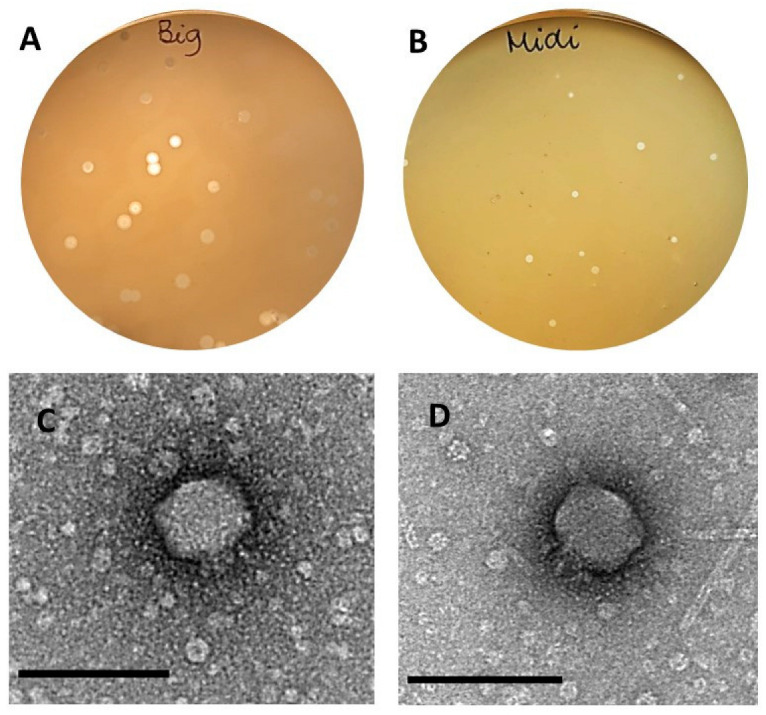
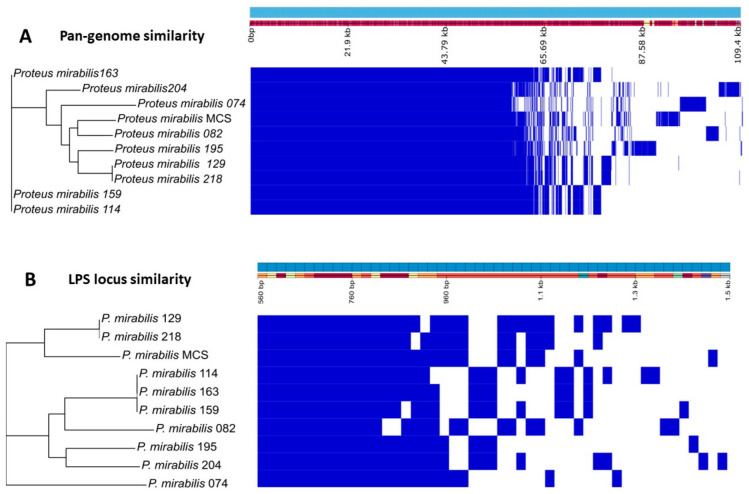
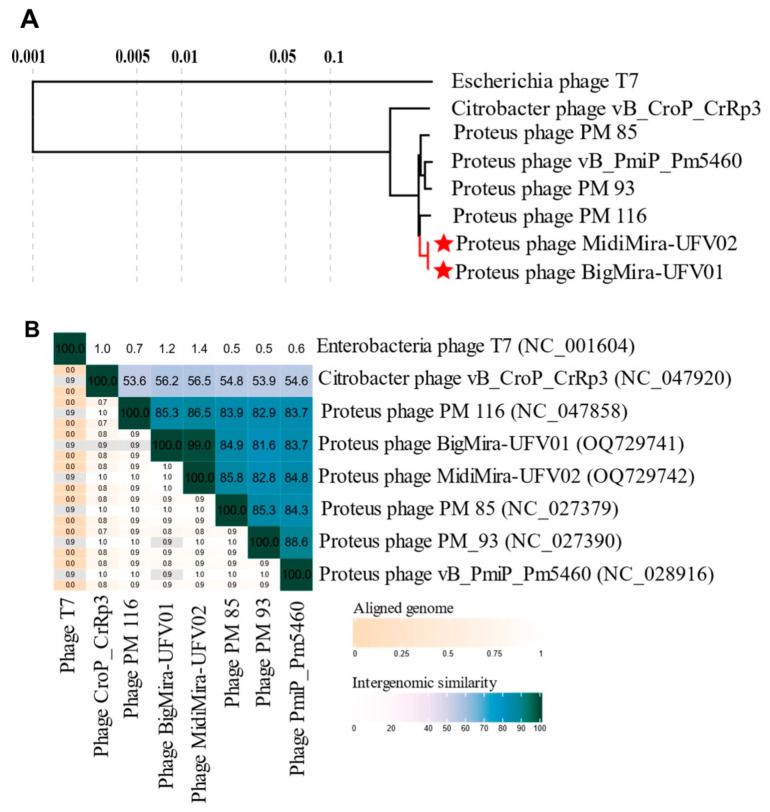
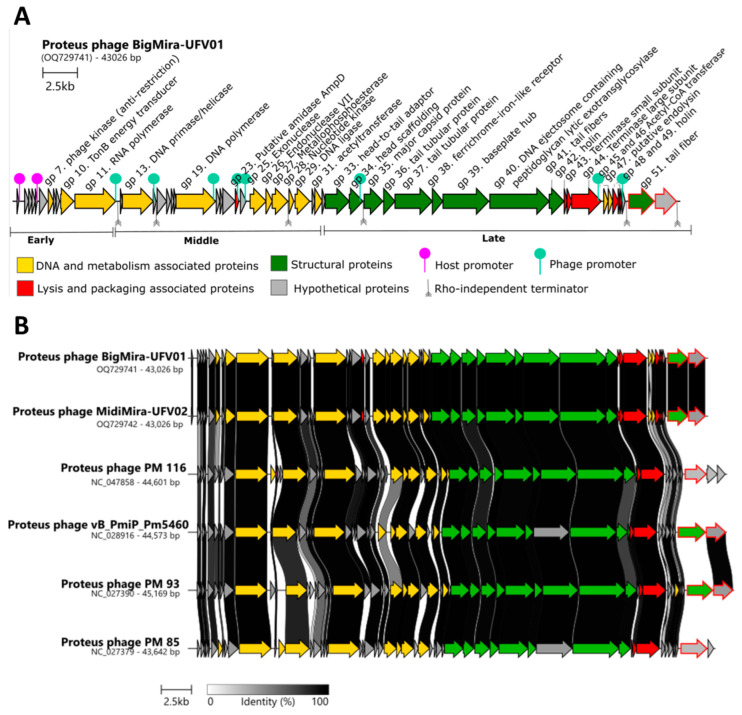
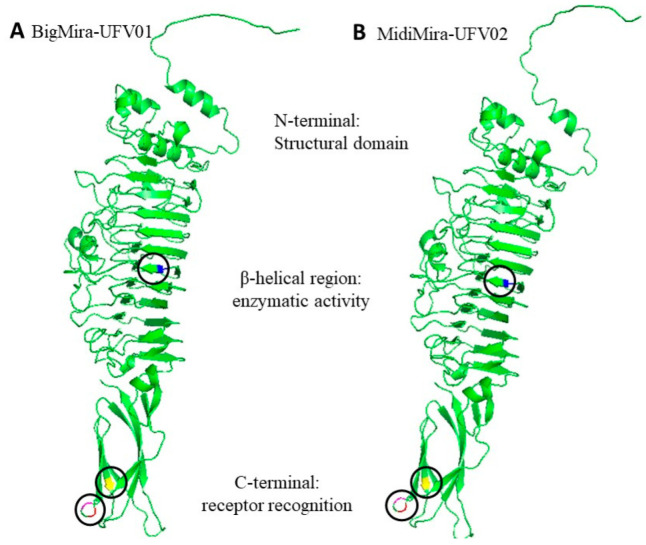
is an opportunistic pathogen and is responsible for more than 40% of all cases of catheter-associated urinary tract infections (CAUTIs). Healthcare-associated infections have been aggravated by the constant emergence of antibiotic-resistant bacterial strains. Because of this, the use of phages to combat bacterial infections gained renewed interest. In this study, we describe the biological and genomic features of two phages, named BigMira and MidiMira. These phages belong to the genus (family ). BigMira and MidiMira are highly similar, differing only in four missense mutations in their phage tail fiber. These mutations are sufficient to impact the phages' depolymerase activity. Subsequently, the comparative genomic analysis of ten clinical strains revealed differences in their antibiotic resistance profiles and lipopolysaccharide locus, with the latter potentially explaining the host range data of the phages. The massive presence of antimicrobial resistance genes, especially in the phages' isolation strain MCS, highlights the challenges in treating infections caused by multidrug-resistant bacteria. The findings reinforce BigMira and MidiMira phages as candidates for phage therapy purposes.
是一种机会致病菌,在所有导管相关尿路感染(CAUTI)病例中占比超过40%。医疗保健相关感染因抗生素耐药细菌菌株的不断出现而加剧。因此,利用噬菌体对抗细菌感染重新引起了人们的兴趣。在本研究中,我们描述了两种名为BigMira和MidiMira的噬菌体的生物学和基因组特征。这些噬菌体属于(科)属。BigMira和MidiMira高度相似,仅在其噬菌体尾纤维中的四个错义突变上有所不同。这些突变足以影响噬菌体的解聚酶活性。随后,对十种临床菌株的比较基因组分析揭示了它们在抗生素耐药谱和脂多糖位点上的差异,后者可能解释了噬菌体的宿主范围数据。抗菌耐药基因的大量存在,尤其是在噬菌体的分离菌株MCS中,凸显了治疗由多重耐药细菌引起的感染所面临的挑战。这些发现强化了BigMira和MidiMira噬菌体作为噬菌体治疗候选物的地位。