Sukhova Maria, Byazrova Maria, Mikhailov Artem, Yusubalieva Gaukhar, Maslova Irina, Belovezhets Tatyana, Chikaev Nikolay, Vorobiev Ivan, Baklaushev Vladimir, Filatov Alexander
Laboratory of Immunochemistry, National Research Center Institute of Immunology, Federal Medical Biological Agency of Russia, 115522 Moscow, Russia.
Department of Immunology, Faculty of Biology, Lomonosov Moscow State University, 119234 Moscow, Russia.
Microorganisms. 2023 Sep 20;11(9):2347. doi: 10.3390/microorganisms11092347.
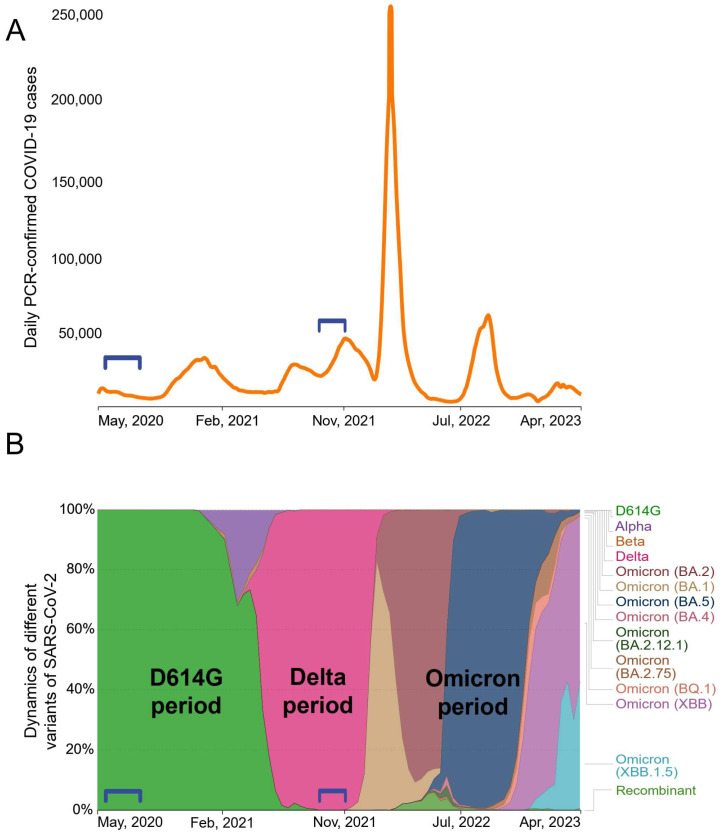
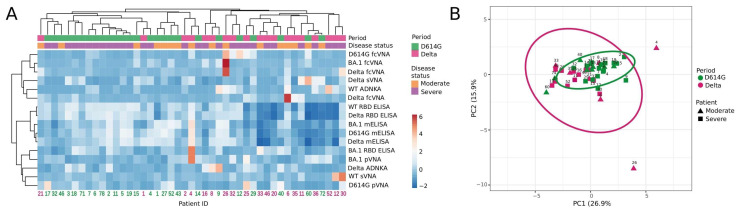
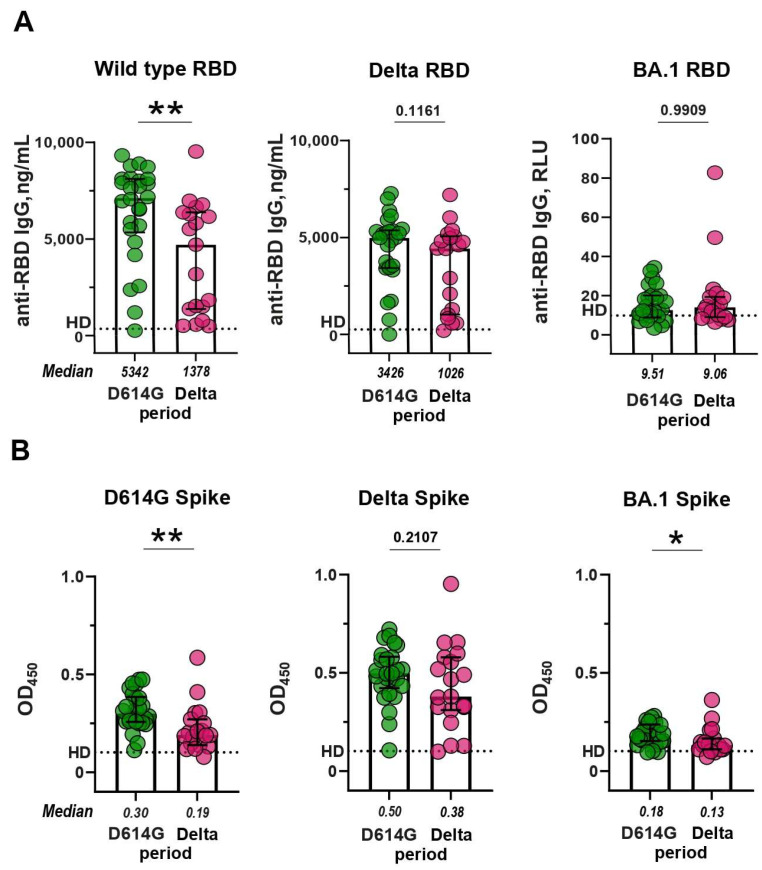
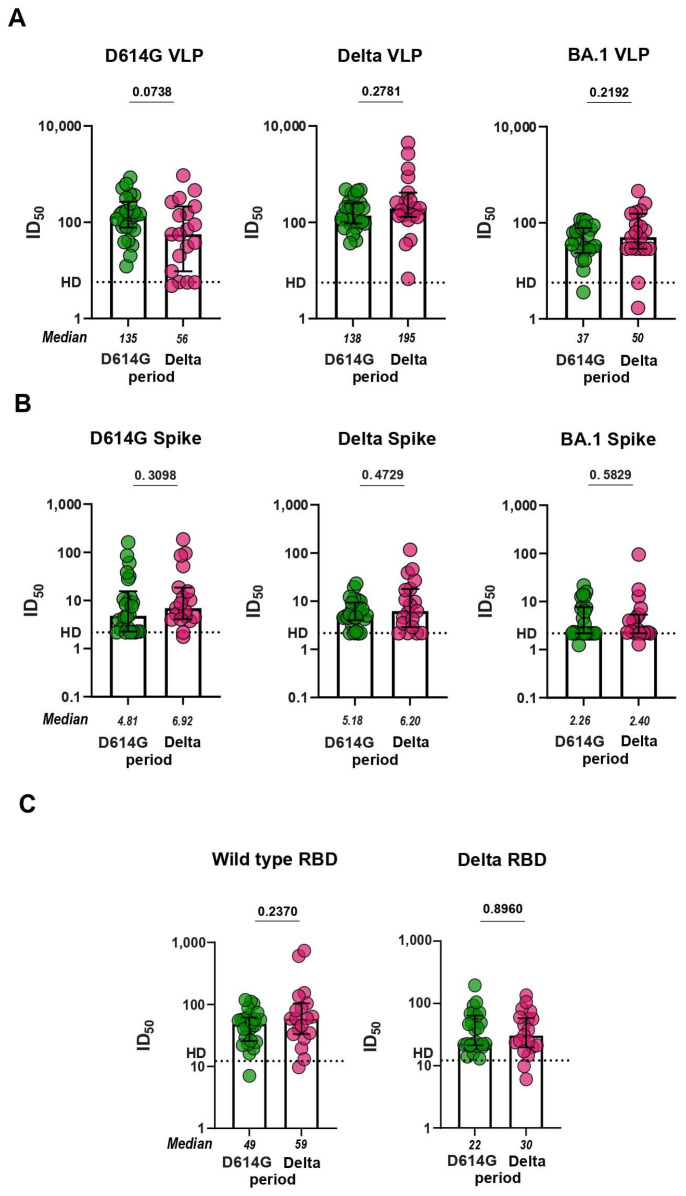
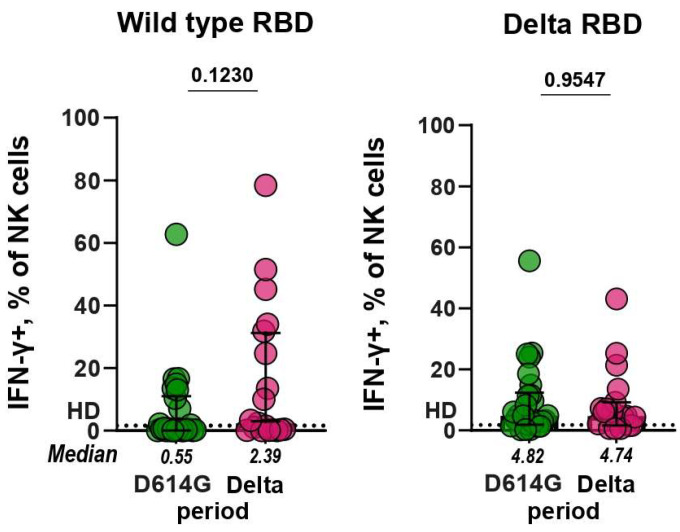
Since the onset of the COVID-19 pandemic, humanity has experienced the spread and circulation of several SARS-CoV-2 variants that differed in transmissibility, contagiousness, and the ability to escape from vaccine-induced neutralizing antibodies. However, issues related to the differences in the variant-specific immune responses remain insufficiently studied. The aim of this study was to compare the parameters of the humoral immune responses in two groups of patients with acute COVID-19 who were infected during the circulation period of the D614G and the Delta variants of SARS-CoV-2. Sera from 48 patients with acute COVID-19 were tested for SARS-CoV-2 binding and neutralizing antibodies using six assays. We found that serum samples from the D614G period demonstrated 3.9- and 1.6-fold increases in RBD- and spike-specific IgG binding with wild-type antigens compared with Delta variant antigens ( < 0.01). Cluster analysis showed the existence of two well-separated clusters. The first cluster mainly consisted of D614G-period patients and the second cluster predominantly included patients from the Delta period. The results thus obtained indicate that humoral immune responses in D614G- and Delta-specific infections can be characterized by variant-specific signatures. This can be taken into account when developing new variant-specific vaccines.
自新冠疫情爆发以来,人类经历了几种严重急性呼吸综合征冠状病毒2(SARS-CoV-2)变体的传播和流行,这些变体在传播性、传染性以及逃避疫苗诱导的中和抗体的能力方面存在差异。然而,与变体特异性免疫反应差异相关的问题仍未得到充分研究。本研究的目的是比较两组急性新冠患者的体液免疫反应参数,这两组患者分别在SARS-CoV-2的D614G变体和Delta变体流行期间感染。使用六种检测方法对48例急性新冠患者的血清进行了SARS-CoV-2结合抗体和中和抗体检测。我们发现,与Delta变体抗原相比,D614G时期的血清样本与野生型抗原的受体结合域(RBD)和刺突特异性IgG结合增加了3.9倍和1.6倍(<0.01)。聚类分析显示存在两个明显分开的簇。第一个簇主要由D614G时期的患者组成,第二个簇主要包括Delta时期的患者。由此获得的结果表明,D614G和Delta特异性感染中的体液免疫反应可以通过变体特异性特征来表征。在开发新的变体特异性疫苗时可以考虑这一点。