Nair Niranjana, Osterhaus Albert D M E, Rimmelzwaan Guus F, Prajeeth Chittappen Kandiyil
Research Center for Emerging Infections and Zoonoses, University of Veterinary Medicine Hannover, Foundation, 30559 Hannover, Germany.
Pathogens. 2023 Sep 19;12(9):1174. doi: 10.3390/pathogens12091174.
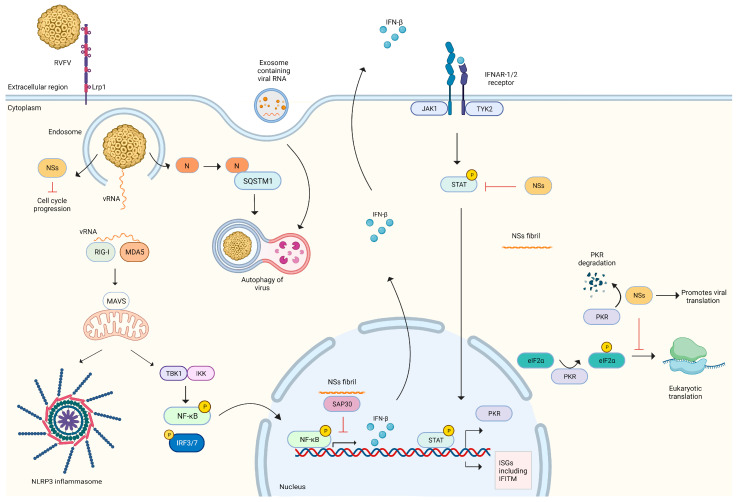
Rift Valley Fever Virus is a mosquito-borne phlebovirus causing febrile or haemorrhagic illness in ruminants and humans. The virus can prevent the induction of the antiviral interferon response through its NSs proteins. Mutations in the NSs gene may allow the induction of innate proinflammatory immune responses and lead to attenuation of the virus. Upon infection, virus-specific antibodies and T cells are induced that may afford protection against subsequent infections. Thus, all arms of the adaptive immune system contribute to prevention of disease progression. These findings will aid the design of vaccines using the currently available platforms. Vaccine candidates have shown promise in safety and efficacy trials in susceptible animal species and these may contribute to the control of RVFV infections and prevention of disease progression in humans and ruminants.
裂谷热病毒是一种由蚊子传播的白蛉病毒,可在反刍动物和人类中引起发热或出血性疾病。该病毒可通过其NSs蛋白阻止抗病毒干扰素反应的诱导。NSs基因的突变可能允许诱导先天性促炎免疫反应并导致病毒减毒。感染后,会诱导产生病毒特异性抗体和T细胞,它们可能提供针对后续感染的保护。因此,适应性免疫系统的所有分支都有助于预防疾病进展。这些发现将有助于利用现有平台设计疫苗。候选疫苗在易感动物物种的安全性和有效性试验中已显示出前景,这些疫苗可能有助于控制裂谷热病毒感染并预防人类和反刍动物的疾病进展。