Li Jianmin, Wang Qingluo, Xia Guoyu, Adilijiang Nigela, Li Ying, Hou Zhenqing, Fan Zhongxiong, Li Jinyao
College of Life Science and Technology & Institute of Materia Medica, Xinjiang University, Urumqi 830017, China.
Xiamen Key Laboratory of Traditional Chinese Bio-Engineering, Xiamen Medical College, Xiamen 361021, China.
Pharmaceutics. 2023 Aug 29;15(9):2233. doi: 10.3390/pharmaceutics15092233.
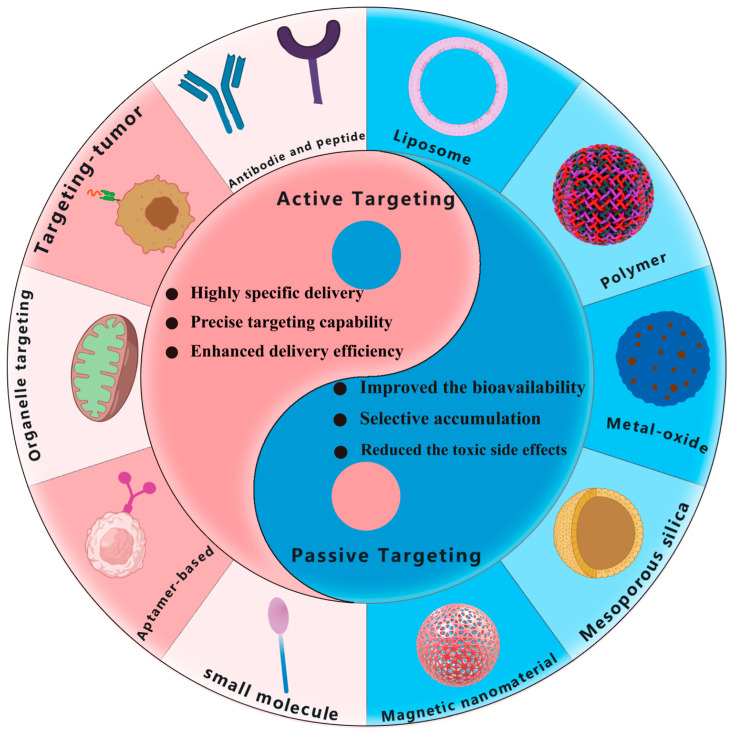
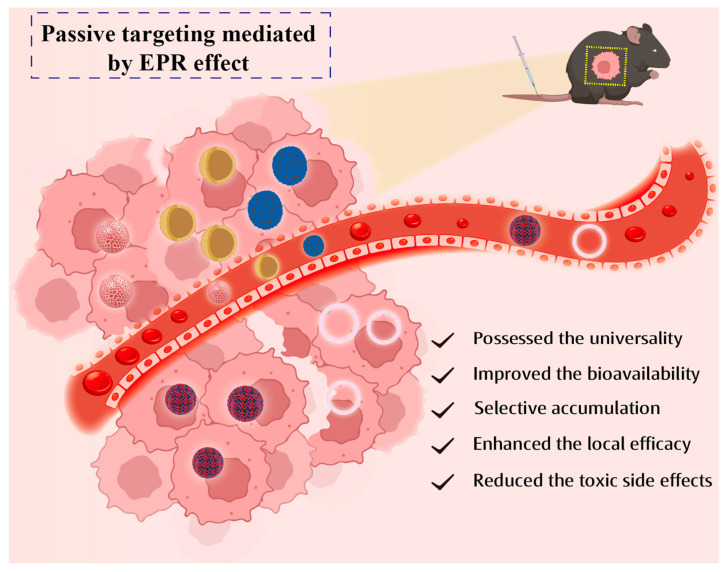
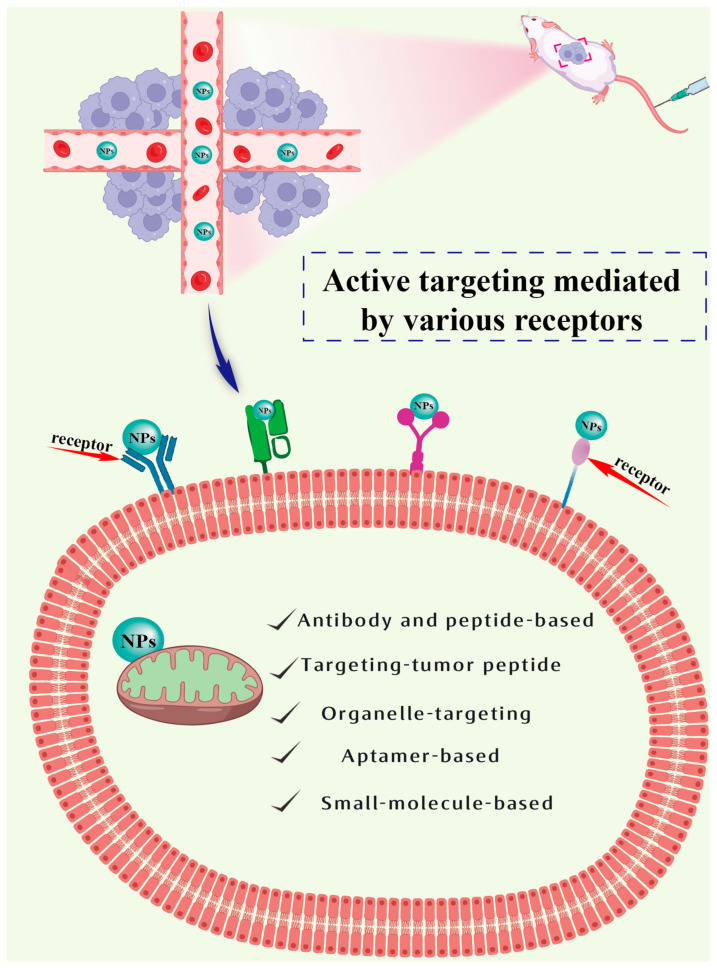
Targeted drug delivery is a precise and effective strategy in oncotherapy that can accurately deliver drugs to tumor cells or tissues to enhance their therapeutic effect and, meanwhile, weaken their undesirable side effects on normal cells or tissues. In this research field, a large number of researchers have achieved significant breakthroughs and advances in oncotherapy. Typically, nanocarriers as a promising drug delivery strategy can effectively deliver drugs to the tumor site through enhanced permeability and retention (EPR) effect-mediated passive targeting and various types of receptor-mediated active targeting, respectively. Herein, we review recent targeted drug delivery strategies and technologies for enhancing oncotherapy. In addition, we also review two mainstream drug delivery strategies, passive and active targeting, based on various nanocarriers for enhancing tumor therapy. Meanwhile, a comparison and combination of passive and active targeting are also carried out. Furthermore, we discuss the associated challenges of passive and active targeted drug delivery strategies and the prospects for further study.
靶向给药是肿瘤治疗中一种精确有效的策略,它可以将药物准确地递送至肿瘤细胞或组织,以增强其治疗效果,同时减轻其对正常细胞或组织的不良副作用。在该研究领域,大量研究人员已在肿瘤治疗方面取得了重大突破和进展。通常,纳米载体作为一种有前景的给药策略,可分别通过增强的渗透与滞留(EPR)效应介导的被动靶向和各种类型的受体介导的主动靶向,有效地将药物递送至肿瘤部位。在此,我们综述了近期用于增强肿瘤治疗的靶向给药策略和技术。此外,我们还基于各种纳米载体对两种主流给药策略——被动靶向和主动靶向进行了综述,以增强肿瘤治疗效果。同时,还对被动靶向和主动靶向进行了比较与结合。此外,我们讨论了被动和主动靶向给药策略的相关挑战以及进一步研究的前景。